 Zerolimits
Crunch
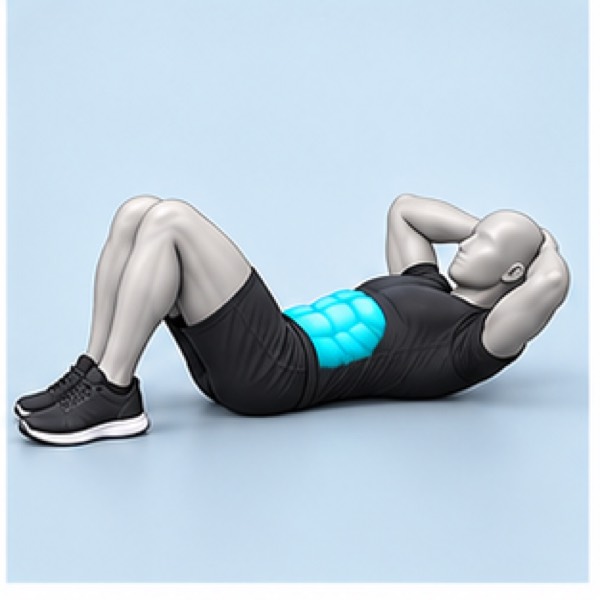
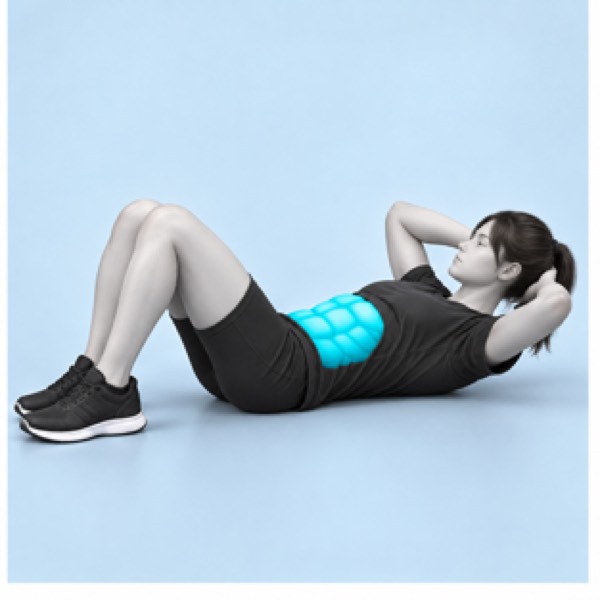
The crunch, or abdominal crunch, is the classic floor ab exercise: lying on your back, you curl your torso until your shoulder blades leave the floor. It mainly works your rectus abdominis, with help from your obliques, over a short range of motion.
- Primary muscle
- Core
- Also works
- —
- Equipment
- Bodyweight
- Pattern
- Core flexion
Muscles worked
Your rectus abdominis pulls your ribs toward your pelvis; it's the muscle you see on the front of your stomach. Your obliques help flex your trunk and keep it stable. Because you only lift your shoulders and upper back, your hip flexors barely work, unlike in a sit-up, where you come all the way up and they do much of the work.
How to do it
Setup
- Lie on your back with your knees bent and your feet flat on the floor, hip-width apart.
- Cross your arms over your chest or rest your fingertips behind your ears, without interlocking your hands.
Execution
- Breathe out and curl your torso, bringing your ribs toward your pelvis.
- Lift your head, shoulders and upper back; your lower back stays on the floor.
- Hold for a second at the top with your abs tight.
- Lower slowly until your shoulders brush the floor and start the next rep without relaxing.
Key cue: Move from the trunk, not by pulling your neck.
Common mistakes
- Yanking your head with your hands. Your neck bends and your abs do less. Keep a fist-sized gap between your chin and chest; if your neck bothers you, support your head with one hand without pulling.
- Coming all the way up. Past a certain point your hip flexors take over. Stop before your lower back starts to lift.
- Bouncing through reps. Fifty fast crunches count for less than 15 slow ones with a pause at the top.
- Never adding load. Once you can do 25 controlled reps, hold a plate on your chest or move to cable crunches.
Variations
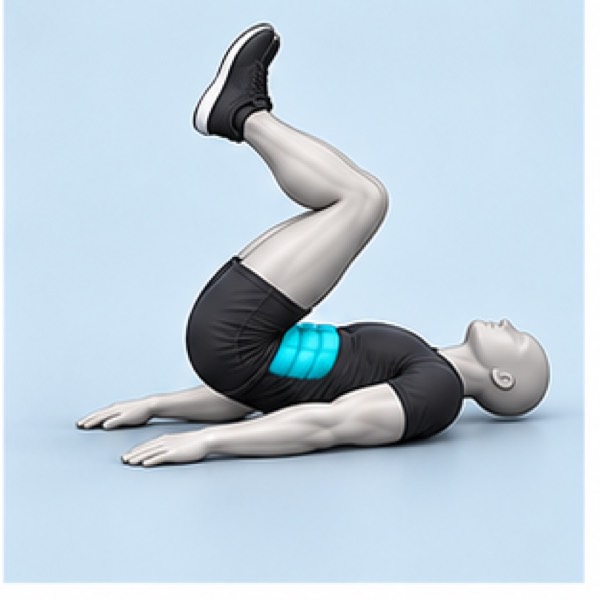
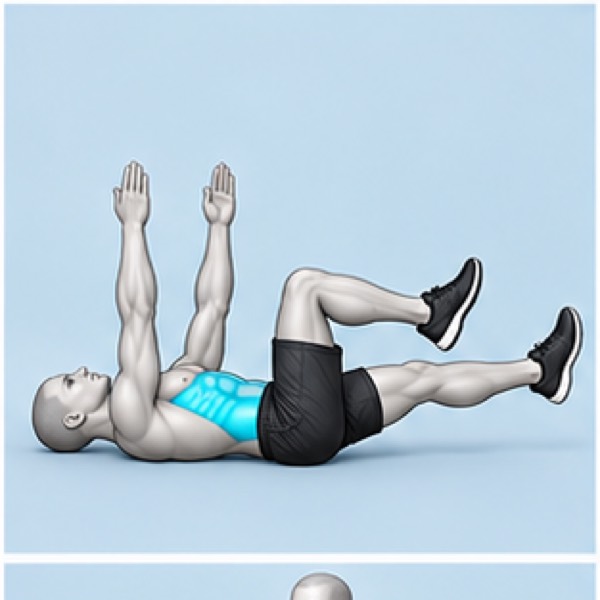
- Reverse crunch: You curl your pelvis toward your chest instead of lowering your torso. Many people feel it more in the lower part of their abs.
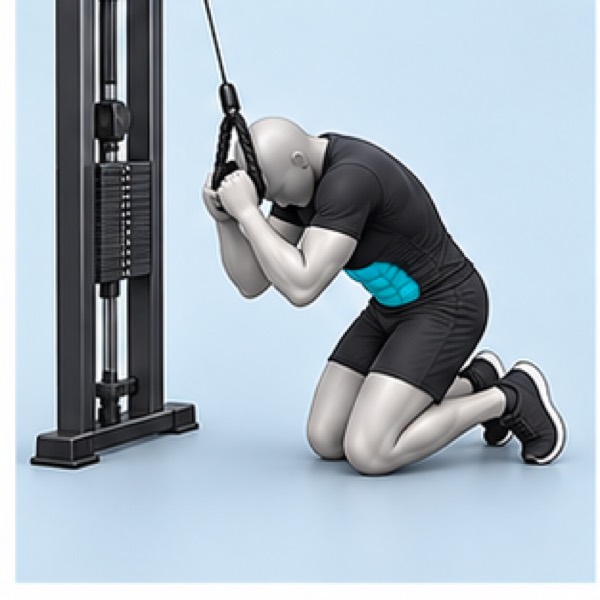
- Cable crunch: Adjustable load. The simplest way to keep progressing once floor crunches get easy.
- Weighted crunch: A 10 or 25 lb plate on your chest adds load without changing the technique.
Sets and reps
12–20 slow reps; once you pass 25, add weight instead of piling on more reps. To build muscle and strength: 12–20 reps, 2–3 sets. When you complete the range on every set, add a little weight. That's double progression.
Alternatives
Frequently asked questions
What muscles do crunches work?
Mainly the rectus abdominis, which pulls your ribs toward your pelvis. Your obliques help flex and stabilize your trunk, and your hip flexors barely work because you never sit all the way up.
Crunches vs sit-ups: which is better?
The crunch trains your abs through a short, direct range. In a sit-up you come all the way up and your hip flexors do much of the work. If your goal is training your abs, the crunch is more targeted.
How many crunches should you do a day?
You don't need to do them daily. Two or three sessions a week of 2–3 sets of 12–20, taken close to failure, is enough. Hundreds a day won't do more than a few hard sets.