 Zerolimits
Lying leg curl
The lying leg curl, also called the prone leg curl, is done face down on a machine, bending your knees against a pad that sits just above your heels. It works your hamstrings with your hips extended, with help from your calves, and along with the seated curl it's the most common hamstring machine in gyms.
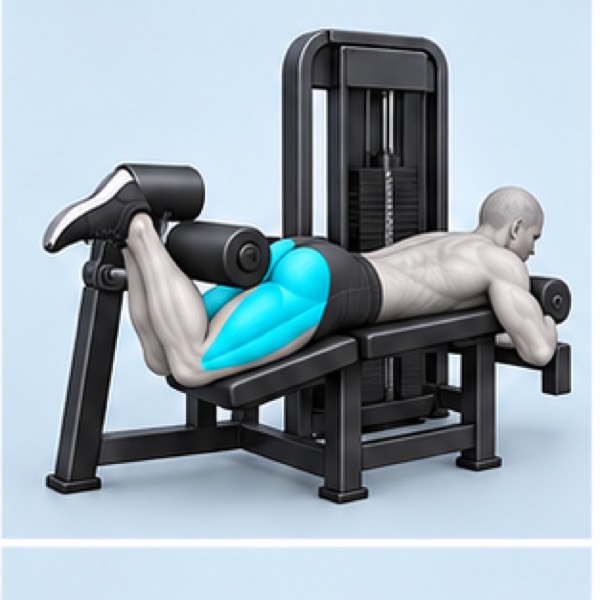
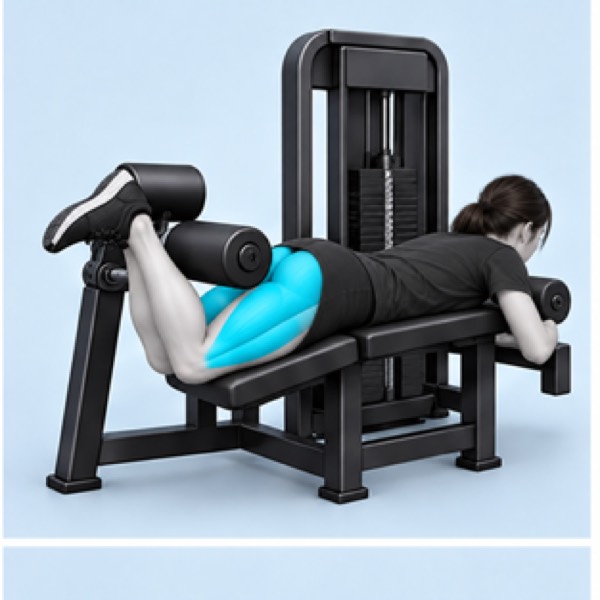
- Primary muscle
- Hamstrings
- Also works
- Calves
- Equipment
- Machine
- Pattern
- Knee flexion
Muscles worked
It works the biceps femoris (long and short heads), semitendinosus and semimembranosus. Lying with your hips extended, your hamstrings end up very shortened at the top: the last part of each rep is hard, and they tire fast or even cramp. Your gastrocnemius helps bend the knee, especially with your toes pulled toward your shins; with your toes pointed it helps less and more of the work falls on your hamstrings.
How to do it
Setup
- Lie face down with your knees just past the edge of the bench, lined up with the machine's pivot.
- Set the pad on your Achilles tendon, just above your heels, not on your calves.
- Grab the handles and press your hips into the bench.
Execution
- Curl your heels toward your glutes without letting your hips leave the bench.
- Keep curling until your knees pass 90° or the pad nearly touches your glutes.
- Hold for a second at the top.
- Lower over 2–3 seconds until your legs are almost straight, without locking your knees or letting the plates touch.
Key cue: Move at the knee without lifting your hips.
Common mistakes
- Lifting your butt as you curl. It's the most common cheat: your hips bend and momentum does the work. Drop the weight until you can curl with your hips pinned to the bench.
- Arching your lower back. If you feel it there, brace your abs into the bench and lighten the load.
- Kneecaps on the pad. Your knee no longer lines up with the pivot and it feels wrong. Slide down until your knees clear the edge.
- Jerking the weight up. The pad should move at the same speed through the whole rep; if it jumps at the start, the weight is too heavy.
Variations
- Single-leg lying curl: Each leg works on its own. Useful if one side is clearly stronger.
- Pause at the top: Holding for 2 seconds with your heels near your glutes makes the most shortened part of the rep much harder.
- Seated leg curl: With your hips flexed, your hamstrings work more stretched. A good partner or swap for the lying version.
Sets and reps
10–15 reps works well; with shorter, heavier sets it's harder to keep your hips down. To build muscle and strength: 10–15 reps, 2–4 sets. When you complete the range on every set, add a little weight. That's double progression.
Alternatives
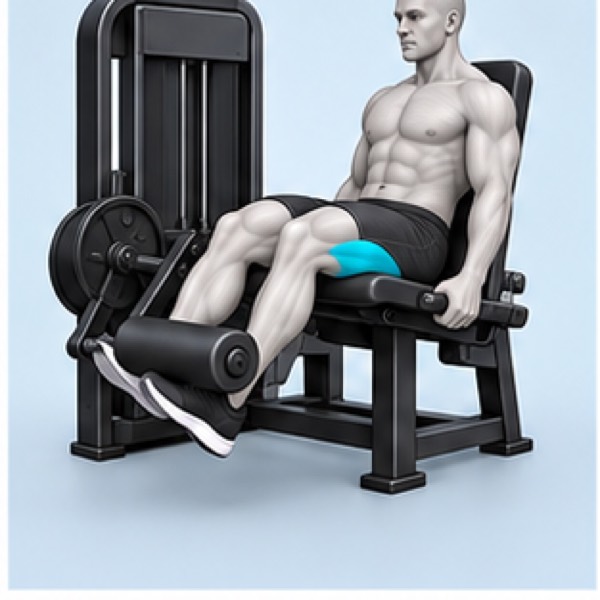
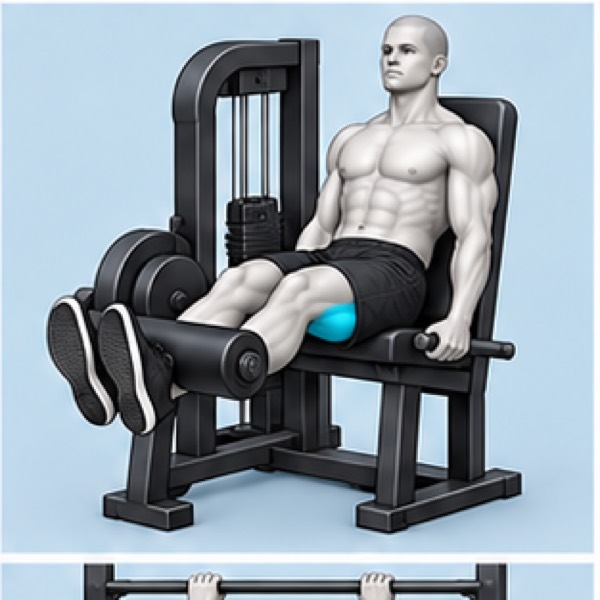
Frequently asked questions
What muscles does the lying leg curl work?
Your hamstrings: the biceps femoris (both heads), semitendinosus and semimembranosus. Your calves help bend the knee, especially when you pull your toes toward your shins.
Lying vs seated leg curl: which is better?
The seated curl works your hamstrings more stretched, and in a head-to-head study it built slightly more muscle. The lying curl is still a good exercise: if your gym only has one, use it, and if it has both, you can rotate them.
Should I point my toes or flex my feet on leg curls?
With your toes pulled toward your shins, your calves help and you lift more. With your toes pointed, your calves barely contribute and your hamstrings do more work with less weight. Pick one and stick with it so you can compare from week to week.