 Zerolimits
Sissy squat
The sissy squat is a squat where your knees travel far forward while you lean back without bending at the hips. It mainly works your quads, especially the rectus femoris, with very little glute involvement. You can do it with bodyweight, holding a post for balance, or on a dedicated sissy squat bench.
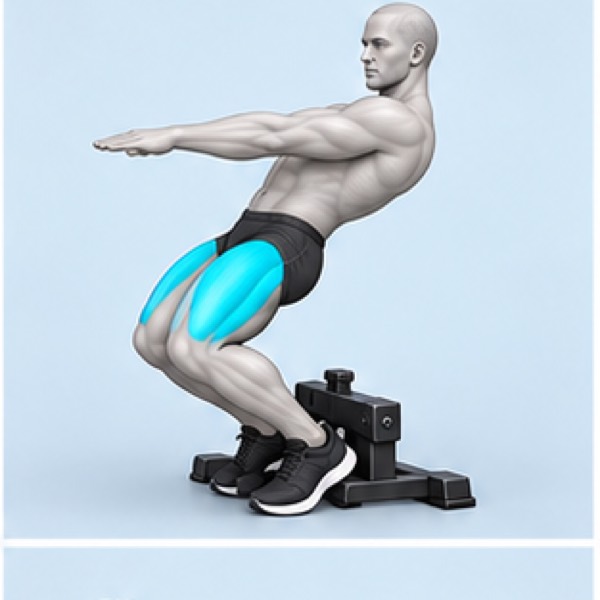
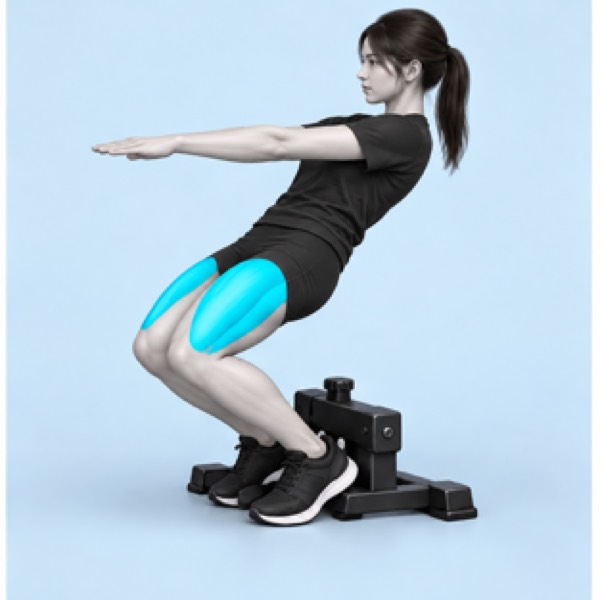
- Primary muscle
- Quads
- Also works
- Glutes
- Equipment
- Bodyweight
- Pattern
- Knee extension
Muscles worked
It's close to a pure quad isolation. Your vasti straighten your knee from very deep flexion, and the rectus femoris, which crosses both the hip and the knee, works in a long, stretched position because your hips stay extended while your knees bend. Your glutes squeeze isometrically to keep your hips from folding, and your abs keep your body straight. The further you lean back and the lower you go, the bigger the stretch and the harder it gets.
How to do it
Setup
- Stand next to a rack or post and hold it with one hand, for balance only.
- Set your feet hip-width apart and rise onto the balls of your feet, heels up.
- Squeeze your glutes and abs so your knees, hips and shoulders line up.
Execution
- Push your knees forward and down while leaning your body back, without bending at the hips.
- Lower slowly, over 2–3 seconds, until you feel a strong stretch in your quads, knees well past your toes.
- Come up by straightening your knees and pressing through the balls of your feet, hips extended the whole time.
- Finish with your legs almost straight and start the next rep without resting at the top.
Key cue: Control the range without snapping into lockout.
Common mistakes
- Bending at the hips and sticking your butt out. It turns into a short squat and your quads lose the stretch. Keep your glutes squeezed for the whole set.
- Dropping into the bottom. Your knee takes the load all at once at its most bent position. Take 2–3 seconds on the way down.
- Pulling yourself up with your arm. That hand is for balance; if you need to pull, shorten the range.
- Starting with full depth. It's very demanding on your knees and patellar tendon. Start shallow and go a little deeper each week.
Variations
- Sissy squat bench: Your feet and calves are locked in, so you can lean back without falling. Easier to learn and to load.
- Weighted sissy squat: Once you can do 15 slow reps with bodyweight, hug a 10–25 lb plate to your chest.
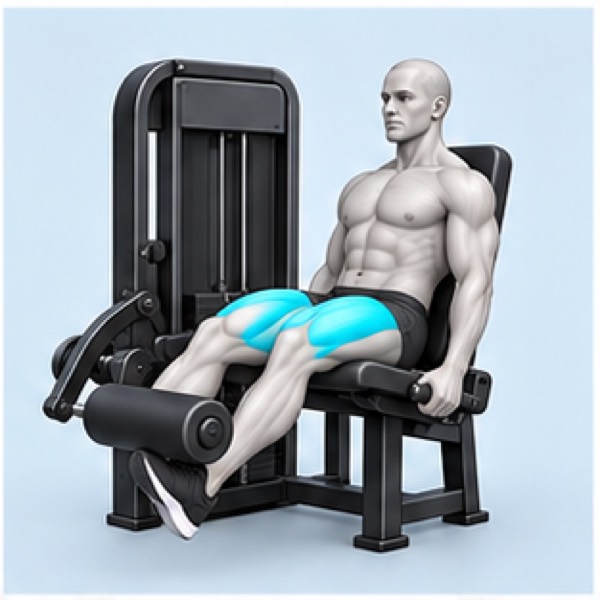
- Leg extension: The machine version: the same knee work, with small, easy jumps in weight.
Sets and reps
It works well for 8–15 slow reps at the end of leg day, when your quads are already tired and you don't need much load. To build muscle and strength: 10–15 reps, 2–4 sets. When you complete the range on every set, add a little weight. That's double progression.
Alternatives
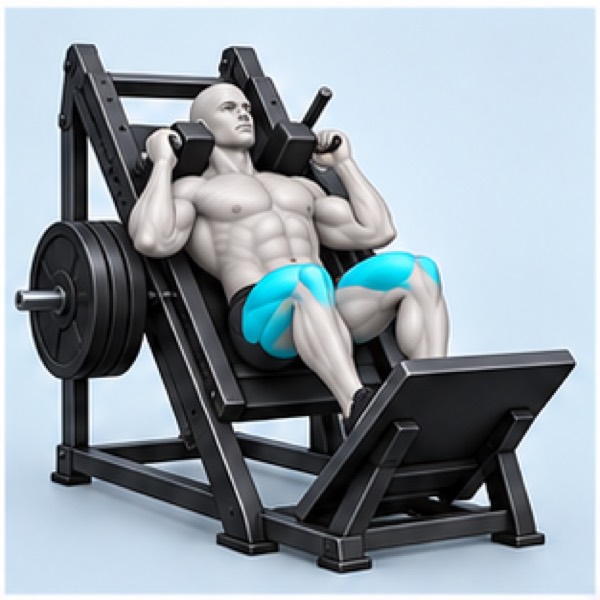
Frequently asked questions
What muscles does the sissy squat work?
Your quads, especially the rectus femoris, which works in a stretched position because your hips stay extended. Your glutes and abs hold the position isometrically.
Are sissy squats bad for your knees?
Not inherently, but they load the knee heavily in deep flexion. Build up depth gradually and don't train through pain; if your knees complain, stick to a partial range or switch to leg extensions.
Sissy squat vs leg extension: which is better?
Both isolate your quads. The sissy squat needs no machine and works the rectus femoris at a longer length. The leg extension is easier to load and track week to week. You can rotate them.