 Zerolimits
Box jump
The box jump is a two-footed jump from the floor onto a box, landing on top under control. It mainly works your quads, along with your glutes and calves, which extend your hips, knees and ankles together. It's a power exercise: the quality of each jump counts more than the number of reps.
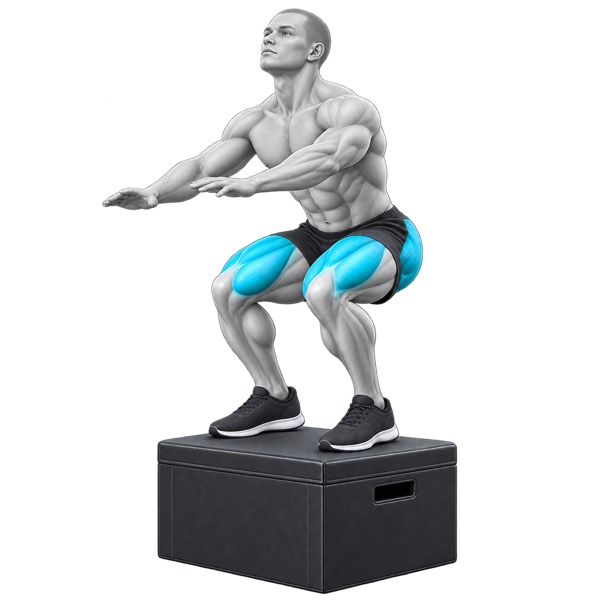
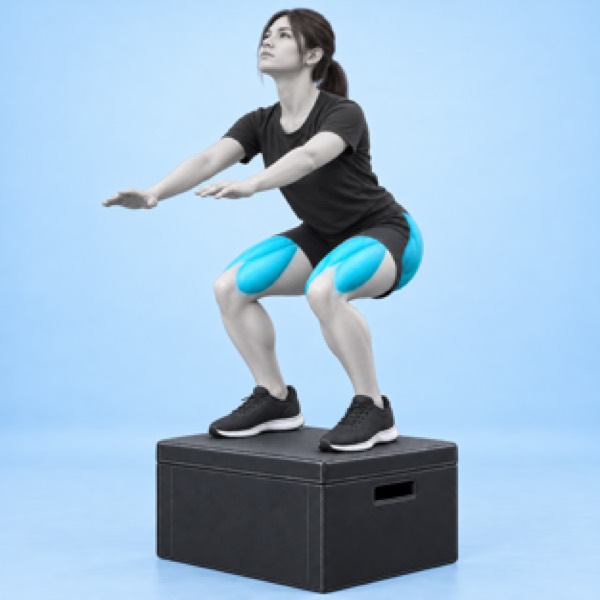
- Primary muscle
- Quads
- Also works
- Glutes, Calves
- Equipment
- Functional
- Pattern
- Plyometric
Muscles worked
On takeoff, your glutes extend your hips, your quads straighten your knees and your calves push from the ankles, all three joints firing almost at once. Your hamstrings help extend the hips and your arm swing adds momentum. On landing, your quads and glutes absorb the fall in a half squat while your core keeps your torso stable. A quick dip before the jump uses stored elastic energy; jumping from a seated or static start makes your legs produce it all.
How to do it
Setup
- Pick a box you can land on in a quarter or half squat, not a deep crouch. To start, 16–20 inches.
- Stand about a foot from the box, feet hip-width apart.
Execution
- Swing your arms back as you quickly bend your hips and knees into a quarter squat.
- Jump by throwing your arms forward and up and extending your hips, knees and ankles.
- Land softly with your whole foot on the box, knees in line with your toes.
- Stand all the way up on top, then step down one foot at a time.
Key cue: Land softly and keep your knees aligned.
Common mistakes
- Using a box that's too high. You land in a deep crouch with your knees at your chest: you didn't jump higher, you just tucked your legs more. Lower the box until you land in the same position you took off from.
- Jumping down backward. Each landing on the floor adds impact to your Achilles tendon. Step down instead.
- Knees caving in on landing. It usually means the box is too high or you're tired. Lower it and think knees out.
- Chaining jumps while fatigued. Your foot catches the edge and you scrape your shin. End the set as soon as your jumps lose height or precision.
Variations
- Seated box jump: Jump from a bench with no dip. Your legs have to generate force from a dead stop.
- Single-leg box jump: Use a low box, 8–12 inches. It demands more knee and ankle stability; save it for when two-footed jumps are solid.
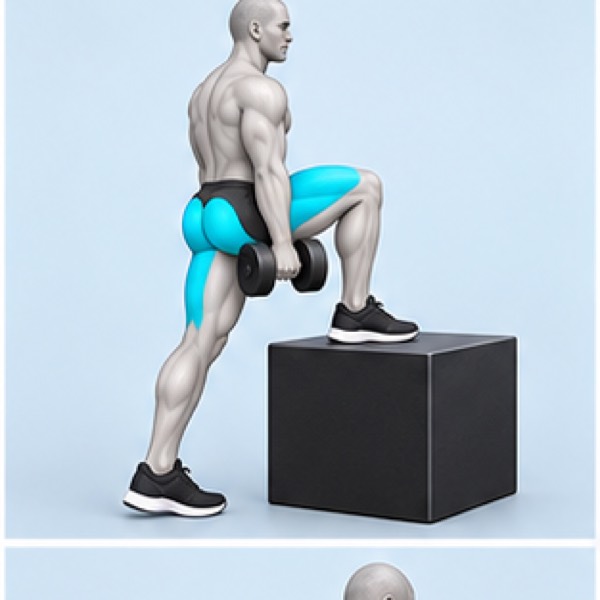
- Step-up: If you're not confident jumping yet, dumbbell step-ups work the same muscles with no impact.
Sets and reps
For power, keep sets short, 3–5 jumps, and rest 1–2 minutes so every jump is a max effort. For strength and power: 1–5 reps per set, with 2–3 minutes of rest. Make it harder only when every rep is fast and clean.
Alternatives
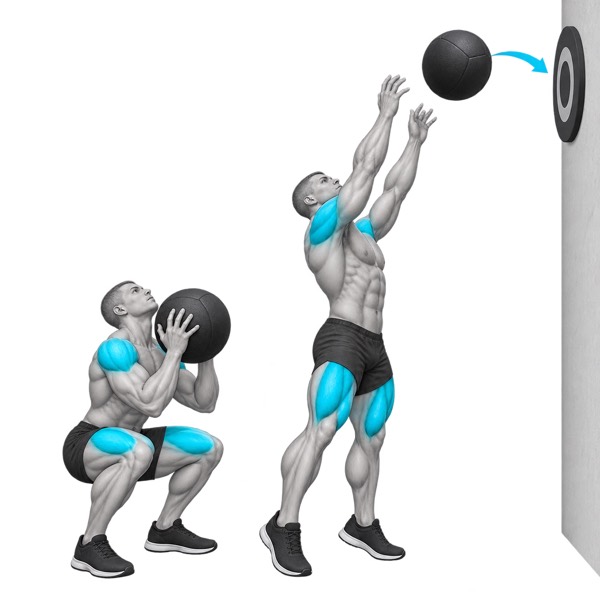
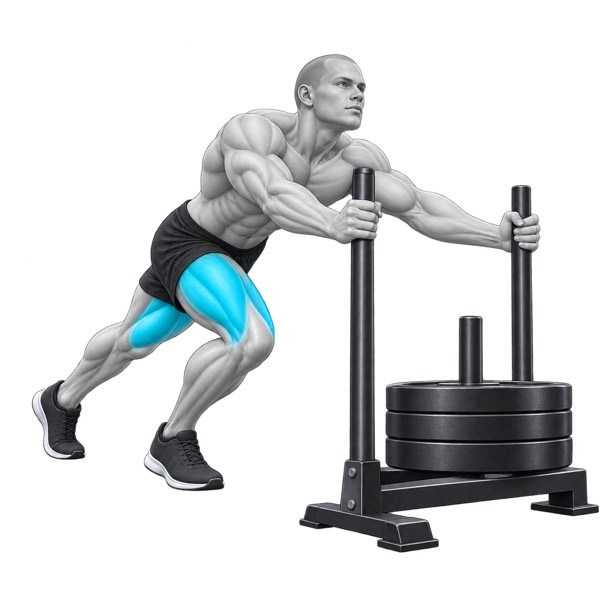
Frequently asked questions
What muscles do box jumps work?
Your quads, glutes and calves, which extend your hips, knees and ankles on takeoff. Your hamstrings assist the hip drive and your core stabilizes you on the landing.
What box height should you use?
Start at 16–20 inches and go higher only when you consistently land softly in the same position you took off from. CrossFit boxes are usually 20 and 24 inches, but a taller box doesn't mean a better jump.
Do box jumps help you jump higher?
Yes: they train leg power and good landings. For real progress, pair them with strength work like heavy squats or Bulgarian split squats. Stronger legs jump higher.