 Zerolimits
Cable pull-through
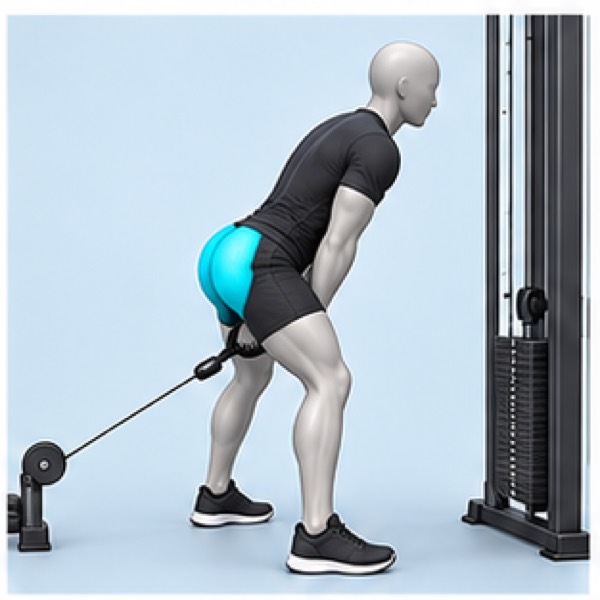
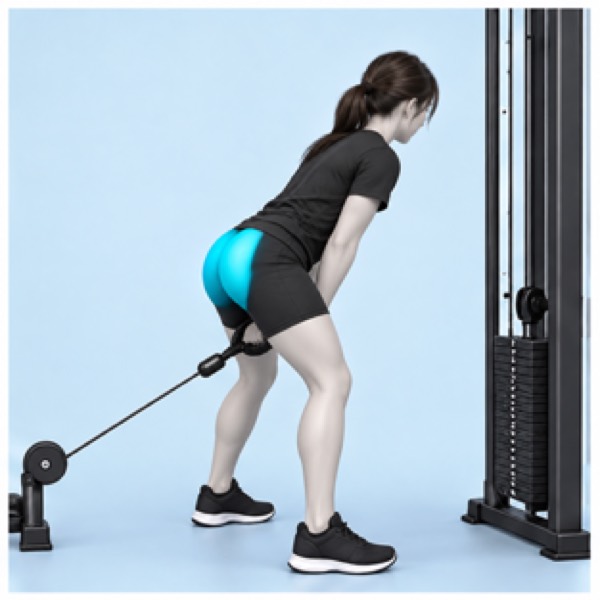
The cable pull-through is a hip hinge where you pull a rope from a low pulley through your legs. It mainly works your glutes, with help from your hamstrings, and it's a good way to learn the hinge with little load on your spine.
- Primary muscle
- Glutes
- Also works
- Hamstrings
- Equipment
- Cable
- Pattern
- Hip hinge
Muscles worked
Your glutes extend your hips and do most of the work, especially at the top: the cable pulls you backward, so tension stays high when you're standing tall. Your hamstrings and adductor magnus help extend your hips. Your spinal erectors work without moving to keep your back neutral. More knee bend shifts the work toward your glutes; straighter legs put more stretch on your hamstrings.
How to do it
Setup
- Attach a rope to a low pulley and stand facing away from the stack, with the rope between your legs.
- Hold one end in each hand and walk 2–3 steps forward until the weight lifts and the cable is taut.
- Set your feet slightly wider than hip-width, knees softly bent.
Execution
- Push your hips back with a neutral spine and let the rope travel back between your legs until you feel a hamstring stretch.
- Keep your arms straight: they only hold the rope, they don't pull.
- Stand up by driving your hips forward until you're tall and straight.
- Squeeze your glutes for a second without leaning your shoulders back, then hinge again under control.
Key cue: Send your hips back and keep a neutral spine.
Common mistakes
- Pulling with your arms. If your elbows bend, it's no longer a hip movement; keep your arms straight and think about driving your hips forward.
- Squatting it. If your knees bend a lot, your hips drop instead of going back; keep your shins close to vertical.
- Leaning back at the top. Arching your lower back adds nothing for your glutes; finish standing tall with your abs braced.
- Standing too close to the pulley. The stack touches down and you lose tension; take another step forward. If the cable pulls you off balance, widen your stance or drop the weight.
Variations
- Banded pull-through: Loop a band around a low, solid anchor and do the same movement. Useful for training at home or warming up before deadlifts.
- Wide-stance pull-through: Feet well outside shoulder-width, toes turned out. Your adductors do more and the range gets shorter.
Sets and reps
It works best for 10–15 reps: the cable limits the load, and a heavy stack pulls you backward before your glutes tire out. To build muscle and strength: 10–15 reps, 2–4 sets. When you complete the range on every set, add a little weight. That's double progression.
Alternatives
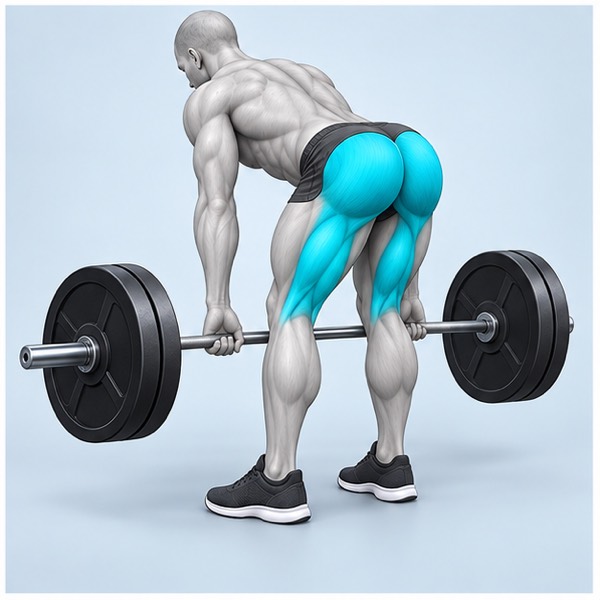 Romanian deadliftBarbell
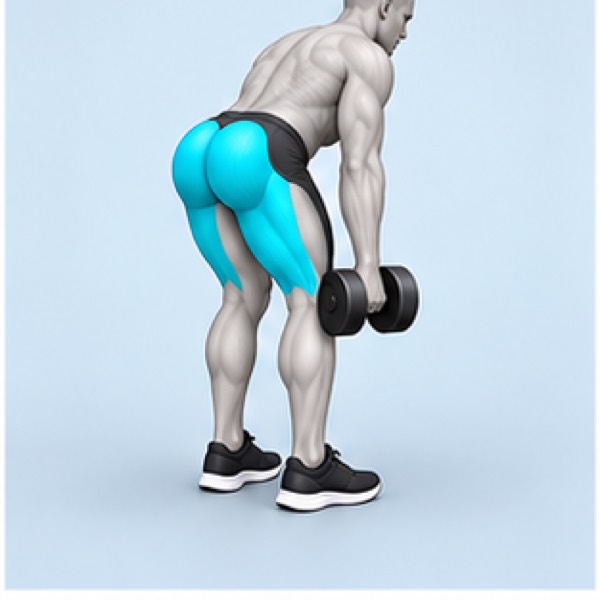 Dumbbell Romanian deadliftDumbbells
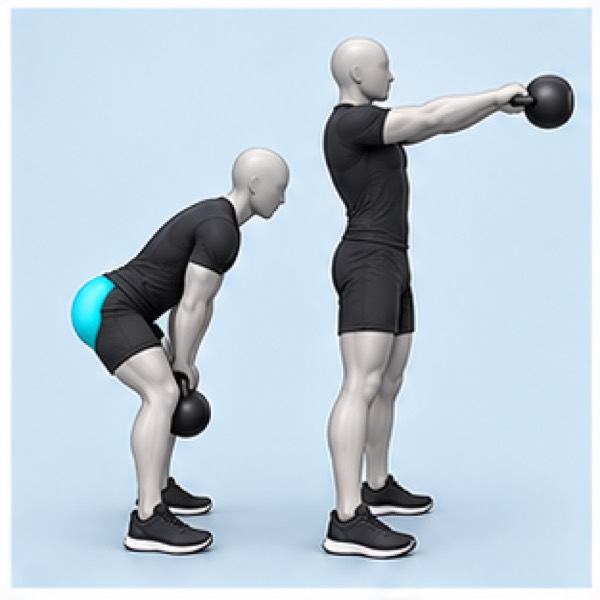 Kettlebell swingKettlebell
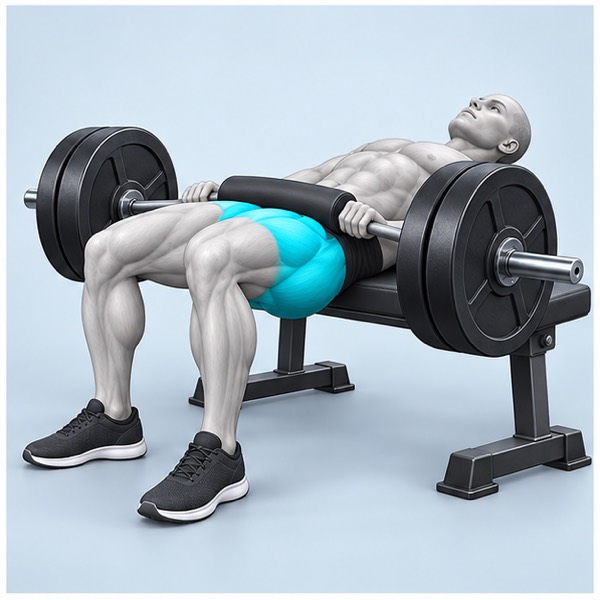 Hip thrustBarbell
Frequently asked questions
What muscles does the cable pull-through work?
Mainly your glute max, which works hardest at the top of each rep. Your hamstrings and adductor magnus help extend your hips, and your spinal erectors keep your back neutral.
Cable pull-through vs Romanian deadlift: which is better?
The RDL loads your hamstrings harder in the stretch and lets you go much heavier. The pull-through keeps tension at the top, when you're standing tall, and is easier on your back. For glutes, use both; to learn the hinge, start with the pull-through.
Can you do a pull-through at home?
Yes, with a resistance band looped around a low, solid anchor. A band pulls harder the more it stretches, so resistance peaks at the top, right where your glutes work hardest in this exercise.