 Zerolimits
Hip thrust
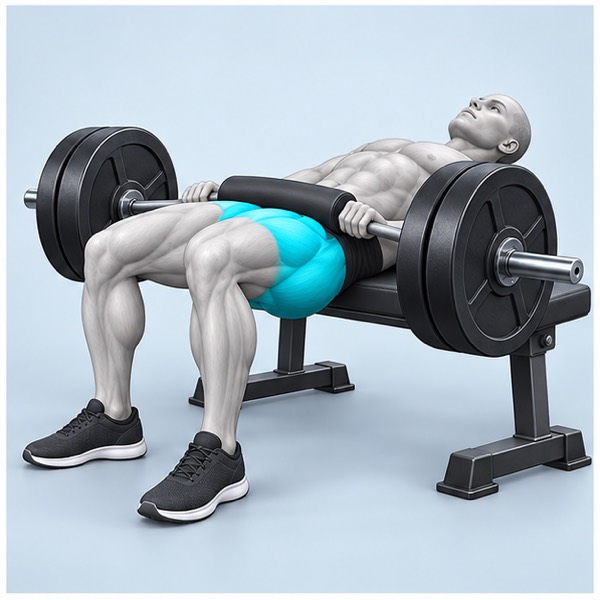
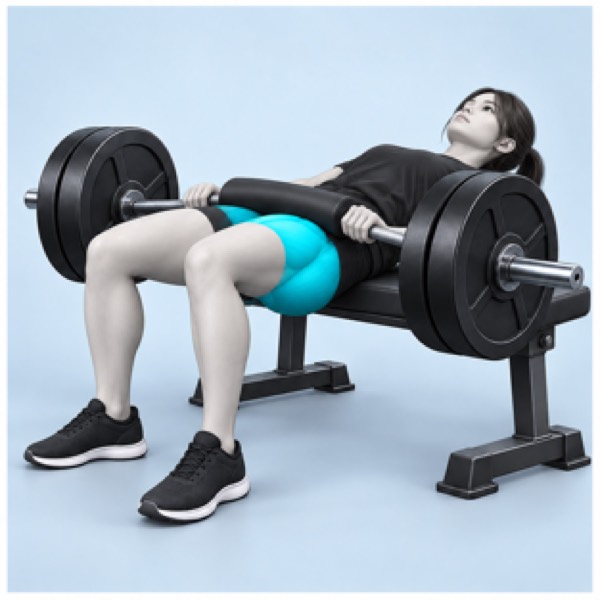
The hip thrust is an exercise where you rest your upper back on a bench and drive a barbell across your hips up until your torso is parallel to the floor. It mainly works your glute max, with help from your hamstrings and quads, and it lets you go heavy. It's also called the barbell hip thrust.
- Primary muscle
- Glutes
- Also works
- Hamstrings
- Equipment
- Barbell
- Pattern
- Hip extension
Muscles worked
Your glute max extends your hips and does most of the work, with peak tension at the top, when your hips are fully extended. Your hamstrings and adductor magnus help extend your hips and your quads hold your knee position. Your spinal erectors and abs lock your pelvis in place. With your feet further out, your hamstrings work more; closer in, your quads do.
How to do it
Setup
- Sit on the floor with the edge of a bench about 16 inches high just below your shoulder blades.
- Roll the bar into the crease of your hips and pad it with a bar pad or a folded mat.
- Plant your feet hip-width or slightly wider, toes turned out a little, far enough out that your shins are vertical at the top.
Execution
- Brace your abs, tuck your chin slightly and hold the bar with both hands.
- Drive through your heels and mid-foot and lift your hips until your torso is parallel to the floor.
- Squeeze your glutes for a second at the top with your ribs down, without arching your lower back.
- Lower under control until your hips are a few inches off the floor, then drive up again.
Key cue: Drive through the hips without overextending your back.
Common mistakes
- Finishing with your lower back instead of your hips. If you look at the ceiling, your lower back takes over; keep your eyes forward, chin tucked and ribs down.
- Feet too far or too close. Too far, your hamstrings take over and may cramp; too close, your heels lift. Adjust until your shins are vertical at the top.
- Sliding along the bench. Set the edge just below your shoulder blades and let your torso pivot on that point.
- Cutting the bottom short. If your hips only drop a few inches, you lose range; lower until you nearly touch the floor.
Variations
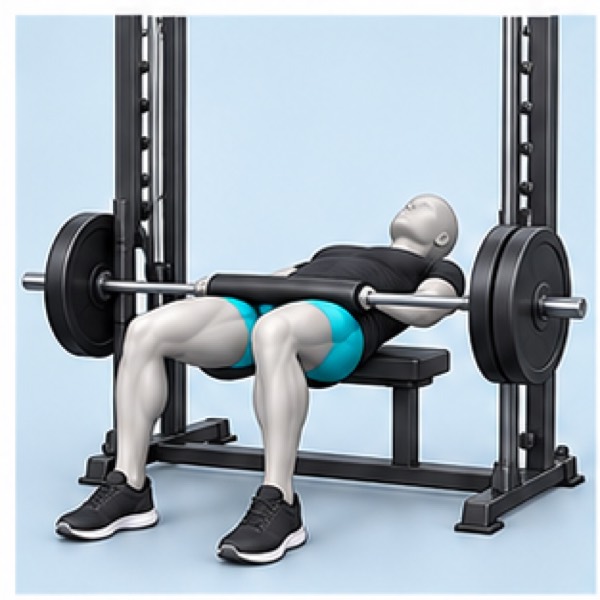
- Smith machine hip thrust: The bar runs on rails, so there's nothing to balance. Faster to set up and easier to take close to failure.
- Single-leg hip thrust: Bodyweight or with a dumbbell, one leg in the air. Trains each glute on its own and shows imbalances between sides.
- Dumbbell hip thrust: One dumbbell resting on your hips. A good option at home or before moving to the barbell.
Sets and reps
It works across the whole 6–12 range; your grip and back don't limit you, so you can push your sets close to failure. To build muscle and strength: 6–12 reps, 3–4 sets. When you complete the range on every set, add a little weight. That's double progression.
Alternatives
Frequently asked questions
What muscles does the hip thrust work?
Mainly your glute max, which works hardest at the top. Your hamstrings, adductor magnus and quads help, and your abs and spinal erectors keep your pelvis locked in place.
Hip thrust vs glute bridge: what's the difference?
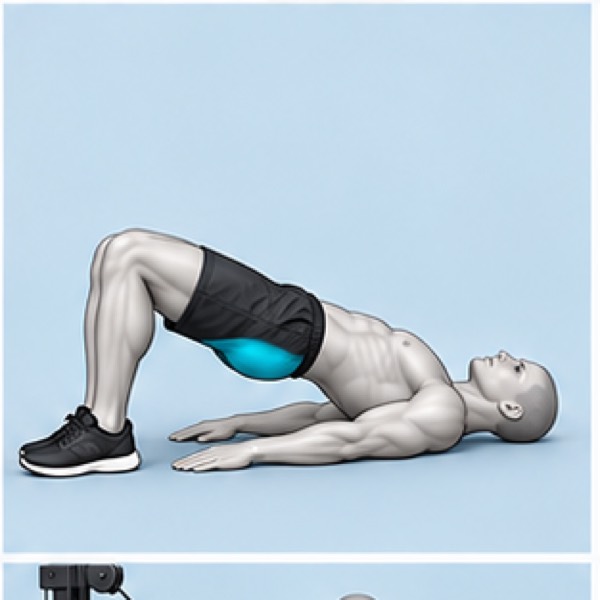
It's the same movement. In the hip thrust your back is on a bench, so the range is longer and it takes more weight. The glute bridge, on the floor, is easier to set up and good for starting out or warming up.
Hip thrust vs squat for glutes: which is better?
They complement each other. The squat loads your glutes in the stretched position at the bottom and also trains your quads. The hip thrust loads them at the top, with your hips extended, and causes less overall fatigue. To build your glutes, do both.
How high should the bench be for hip thrusts?
A standard flat bench, about 14–18 inches, works for most people. The edge should sit just below your shoulder blades. Too high and your back slides; too low and you cut the range short.