 Zerolimits
Front squat
The front squat is a squat with the barbell resting on the front of your shoulders. It mainly works your quads, with help from your glutes, adductors and upper back, which keeps your elbows up. Your torso stays more upright than in a back squat, which shifts more of the work to your quads.
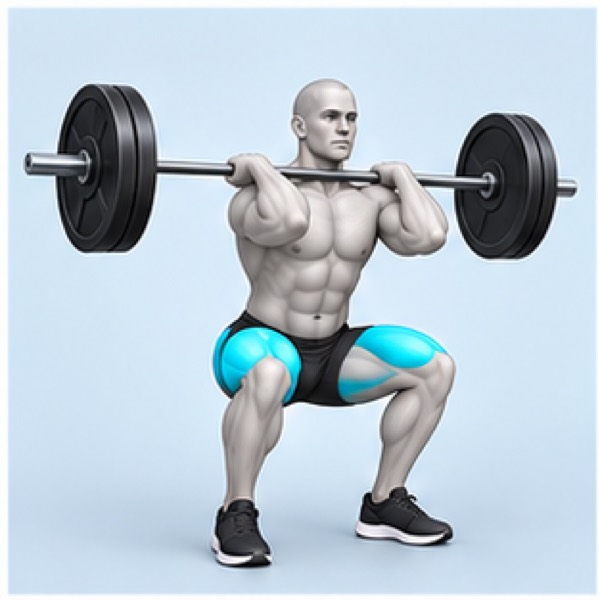
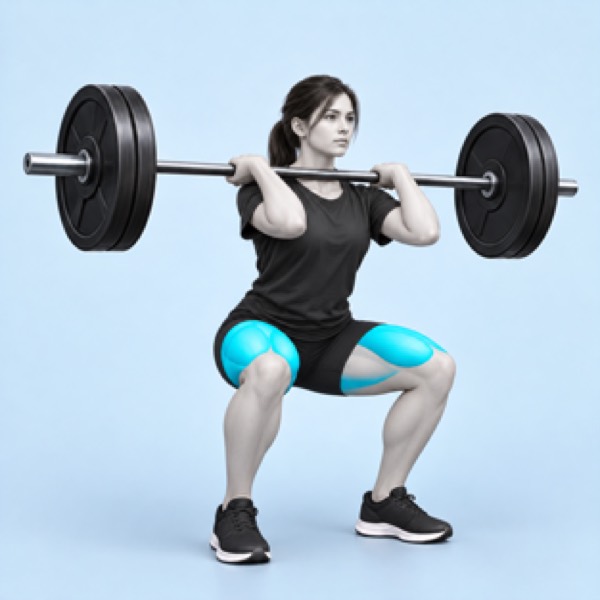
- Primary muscle
- Quads
- Also works
- Glutes, Hamstrings
- Equipment
- Barbell
- Pattern
- Squat
Muscles worked
Your quads work harder than in the back squat, because an upright torso makes your knees travel further forward and bend more. Your glute max and adductor magnus extend your hips, especially out of the bottom. Your upper back, traps and thoracic erectors, works hard to keep the bar from rolling forward, and your abs hold your trunk rigid. Your hamstrings do little. Going deeper with your knees further forward loads your quads even more.
How to do it
Setup
- Set the bar in the rack a little below shoulder height.
- Step in until the bar touches your throat and rest it on your front delts.
- Grip a bit wider than shoulder-width with 2–3 fingers under the bar, and drive your elbows up until your upper arms are nearly parallel to the floor.
- Unrack it, take 2 steps back, and set your feet shoulder-width apart, toes slightly out.
Execution
- Breathe in and brace your abs, keeping your elbows high.
- Descend straight down, knees moving forward and out, torso upright.
- Go to at least parallel, deeper if your mobility allows.
- Drive up by pushing the floor and lifting your elbows at the same time, as if pointing them forward.
Key cue: Keep your elbows high for the whole rep.
Common mistakes
- Letting your elbows drop. The bar rolls forward, your torso tips and the set is over. Think about driving your elbows up out of the bottom.
- Holding the bar in your hands. The bar sits on your shoulders and your fingers only guide it. If your wrists can't get there, use a cross-arm grip or straps.
- Heels coming up. Your weight shifts to your toes and you lose balance. Wear weightlifting shoes or put thin plates under your heels.
- Starting with your back squat weight. You'll lift noticeably less. Start light and let the load climb with your technique.
Variations
- Cross-arm front squat: Cross your arms and hold the bar with your hands on the opposite shoulders. Handy if you lack wrist mobility, though it gets harder to hold under heavy loads.
- Strap grip: Wrap lifting straps around the bar and hold them in your fists. It keeps your elbows high without straining your wrists.
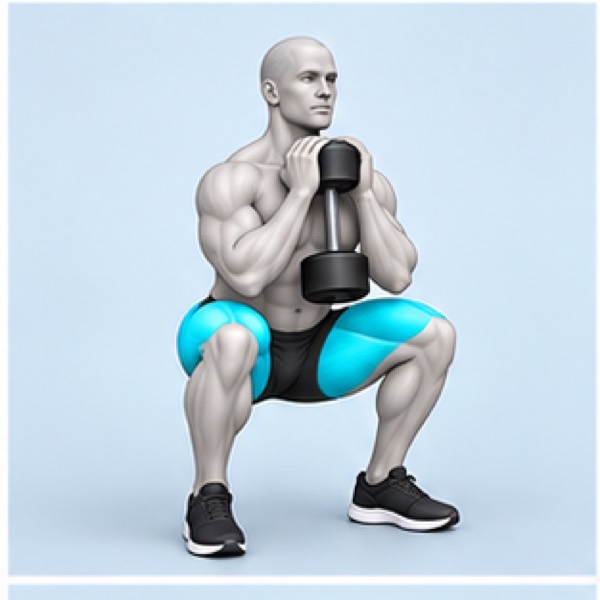
- Goblet squat: The version with a dumbbell at your chest. It teaches the same upright position and is the best stepping stone.
Sets and reps
It works best for 3–8 reps: in long sets your upper back fatigues before your legs and your elbows start to drop. To build muscle and strength: 6–12 reps, 3–4 sets. When you complete the range on every set, add a little weight. That's double progression.
Alternatives
Frequently asked questions
What muscles does the front squat work?
Mainly your quads, with help from your glutes and adductors. Your upper back and abs work hard to keep your torso upright and the bar in place.
Front squat vs back squat: which is better?
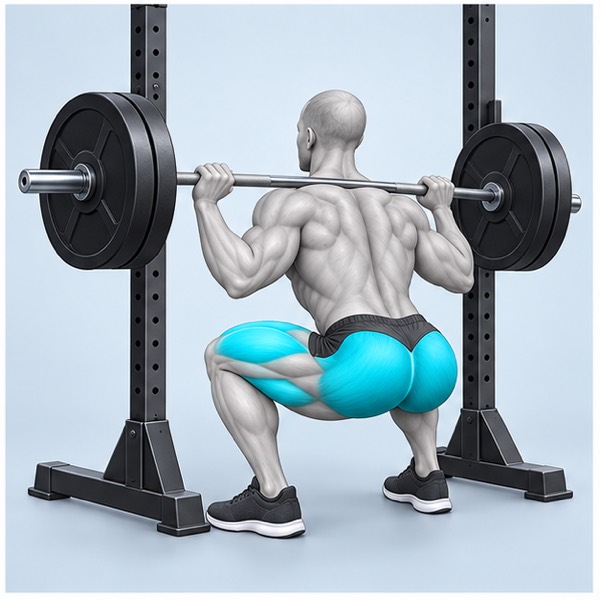
The front squat puts more work on your quads and less stress on your lower back, but you'll lift less. The back squat spreads more work to your glutes and adductors and lets you go heavier. Use the front squat as your main lift or as an accessory to the back squat.
Why do your wrists hurt in the front squat?
Usually because you're gripping the bar with your whole hand, or you lack wrist and lat mobility. The bar should sit on your shoulders, with your fingers only guiding it. While you work on mobility, use a cross-arm grip or straps.