 Zerolimits
Back squat
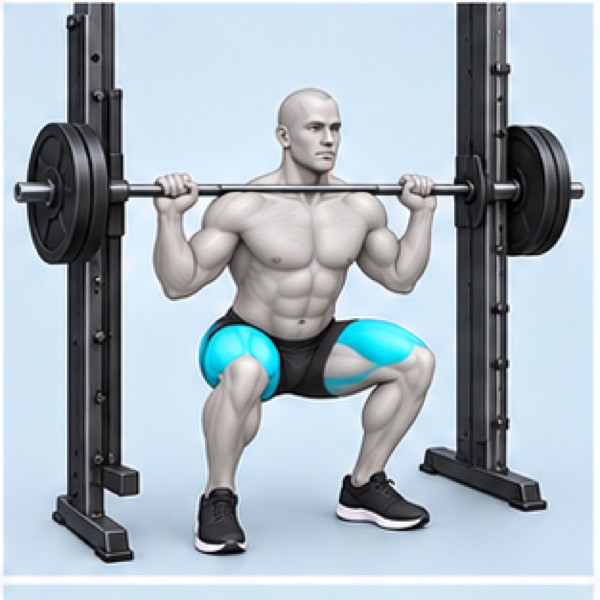
The back squat is a squat with a barbell resting on your upper back. It mainly works your quads, glutes and adductors, and it's the lower-body lift you'll load the heaviest. You'll also see it called the barbell squat or barbell back squat.
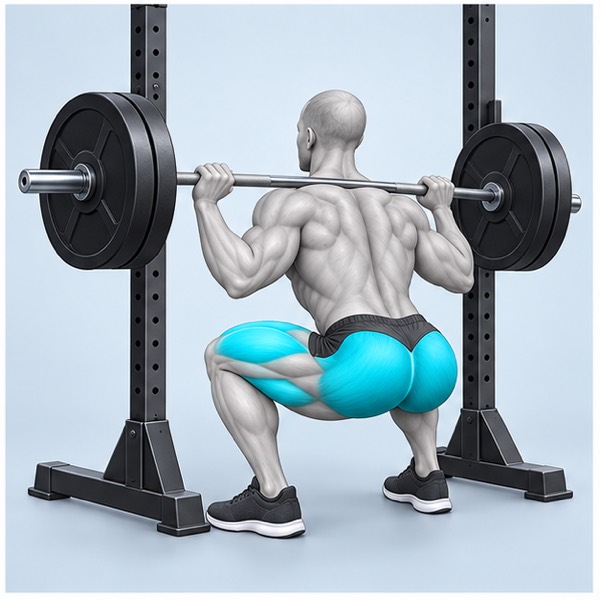
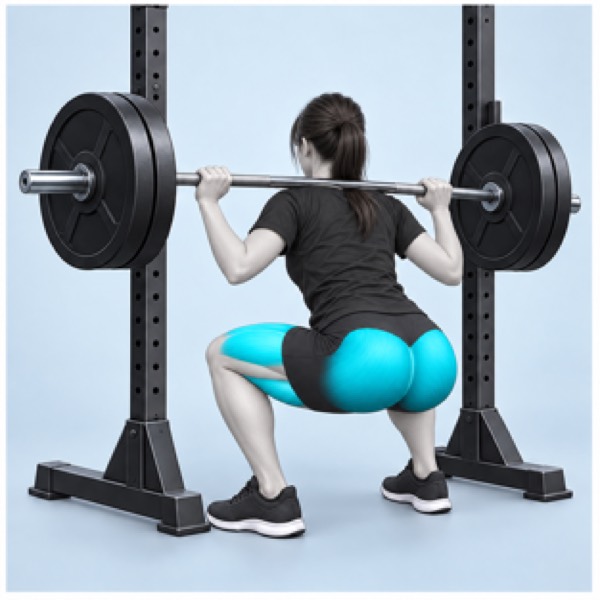
- Primary muscle
- Quads
- Also works
- Glutes, Hamstrings
- Equipment
- Barbell
- Pattern
- Squat
Muscles worked
Your quads straighten your knees and do most of the work, especially the vasti. Your glute max and adductor magnus extend your hips and work harder the deeper you go. Your hamstrings stabilize but grow little from squats: they lengthen at the hip and shorten at the knee at the same time. Your spinal erectors and abs hold your torso. A high bar and upright torso favor the quads; a low bar with more forward lean shifts work to the glutes and adductors.
How to do it
Setup
- Set the bar in the rack at about mid-chest height.
- Step under it and rest it on your upper traps, hands a bit wider than your shoulders, elbows pointing down.
- Unrack it with both legs, take 2–3 steps back, and set your feet shoulder-width apart, toes out about 15–30°.
Execution
- Take a big breath, brace your abs like you're about to take a punch, and hold it on the way down.
- Descend by bending your hips and knees together, knees tracking over your toes, weight over midfoot.
- Go down until your hip crease is level with or below your knees, without your lower back rounding.
- Drive up by pushing the floor away, chest and hips rising at the same rate.
Key cue: Keep your knees tracking in the same direction as your feet.
Common mistakes
- Knees caving in on the way up. Push them out in line with your feet; if you can't, the weight is too heavy.
- Hips shooting up first. Your chest drops, the bar drifts forward and your lower back takes the load. Chest and hips rise together; front squats and pause squats help fix it.
- Squatting high with heavy weight. Half squats work your glutes and adductors less. Get to at least parallel and drop the weight if you need to.
- Exhaling at the bottom. Your trunk goes soft right when the load is highest. Hold your breath until you're past the hardest part.
Variations
- Low-bar squat: The bar sits about 2 inches lower, across your rear delts. You lean forward more, your glutes and adductors work harder, and most people can lift a bit more.
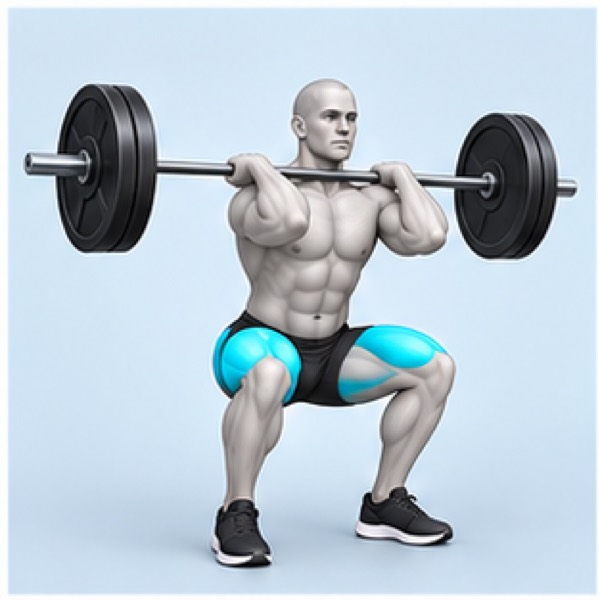
- Front squat: The bar sits in front, on your shoulders. A more upright torso and more quad work.
- Pause squat: Hold 2–3 seconds at the bottom without losing tension. It builds control where the lift is hardest and forces you to use less weight.
Sets and reps
For max strength, 3–6 reps; to build muscle, 6–10 work well without your form breaking down late in the set. To build muscle and strength: 6–12 reps, 3–4 sets. When you complete the range on every set, add a little weight. That's double progression.
Alternatives
Frequently asked questions
What muscles does the back squat work?
Mainly your quads, glutes and adductors. Your hamstrings help stabilize your knees and hips, and your lower back and abs hold your torso rigid under the bar.
How deep should you squat?
At least until your hip crease is level with your knees. If you can keep a neutral back, going deeper works your glutes and adductors more. Your limit is the point where your lower back starts to round.
Is it OK for your knees to go past your toes?
Yes. It's normal and needed to squat with an upright torso, especially if you have long legs. What matters is that your knees track in line with your feet and your heels stay down.
Back squat vs leg press: which is better?
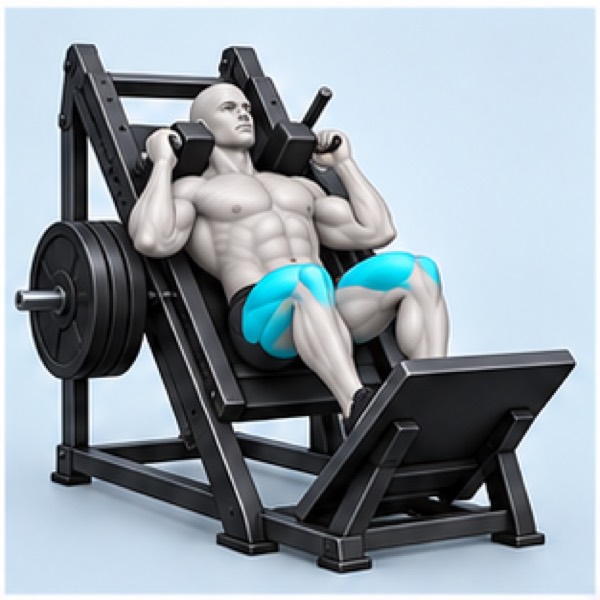
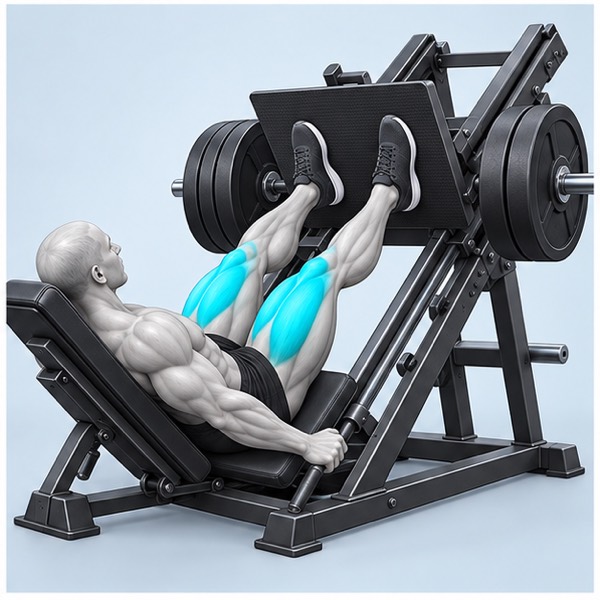
Both build your quads and glutes. The squat demands more technique and trains your trunk; the leg press is easier to learn and safer to push close to failure. Many programs use both.