 Zerolimits
Good morning
The good morning is a hip hinge with a barbell across your upper back, set up like a squat. It mainly works your hamstrings and glutes, and your spinal erectors work hard to keep your back flat while your torso tips forward.
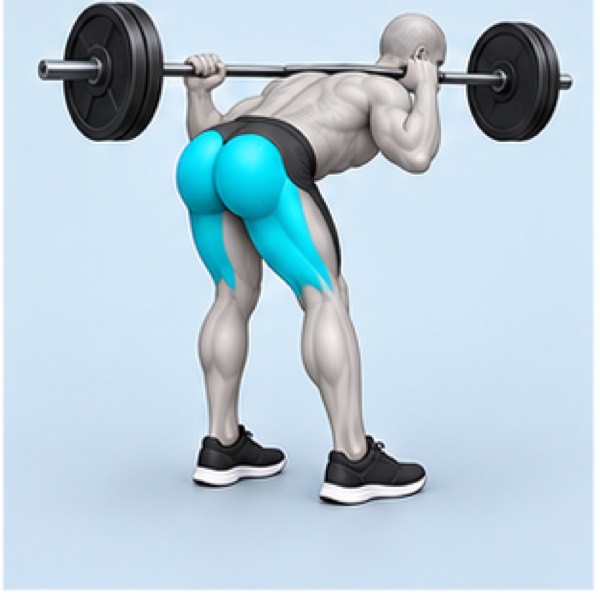
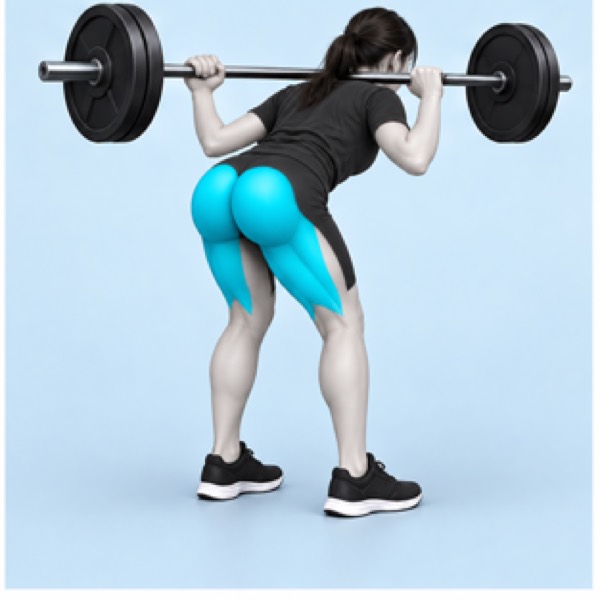
- Primary muscle
- Hamstrings
- Also works
- Glutes, Back
- Equipment
- Barbell
- Pattern
- Hip hinge
Muscles worked
Your hamstrings (biceps femoris, semitendinosus and semimembranosus) lengthen as you bow forward and extend your hips on the way up, along with your glutes and adductor magnus. Your spinal erectors hold an isometric contraction for the whole set, more than in a Romanian deadlift: the bar sits on your shoulders, far from your hips, so the lever is longer. Nearly straight knees put more stretch on your hamstrings; bending them more shifts the work toward your glutes.
How to do it
Setup
- Set the bar in a rack at chest height and place it on your upper traps, as in a high-bar squat, never on your neck.
- Unrack it, take two steps back and set your feet hip-width apart.
- Bend your knees slightly, about 15–20°, and hold that angle for the whole set.
Execution
- Take a big breath, brace your abs and lift your chest to lock your back in place.
- Push your hips back as your torso tips forward; your knees stay put and your weight shifts toward your heels.
- Go down until you feel a strong hamstring stretch or your torso is nearly parallel to the floor, whichever comes first, without rounding your back.
- Drive your hips forward to stand back up and breathe out at the top.
Key cue: Send your hips back and keep a neutral spine.
Common mistakes
- Rounding your back to go lower. Your hamstring flexibility sets the depth: stop just before your lower back loses its natural curve.
- Bending your knees on the way down. It turns into a squat with a forward lean. Set your knee angle at the start and keep it.
- Loading it like a squat. The lever is much longer: start with the empty bar and work up to a weight you can move for 8–12 controlled reps.
- Looking up at the ceiling. It cranks your neck back. Look at the floor a few feet ahead and keep your head in line with your spine.
Variations
- Seated good morning: Sitting on a bench with your legs apart. Your hamstrings barely stretch, so the work shifts to your spinal erectors and glutes.
- Banded good morning: Stand on a band and loop it over your upper back. Good for learning the movement or training at home; tension is highest at the top and lowest at the bottom.
- Safety squat bar: The front handles make the bar easier to hold if your shoulder mobility is limited.
Sets and reps
It works best with moderate weight for 8–12 controlled reps, not for testing your max. To build muscle and strength: 6–12 reps, 3–4 sets. When you complete the range on every set, add a little weight. That's double progression.
Alternatives
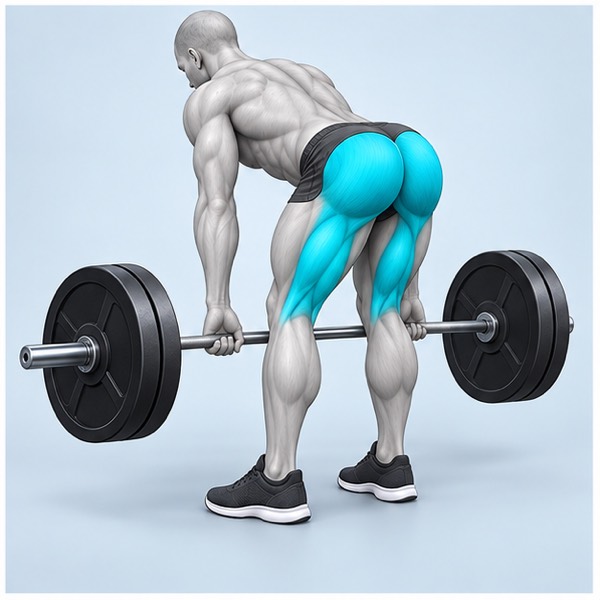 Romanian deadliftBarbell
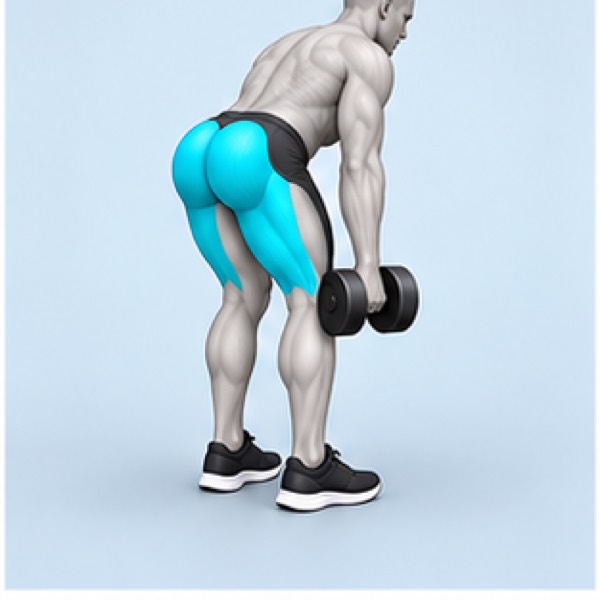 Dumbbell Romanian deadliftDumbbells
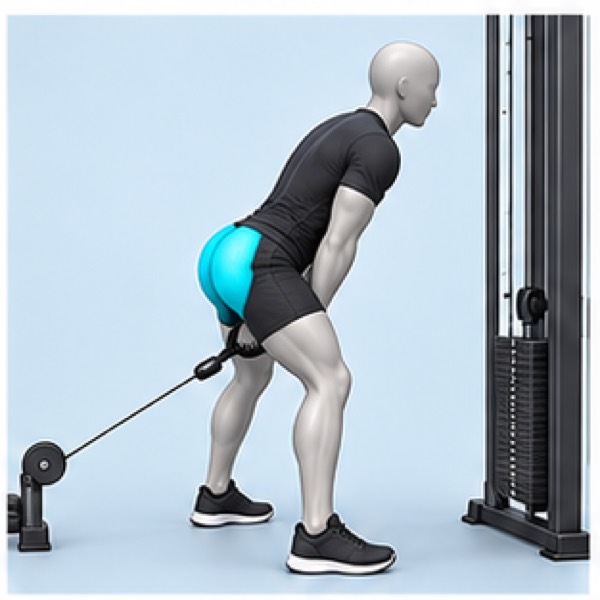 Cable pull-throughCable
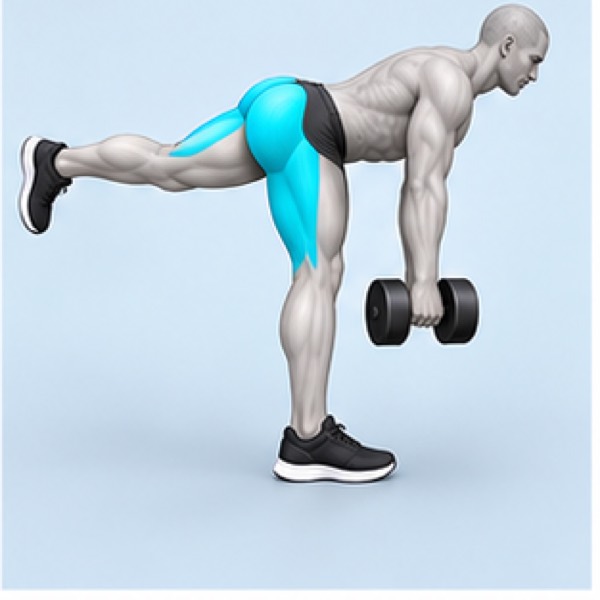 Single-leg Romanian deadliftDumbbells
Frequently asked questions
What muscles does the good morning work?
Mainly your hamstrings and glutes, with help from your adductor magnus. Your spinal erectors work hard the whole set to keep your back flat with the bar on your shoulders.
Good morning vs Romanian deadlift: which is better?
They train the same muscles. In the Romanian deadlift the weight hangs from your arms close to your hips, so you can lift more. In the good morning the bar sits on your back and the lever is longer: you use less weight and your lower back works harder.
Are good mornings bad for your back?
Not with moderate weight and a neutral spine; done that way they strengthen your spinal erectors. The risk comes from heavy loads and a rounded back. If your lower back bothers you, shorten the range or switch to the Romanian deadlift, which has a shorter lever.