 Zerolimits
Hammer curl
The hammer curl is a dumbbell curl with your palms facing each other that works your biceps, your brachialis, and the brachioradialis in your forearm. The neutral grip, like holding a hammer, spreads the work across all three and is usually easier on the wrists and elbows than a regular curl.
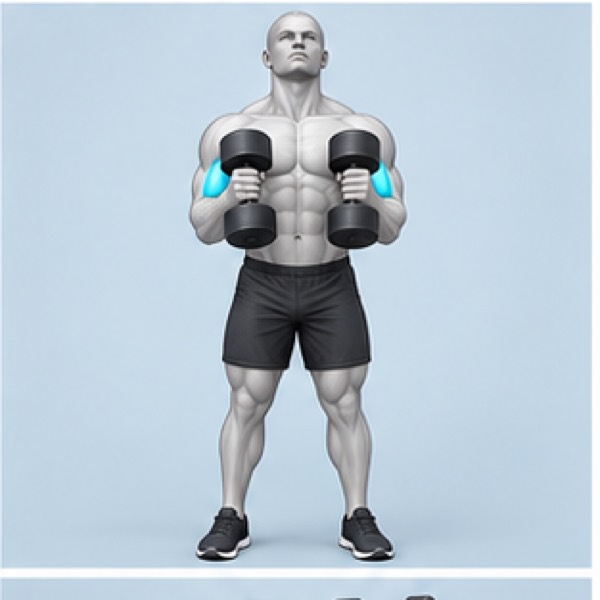
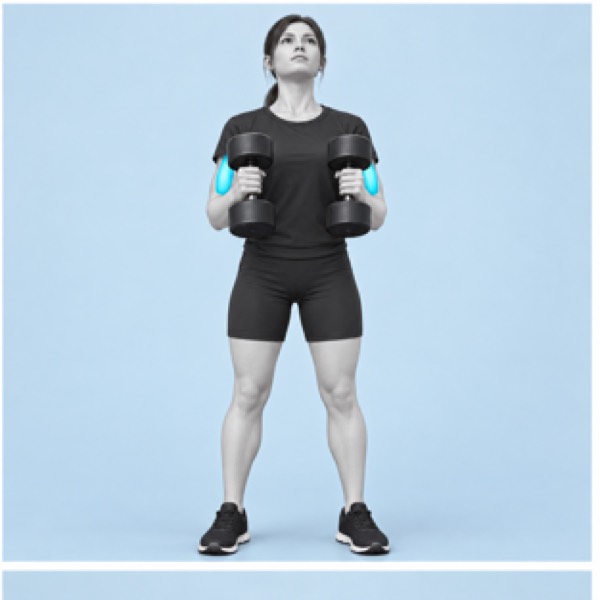
- Primary muscle
- Biceps
- Also works
- —
- Equipment
- Dumbbells
- Pattern
- Elbow flexion
Muscles worked
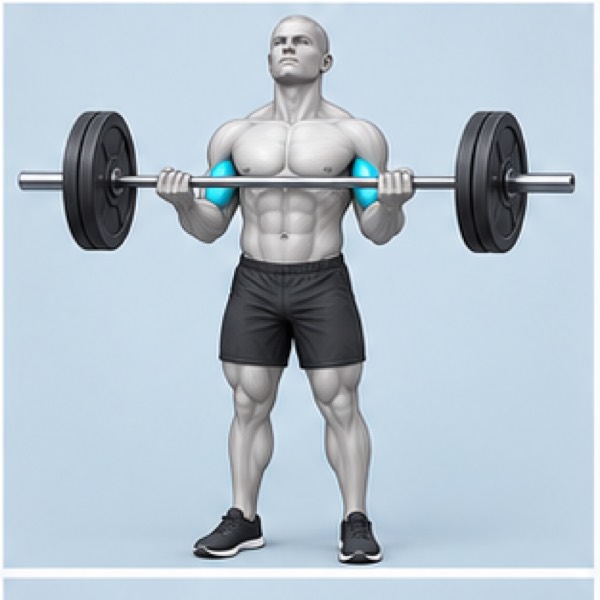
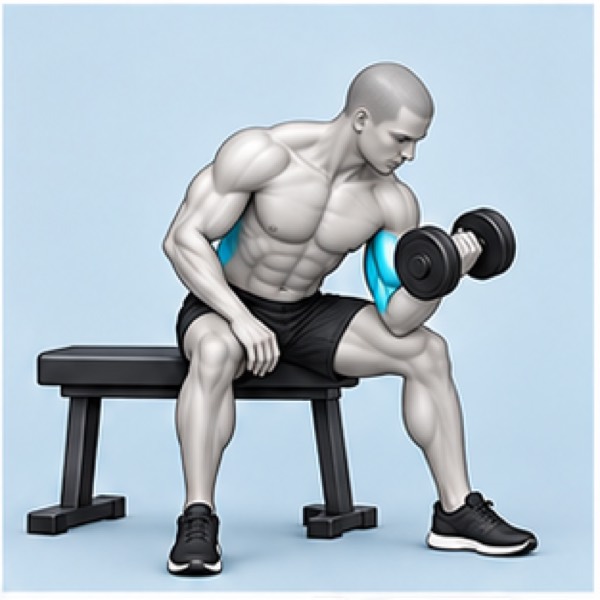
It trains all three elbow flexors. The brachialis, which sits under the biceps, works with any grip; as it grows, it pushes the biceps out and adds thickness to your arm. The brachioradialis, the big muscle at the top of your forearm, is strongest with a neutral grip. Your biceps brachii still works, though a bit less than in a palms-up curl, because your wrist doesn't rotate.
How to do it
- Stand with a dumbbell in each hand at your sides, palms facing your body.
- Curl the dumbbell up by bending your elbow, without rotating your wrist, until your thumb is near your shoulder.
- Keep your elbow pinned to your side and your wrist straight all the way up.
- Lower over 2–3 seconds until your arm is fully straight.
Key cue: Keep your palms facing each other the whole rep: don't rotate your wrist.
Common mistakes
- Swinging your torso to move heavy dumbbells. You can use more weight on hammer curls than regular curls, which makes cheating tempting. If your body moves, go lighter.
- Letting your wrist bend. With heavy dumbbells your wrist gives way backward or to the side. Squeeze the handle hard and keep it in line with your forearm.
- Bringing your elbow forward at the top. Your shoulder ends up lifting the weight. Stop when your forearm is vertical.
- Dropping the dumbbell. Lowering without control throws away half the work. Count 2–3 seconds on the way down.
Variations
- Cross-body hammer curl: Curl the dumbbell diagonally toward the opposite shoulder. Many lifters find it more comfortable and easier to keep the elbow still.
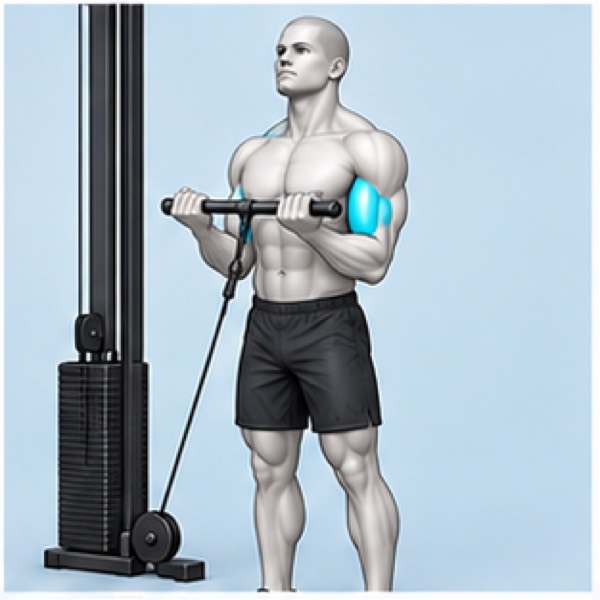
- Rope cable hammer curl: A rope on the low pulley. It keeps tension at the top and lets you add load one plate at a time.
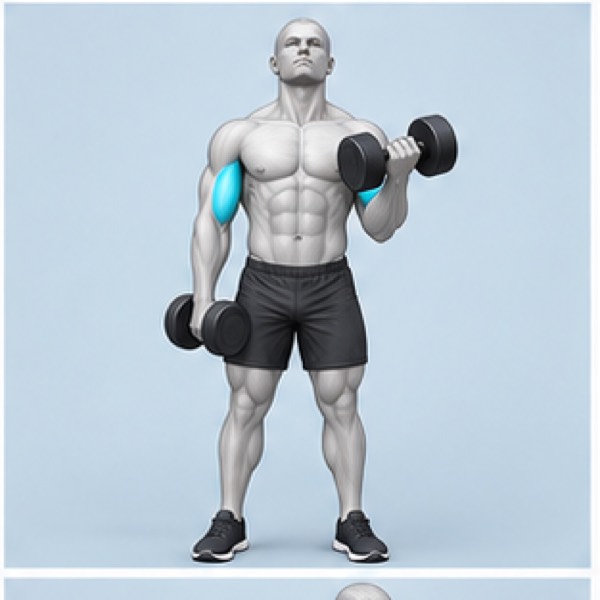
- Alternating hammer curl: One arm at a time. You can focus on each side, and it's easier not to swing with heavy dumbbells.
Sets and reps
8–15 reps works well; the neutral grip usually lets you use a bit more weight than a regular curl. To build muscle and strength: 10–15 reps, 2–4 sets. When you complete the range on every set, add a little weight. That's double progression.
Alternatives
Frequently asked questions
What muscles does the hammer curl work?
It works the brachialis, the brachioradialis in your forearm, and the biceps brachii. Compared with a regular curl, the brachioradialis does more and the biceps a bit less.
Hammer curl vs bicep curl: which is better?
The regular palms-up curl loads your biceps more. The hammer curl shifts more work to the brachialis and forearm and lets you lift a bit heavier. For well-rounded arms, do both.
Do hammer curls make your arms bigger?
They help. The brachialis sits under the biceps and the brachioradialis at the top of your forearm; as both grow, your arm looks thicker, especially from the side.