 Zerolimits
Dumbbell curl
The dumbbell curl is a standing curl with a dumbbell in each hand that mainly works your biceps brachii. Each arm works on its own and you can rotate your wrist as you lift, which a barbell doesn't allow. You can curl both arms together or alternate, and it's often called the dumbbell bicep curl.
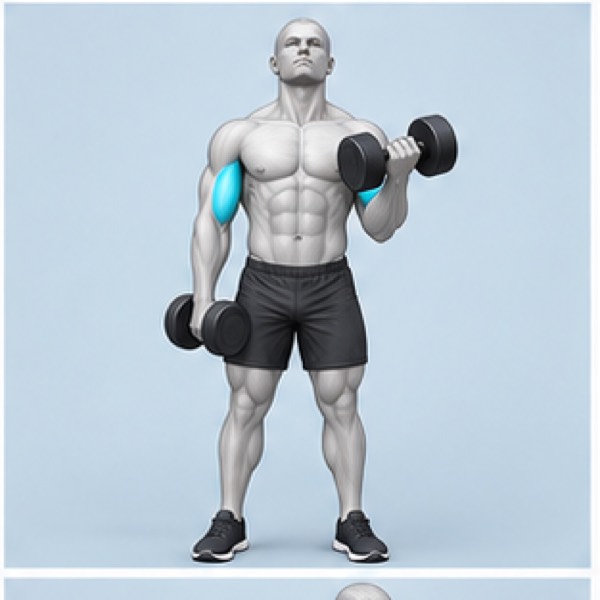
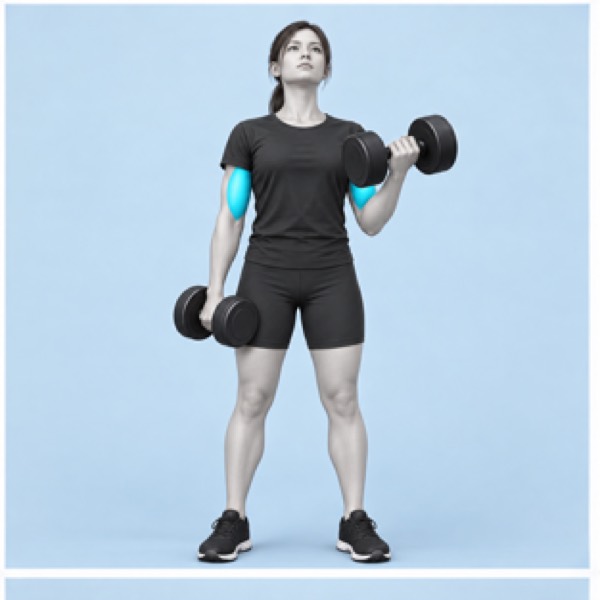
- Primary muscle
- Biceps
- Also works
- —
- Equipment
- Dumbbells
- Pattern
- Elbow flexion
Muscles worked
Your biceps brachii has two jobs: bending your elbow and turning your palm up, called supination. Start with your palms facing your body and rotate them up as you curl, and you use both. The brachialis works underneath with any grip, and the brachioradialis helps, more so if your palms stay facing each other. Seated or standing, the muscles are the same; seated makes it harder to swing.
How to do it
- Stand with a dumbbell in each hand, arms straight at your sides, palms facing your body.
- Curl the dumbbell by bending your elbow, rotating your palm up until it faces your shoulder.
- Stop when your forearm is close to vertical, without moving your elbow forward, and squeeze for a moment.
- Lower over 2–3 seconds, undoing the rotation, until your arm is fully straight.
- If you alternate, don't start the other arm until the first one is all the way down.
Key cue: Rotate your palm up as you curl: that's half of what your biceps does.
Common mistakes
- Swinging your body for momentum. If your torso moves, your back and legs are doing the set. Drop the weight or sit on a bench with back support.
- Not rotating your wrist. Curling with your palm facing your body turns it into a hammer curl. If you're after the biceps, turn your palm up.
- Rushing alternating curls. Going fast, one arm starts before the other is down and you end up swinging. Make every rep full and controlled.
- Cutting the range short at the bottom. Straighten your arm fully on every rep: the last few inches are where your biceps are most stretched.
Variations
- Alternating dumbbell curl: One arm at a time. You can focus on each side, and the other arm gets a short rest, so you squeeze out a rep or two more.
- Hammer curl: Palms facing each other the whole rep. More work for the brachialis and brachioradialis.
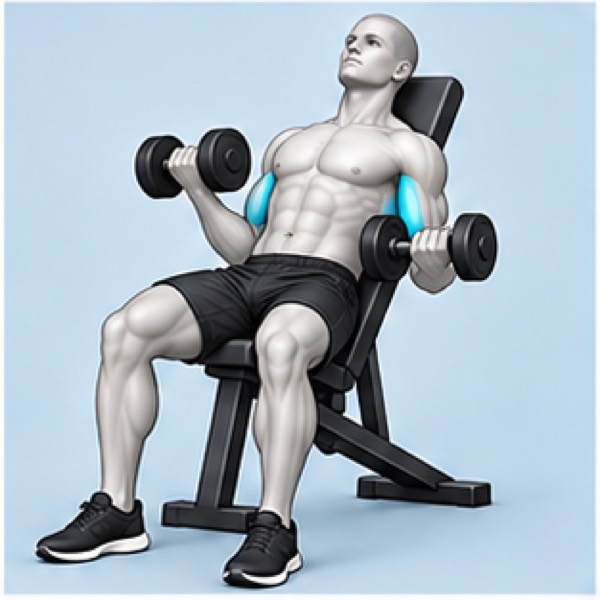
- Incline dumbbell curl: Seated on an incline bench with your arms behind your body. Your biceps work from a deeper stretch.
Sets and reps
10–15 reps works well; when you alternate, count reps per arm, not the total. To build muscle and strength: 10–15 reps, 2–4 sets. When you complete the range on every set, add a little weight. That's double progression.
Alternatives
Frequently asked questions
What muscles does the dumbbell curl work?
Mainly your biceps brachii. The brachialis and brachioradialis assist; rotating your palm up as you curl makes your biceps work harder.
Alternating or both arms at once?
Both at once makes the set harder and shorter, since neither arm rests. Alternating lets you focus on each side and usually handle a bit more weight. For muscle growth both work if you finish close to failure.
Standing or seated dumbbell curls?
Seated makes it harder to cheat with your body. Standing lets you use slightly more weight. If you tend to swing, sit on a bench with back support.