 Zerolimits
Inverted row
The inverted row is a bodyweight row: you hang face up from a bar fixed at about waist height and pull your chest to it. It's also called the Australian pull-up or bodyweight row. It works your lats, rhomboids and middle traps, with help from your biceps and rear delts.
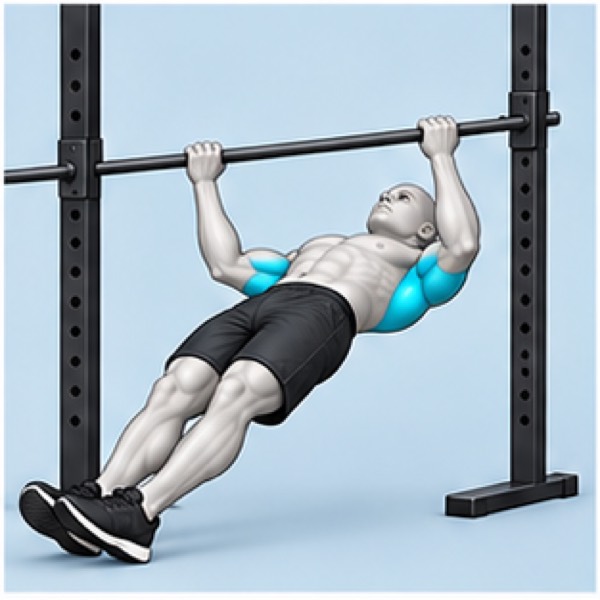
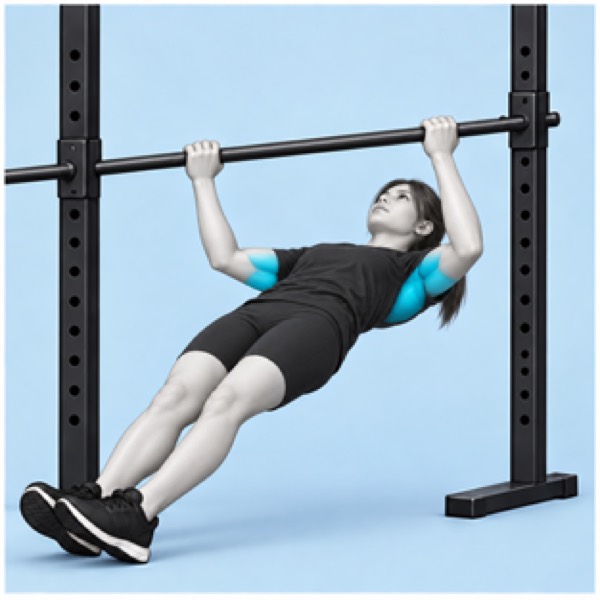
- Primary muscle
- Back
- Also works
- Biceps
- Equipment
- Bodyweight
- Pattern
- Horizontal pull
Muscles worked
Your lats and teres major pull your arms back, and your rhomboids and middle traps squeeze your shoulder blades together at the top. Your rear delts and biceps help you pull. Your glutes, abs and lower back hold your body straight like a plank. A wide overhand grip pulling to your chest puts more work on your upper back; a shoulder-width underhand grip shifts it toward your lats and biceps.
How to do it
Setup
- Set a bar in a squat rack or Smith machine at about waist height.
- Lie underneath and grab it overhand, slightly wider than your shoulders, arms straight.
- Dig in your heels and lift your hips until your body forms a straight line from shoulders to ankles.
Execution
- Squeeze your glutes and abs and pull your shoulders down, away from your ears.
- Row by driving your elbows back at about 45° from your body until your chest touches or nearly touches the bar.
- Squeeze your shoulder blades together for 1 second, body still straight.
- Lower over 2 seconds until your arms are fully straight, without letting your hips sag.
Key cue: Bring your elbows back without shrugging your shoulders.
Common mistakes
- Letting your hips sag. When your body folds, the range shrinks and your lower back takes over: squeeze your glutes, or bend your knees to make it easier.
- Reaching for the bar with your chin. Your chest should touch the bar, not your face; if you can't get there, raise the bar a couple of notches.
- Doing half reps. Straighten your arms fully at the bottom and reach the bar on every rep; if you can't, stand more upright.
Variations
- Bent knees: Feet flat on the floor and knees at about 90°. Your legs carry part of your weight, so it's easier. A good place to start.
- Feet on a bench: With your heels up on a bench, your body is horizontal and you lift more of your own weight. The next step once you can do 15 in a row.
- Ring row: On gymnastic rings or a suspension trainer, your hands rotate freely and the grip is less stable.
Sets and reps
Adjust the bar height to land in the range: if you get more than 12, lower it or put your feet up; if you can't reach 6, raise it. To build muscle and strength: 6–12 reps, 3–4 sets. When you complete the range on every set, add a little weight. That's double progression.
Alternatives
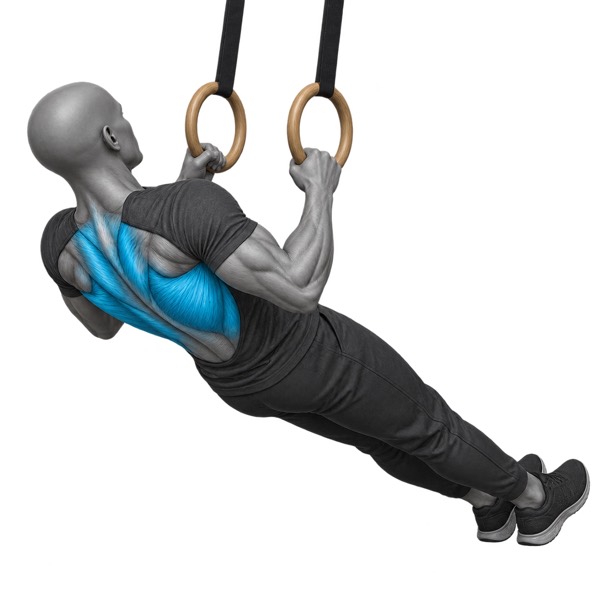
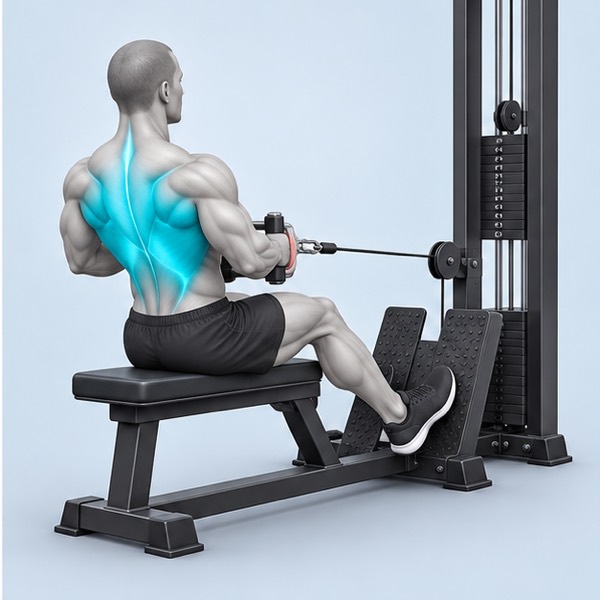
Frequently asked questions
What muscles does the inverted row work?
Your lats, rhomboids and middle traps, with help from your biceps and rear delts. Your glutes and abs work to keep your body in a straight line.
Do inverted rows help you do pull-ups?
Yes. They strengthen many of the muscles that drive a pull-up, with a load you can adjust. Pair them with assisted pull-ups or slow negatives to work toward your first full pull-up.
How do you make inverted rows harder?
Lower the bar, put your feet up on a bench or wear a weight vest. The more horizontal your body, the more of your weight you lift. A 2-second pause at the top also makes it harder without changing the setup.