 Zerolimits
Seated cable row
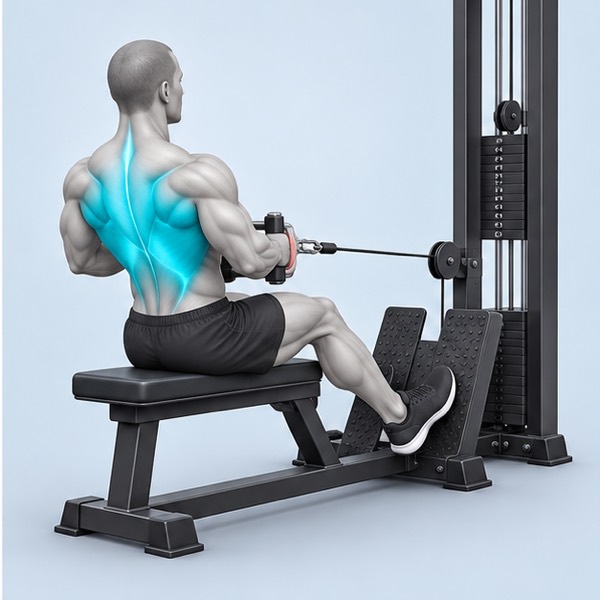
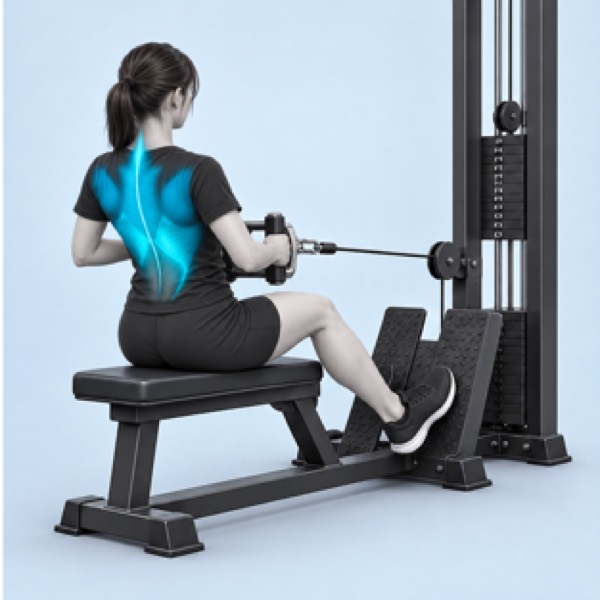
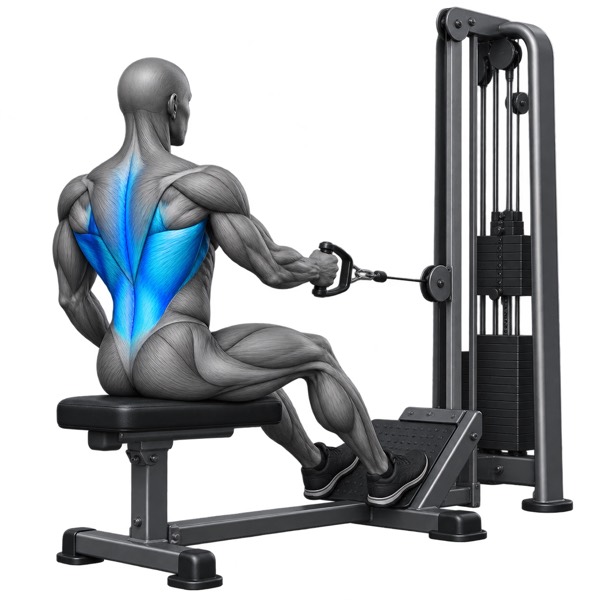
The seated cable row is a low-pulley row: you sit with your feet on the platform and pull a handle to your stomach. It works your lats, rhomboids and middle traps, with help from your biceps and rear delts, and the cable keeps tension on your back through the whole range of motion, even with your arms straight.
- Primary muscle
- Back
- Also works
- Biceps
- Equipment
- Cable
- Pattern
- Horizontal pull
Muscles worked
Your lats and teres major pull your arms back, and your rhomboids and middle traps squeeze your shoulder blades together at the end. Your biceps and rear delts help you pull, and your spinal erectors keep your torso upright. A V-handle with tucked elbows pulling to your belly button hits your lats more; a wide overhand bar pulling to your lower chest shifts the work to your upper back and rear delts.
How to do it
Setup
- Attach a V-handle to the low pulley and sit with your feet on the platform, knees slightly bent.
- Grab the handle and sit back until your torso is upright, arms straight and the weight lifted off the stack.
Execution
- Lift your chest and pull your shoulders down before you row.
- Row by driving your elbows back, close to your body, until the handle touches your upper abs.
- Hold for 1 second, squeezing your shoulder blades, with your torso still.
- Return over 2–3 seconds until your arms are straight and let your shoulders reach forward a little, without rounding your lower back.
Key cue: Bring your elbows back without shrugging your shoulders.
Common mistakes
- Rocking back and forth. If you lean back to finish every rep, momentum does the work: lower the weight and keep your torso movement under about 10°.
- Rounding your lower back on the stretch. Your shoulders can reach forward, but your lower back stays neutral.
- Locking your knees. With straight legs, your hamstrings pull on your pelvis and it's hard to sit tall; keep a slight bend.
- Pulling to your chest with high elbows. That brings in your traps and shrugs your shoulders; pull to your stomach.
Variations
- Wide overhand bar: Flared elbows, pulling to your lower chest. More upper back and rear delts.
- Single-arm cable row: With a one-hand handle. A longer range of motion and each side works on its own.
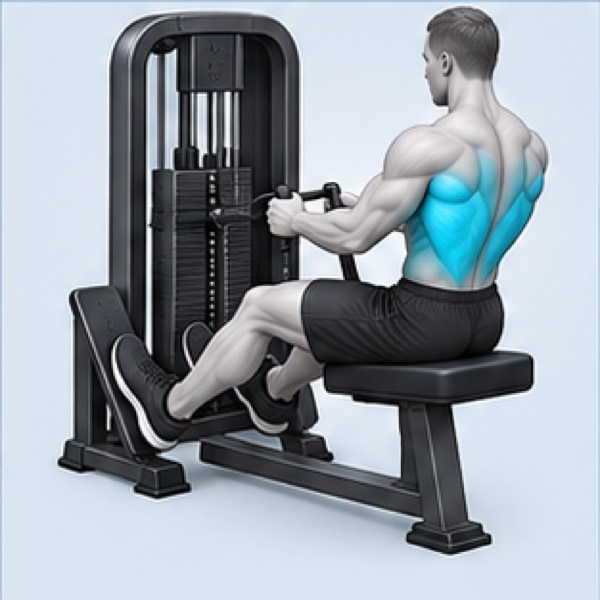
- Machine row: Your chest rests on a pad, so your torso can't move.
Sets and reps
It works well for 8–12 reps, with your torso still on the last reps too. To build muscle and strength: 6–12 reps, 3–4 sets. When you complete the range on every set, add a little weight. That's double progression.
Alternatives
Frequently asked questions
What muscles does the seated cable row work?
Mainly your lats, rhomboids and middle traps. Your biceps and rear delts assist, and your lower back works to keep your torso upright.
Seated cable row vs machine row: which is better?
The cable lets your shoulders move more freely and keeps tension on your back with your arms straight. A chest-supported machine locks your body in place and takes your lower back out of it. Both build your back.
Should you lean forward on seated cable rows?
A little. Letting your shoulders reach forward on the stretch gives your lats more range. What you want to avoid is rocking or rounding your lower back: keep your torso movement to about 10° at most.
V-handle or wide bar for seated rows?
The V-handle keeps your elbows tucked and loads your lats more; a wide bar flares them and moves the work to your upper back. If you only use one, the V-handle is the usual choice.