 Zerolimits
Neutral-grip lat pulldown
The neutral-grip lat pulldown is a high-cable pulldown with your palms facing each other, on a bar with parallel handles or a close-grip V-handle. It mainly targets your lats and teres major, with help from your biceps, brachialis and mid-back. Many people find it the most shoulder-friendly pulldown, and it usually lets you load a bit more than an overhand grip.
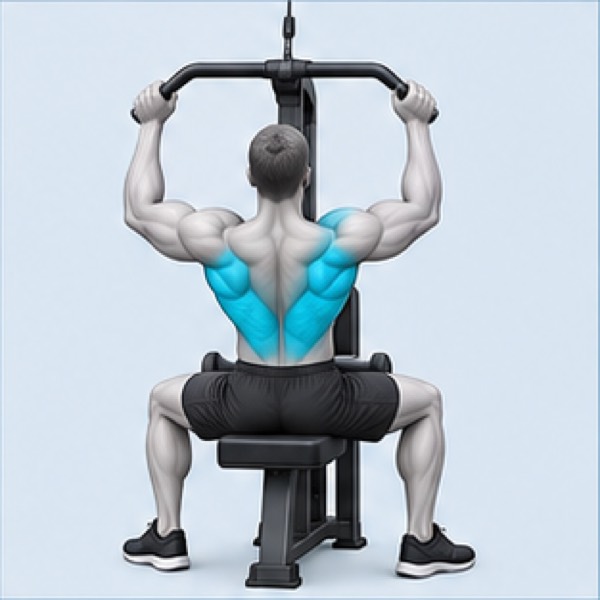
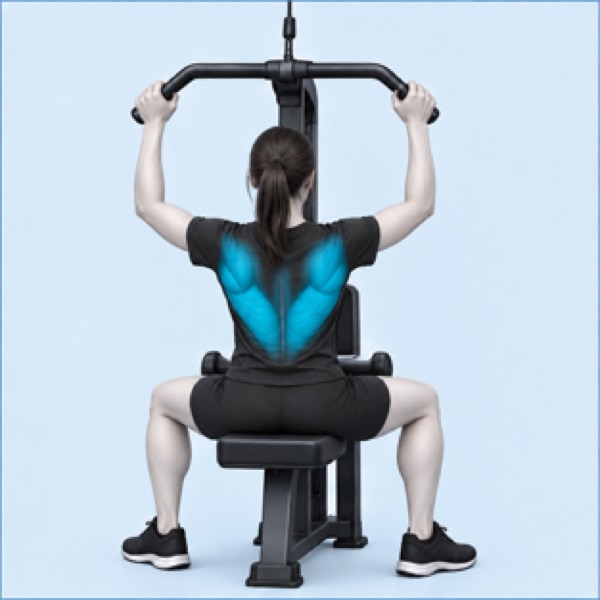
- Primary muscle
- Back
- Also works
- Biceps
- Equipment
- Cable
- Pattern
- Vertical pull
Muscles worked
Your lats and teres major drive your elbows down toward your hips. With this grip your elbows travel down in front of your torso, close to your body, and your lats work through a long range. Your biceps, brachialis and brachioradialis bend your elbows; with your palms facing each other, the brachioradialis works harder than with other grips. Your lower traps and rhomboids pull your shoulder blades down and together. Wider handles shift a bit more to your upper back; a V-handle, to your lats and arms.
How to do it
Setup
- Attach a parallel-grip bar or a V-handle to the high pulley.
- Adjust the pad to lock your thighs down and sit with your feet flat on the floor.
- Grab the handles with your palms facing each other and your arms straight.
Execution
- Lean back about 15° and pull your shoulders down before you bend your elbows.
- Pull by driving your elbows down toward your hips, close to your body, until your hands reach your upper chest.
- Pause for a moment at the bottom with your chest up and your shoulders back, not rolled forward.
- Let the handles rise over 2–3 seconds until your arms are fully straight and you feel your lats stretch.
Key cue: Pull toward your chest with a stable torso.
Common mistakes
- Pulling with your arms. If you feel your forearms and biceps more than your back, set your shoulders down first and think about driving your elbows into your pockets.
- Leaning back to move more weight. Past about 30°, the pulldown becomes a row; if you have to swing, it's too heavy.
- Pulling the V-handle down to your stomach. Past your upper chest, your shoulders roll forward and your back rounds; stop there.
- Cutting the top short. Straighten your arms fully every rep; the lat stretch counts too.
Variations
- V-handle pulldown: Hands close together and elbows tight. More range and more arm work; your go-to if there's no parallel-grip bar.
- Wide neutral-grip bar: Hands at shoulder width or a little wider. Shifts a bit more of the work to your upper back.
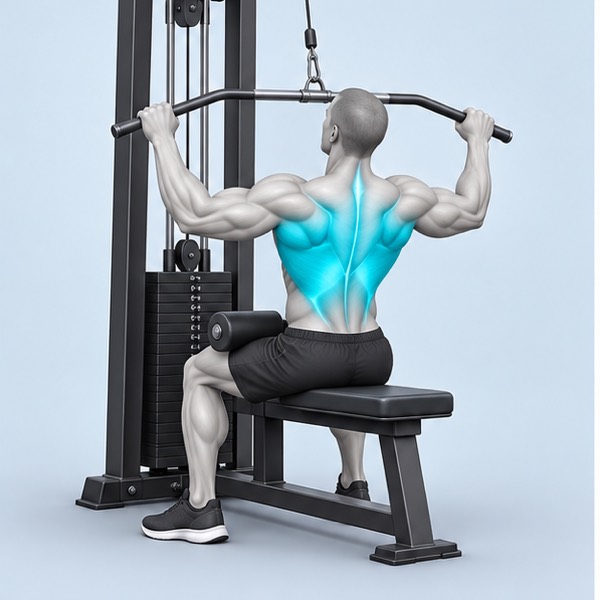
- Overhand lat pulldown: The classic version, with a straight bar and palms facing away.
Sets and reps
It works well for 8–12 reps; since it usually lets you load heavier, add weight in small jumps and keep your torso still. To build muscle and strength: 6–12 reps, 3–4 sets. When you complete the range on every set, add a little weight. That's double progression.
Alternatives
Frequently asked questions
What muscles does the neutral-grip lat pulldown work?
It mainly targets your lats and teres major. Your biceps, brachialis and brachioradialis assist, the last one more than with other grips, along with your lower traps and rhomboids.
Neutral grip vs overhand lat pulldown: which is better?
Both train your lats. The neutral grip is usually easier on your shoulders and wrists and lets you load a bit more; a wide overhand grip shifts a little more work to your upper back. You can use both in the same week.
Wide neutral grip or close V-handle?
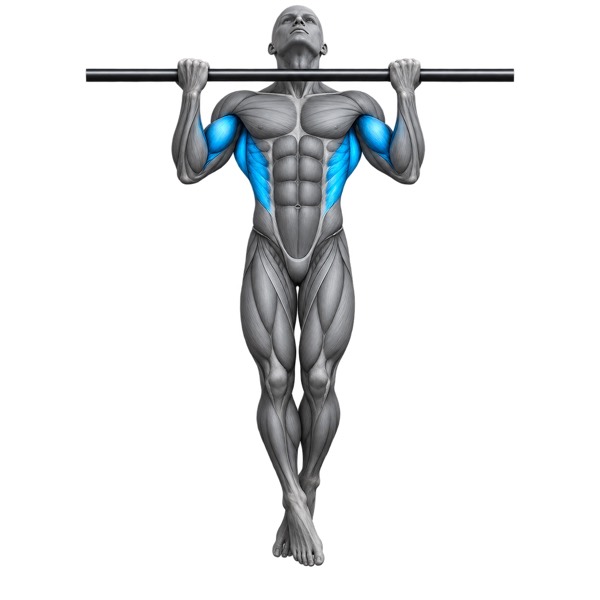
The V-handle gives you more range and brings in more arm. Wide neutral handles put a bit more on your upper back and feel closer to a neutral-grip pull-up. Use whichever lets you feel your back working the most.