 Zerolimits
Lat pulldown
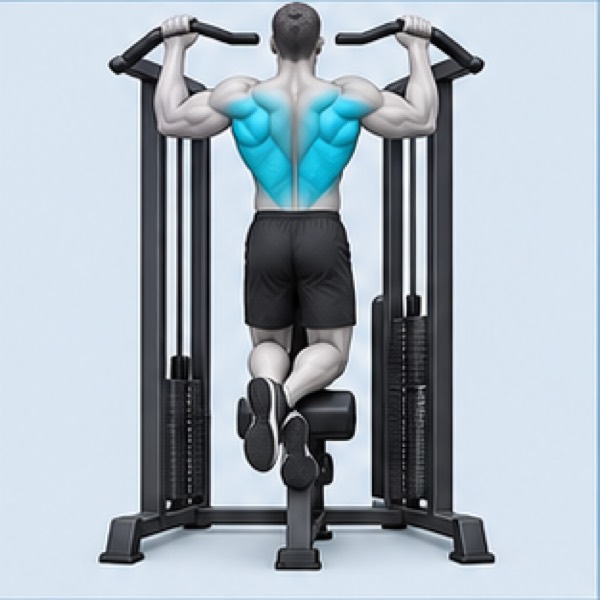
The lat pulldown is a high-cable exercise where you sit with your thighs locked under a pad and pull a bar down to your upper chest. It mainly works your lats and teres major, with help from your biceps and mid-back. It's the machine version of the pull-up, and you can set it for any strength level.
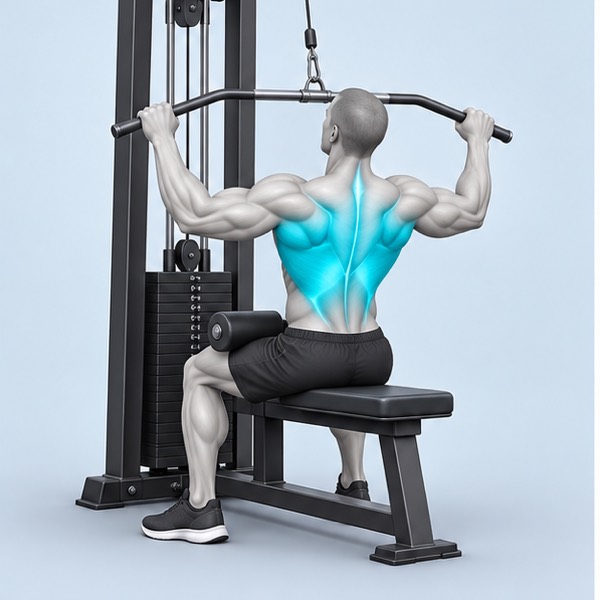
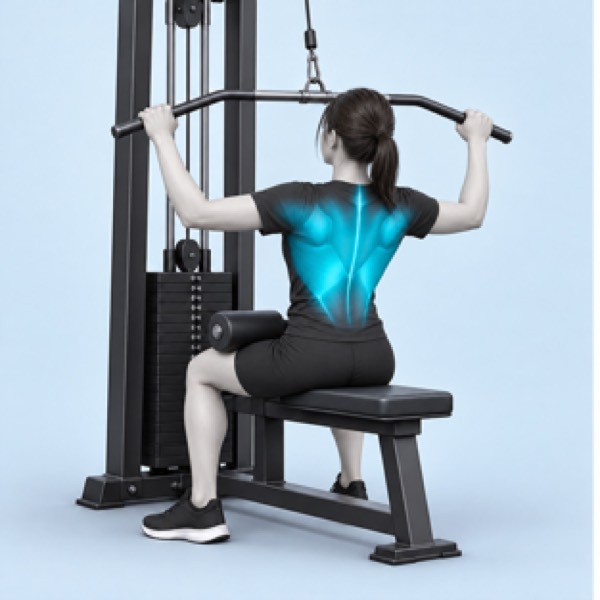
- Primary muscle
- Back
- Also works
- Biceps
- Equipment
- Cable
- Pattern
- Vertical pull
Muscles worked
Your lats and teres major pull your arms down and in toward your body: they do the pulling. Your lower traps and rhomboids pull your shoulder blades down and together, and your biceps, brachialis and brachioradialis bend your elbows. A wide overhand grip brings your elbows down at your sides and hits more upper back; a close neutral or underhand grip brings your elbows down in front, adds more biceps and gives a slightly longer range.
How to do it
Setup
- Adjust the pad so it locks your thighs down with your feet flat on the floor.
- Grab the bar overhand, hands about one and a half times shoulder width, and sit down with your arms straight.
Execution
- Lean back about 10–20°, lift your chest and pull your shoulders down before you bend your elbows.
- Pull by driving your elbows down toward your ribs until the bar reaches your upper chest.
- Pause for a moment at the bottom without leaning back further.
- Let the bar rise over 2–3 seconds until your arms are straight and you feel your lats stretch.
Key cue: Pull toward your chest with a stable torso.
Common mistakes
- Leaning way back to get the bar down. Past about 30°, the pulldown turns into a row; keep your torso nearly fixed and lower the weight if you have to swing.
- Pulling the bar behind your neck. It forces your head forward and strains your shoulder without working your lats any harder; always pull in front.
- Gripping the curved ends of the bar. With your hands that wide the range shrinks; move them in a bit.
- Not straightening your arms at the top. Let the bar rise until your elbows are straight; otherwise you miss the part where your lats stretch.
Variations
- Neutral-grip lat pulldown: Palms facing each other, on a wide bar with parallel handles or a V-handle. Usually the most comfortable for your shoulders.
- Underhand grip: Palms facing you, shoulder-width apart. More biceps, and most people can load a bit heavier.
- Single-arm pulldown: With a D-handle. A longer range of motion and each side works on its own.
Sets and reps
It works well for 8–12 reps; if you have to swing to finish, the weight is too heavy for the range. To build muscle and strength: 6–12 reps, 3–4 sets. When you complete the range on every set, add a little weight. That's double progression.
Alternatives
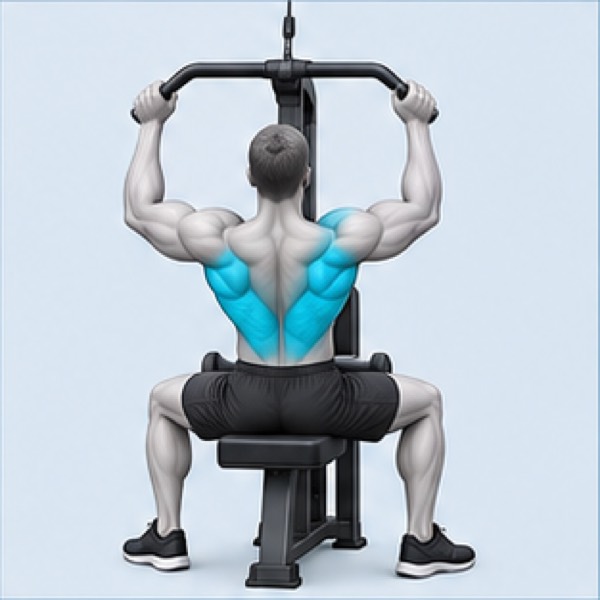
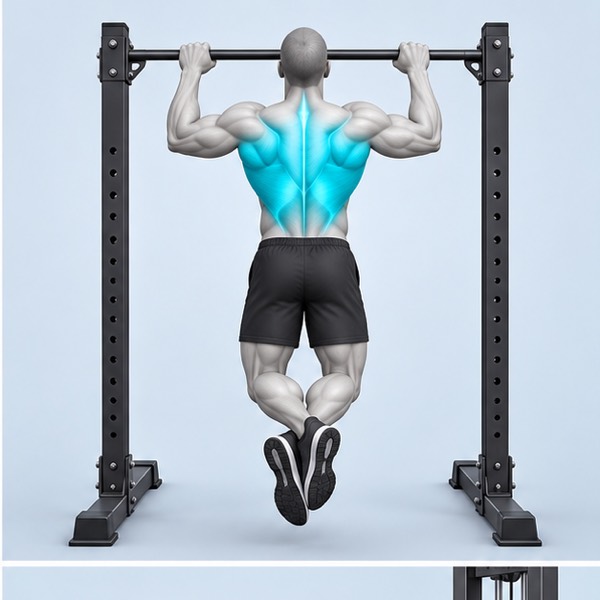
Frequently asked questions
What muscles does the lat pulldown work?
Mainly your lats and teres major. Your biceps, lower traps, rhomboids and rear delts assist.
Lat pulldown vs pull-up: which is better?
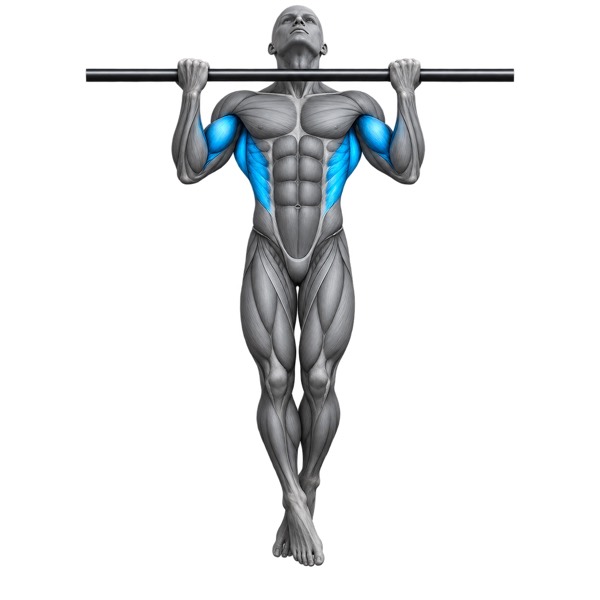
They train the same muscles. Pull-ups move your bodyweight and demand more stability; the pulldown lets you pick the exact load and hit 8–12 reps even if you can't do pull-ups yet. If you can, use both.
Wide or close grip lat pulldown?
Both train your lats. A wide grip shifts a bit more work to your upper back; a close grip, especially neutral or underhand, gives more range and lets you load heavier. Use whichever feels better and rotate them.
Are behind-the-neck pulldowns bad?
They add nothing the front pulldown doesn't give you. You have to push your head forward and strain your shoulder, with no extra lat work. Pulling to your chest trains the same muscles with less risk.