 Zerolimits
Rear delt fly
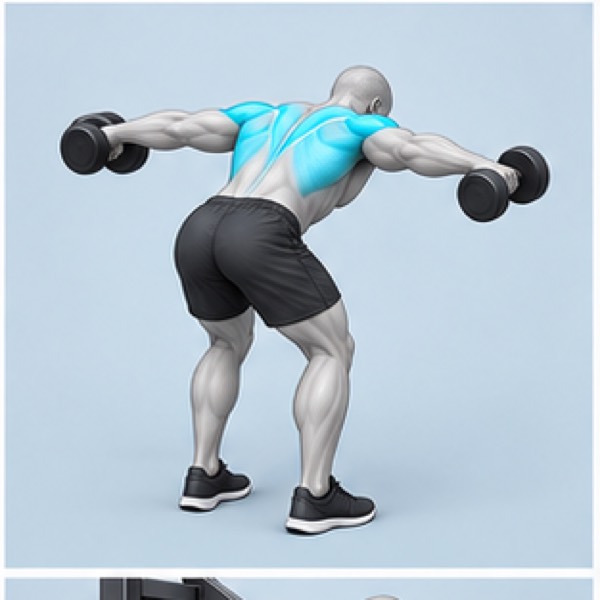
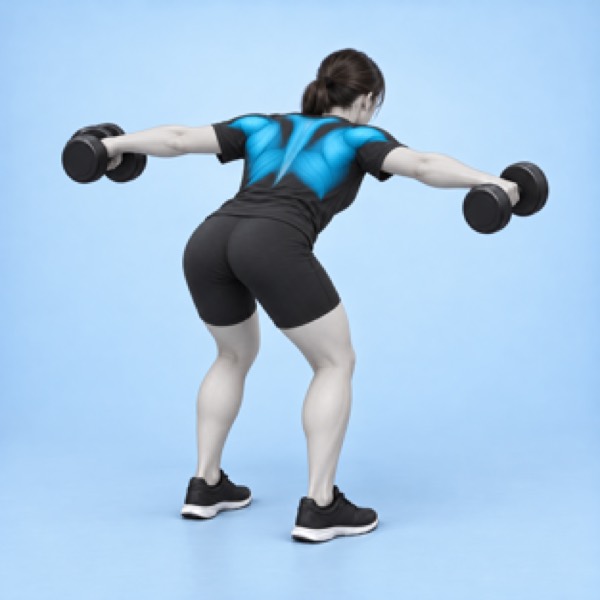
The rear delt fly, also called the bent-over reverse fly or rear lateral raise, is an isolation exercise where you hinge forward and raise dumbbells out to your sides. It mainly works your rear delts, with help from your middle traps and rhomboids.
- Primary muscle
- Shoulders
- Also works
- Back
- Equipment
- Dumbbells
- Pattern
- Shoulder isolation
Muscles worked
Your rear delts pull your arms back and out and do most of the work. Your middle traps and rhomboids squeeze your shoulder blades together near the top, and your infraspinatus and teres minor help stabilize the shoulder. With your arms out at about 90° from your body and your shoulder blades not fully pinched, your rear delts work hardest; bring your arms closer to your sides and squeeze your back, and your traps and rhomboids take more of it.
How to do it
Setup
- Sit on the end of a bench with a dumbbell in each hand, or stand with your knees slightly bent.
- Hinge at the hips until your torso is nearly parallel to the floor, back neutral.
- Let the dumbbells hang under your chest, palms facing each other and elbows slightly bent.
Execution
- Sweep your arms out to the sides in an arc, leading with your elbows and keeping their angle fixed.
- Raise them until your arms line up with your torso, at shoulder height.
- Hold for a moment at the top without lifting your torso.
- Lower over 2–3 seconds until the dumbbells are back under your chest.
Key cue: Reach your arms out wide, as if you were trying to touch the walls.
Common mistakes
- Lifting your torso to raise the dumbbells. Momentum does the work. If you can't hold the hinge, rest your chest on an incline bench.
- Bending your elbows and rowing. Your back and biceps join in and your rear delts lose tension. Keep your elbows nearly straight and fixed.
- Going too heavy. The rear delt is a small muscle: light dumbbells are normal. If you can't reach shoulder height, go lighter.
- Shrugging toward your ears. Keep your neck long and your shoulders down so your upper traps don't take over.
Variations
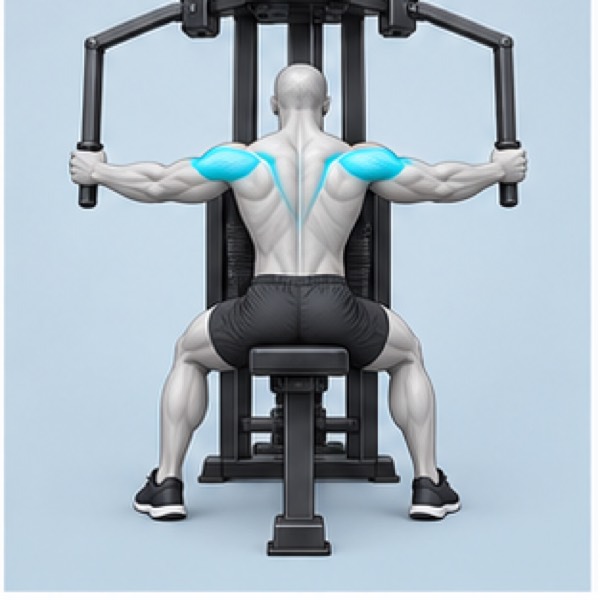
- Reverse pec deck: The machine fixes the path and rests your lower back. Easier to add weight over time.
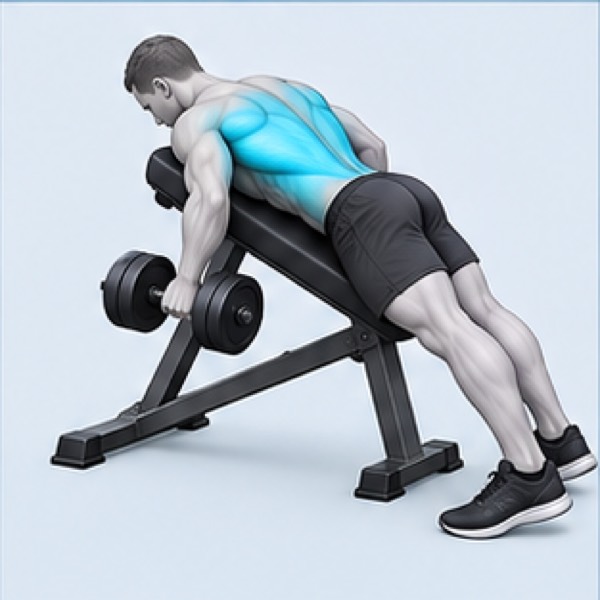
- Chest-supported reverse fly: Lie face down on an incline bench set to about 30–45°. It removes swinging and lower-back fatigue.
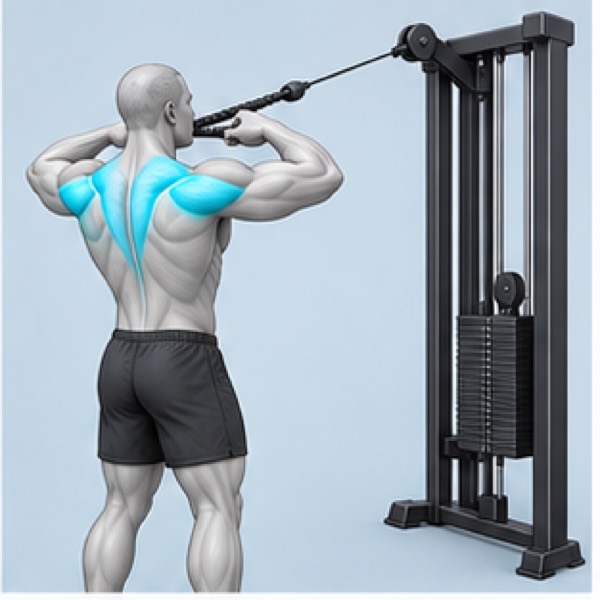
- Cable rear delt fly: With two pulleys at shoulder height and the cables crossed. Constant tension through the whole range.
Sets and reps
It works best with light weight and 12–15 controlled reps, taken close to failure. To build muscle and strength: 10–15 reps, 2–4 sets. When you complete the range on every set, add a little weight. That's double progression.
Alternatives
Frequently asked questions
What muscles does the rear delt fly work?
Mainly your rear delts, the back of your shoulders. Your middle traps and rhomboids help by squeezing your shoulder blades, and your external rotators, the infraspinatus and teres minor, stabilize the joint.
Should you do rear delt flys seated or standing?
They train the same muscles. Seated on the end of a bench, it's easier to hold the hinge without tiring your lower back; standing, it's harder not to swing. If your lower back gets tired, try the chest-supported version.
Dumbbell rear delt fly vs reverse pec deck: which is better?
The machine is more stable, spares your lower back and makes it easier to add weight. Dumbbells need no machine and let you adjust your arm angle. Both build your rear delts.