 Zerolimits
Ring dip
The ring dip is a dip on two hanging gymnastics rings that works your chest, especially the lower part, plus your triceps and front delts. You support yourself with straight arms, lower until your shoulders drop below your elbows and press back up. It's much harder than a dip on parallel bars.
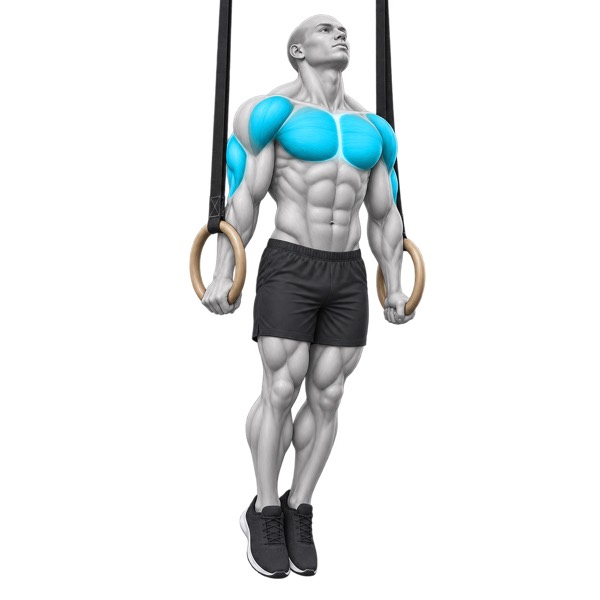
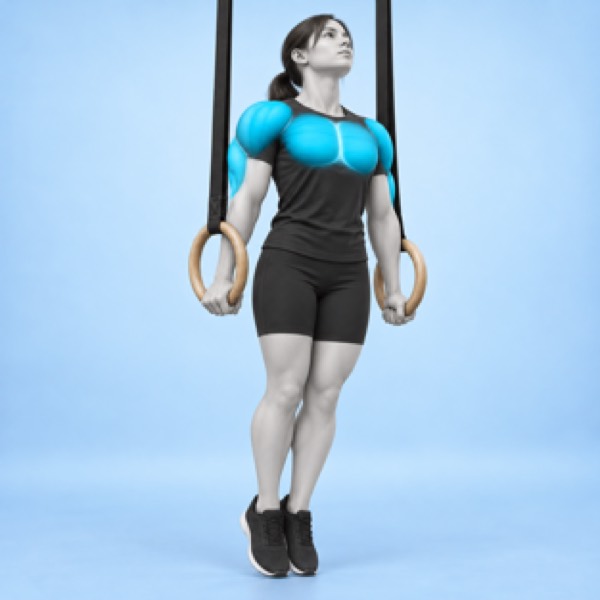
- Primary muscle
- Chest
- Also works
- Shoulders, Triceps
- Equipment
- Functional
- Pattern
- Dip
Muscles worked
Your pec major, especially its lower part, and your triceps drive the press; your front delts work hard at the bottom. What sets ring dips apart from bar dips is instability: the rings want to drift apart and rotate, so your chest and lats work constantly to keep them close to your body, and your rotator cuff stabilizes the shoulder. Leaning your torso forward loads your chest more; staying upright, your triceps.
How to do it
Setup
- Hang the rings at about hip height so you can jump into the support position.
- Jump into support: arms straight, rings tight against your sides and shoulders down, away from your ears.
- Turn the rings slightly out so your thumbs point forward and out, and brace your abs and glutes.
Execution
- Lower over 2–3 seconds, bending your elbows and leaning your torso slightly forward.
- Keep the rings close to your body and your elbows pointing back, without letting them flare.
- Stop when your shoulders are slightly below your elbows.
- Press back up to straight arms and finish by turning the rings out, shoulders down.
Key cue: Rings tight to your body the whole way: if they drift apart, you lose control of your shoulders.
Common mistakes
- Starting without a base. If you can't yet do about 10 clean bar dips or hold a 30-second ring support, build those first.
- Letting the rings drift apart. Your arms swing out to the sides and your shoulders end up in a bad position; squeeze the rings into your sides.
- Dropping too low or too fast. Sinking far below your elbows without control loads the front of your shoulder; lower over 2–3 seconds and stop with your shoulders slightly below your elbows.
- Shrugging in the support. If your shoulders creep up to your ears, they lose stability; push the rings down to keep your shoulders low.
Variations
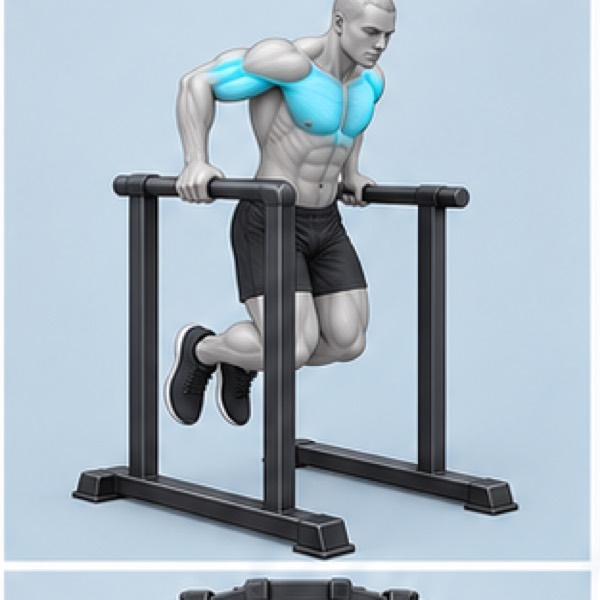
- Dips: Fixed parallel bars remove the instability. They're the step before rings and make it easy to add weight.
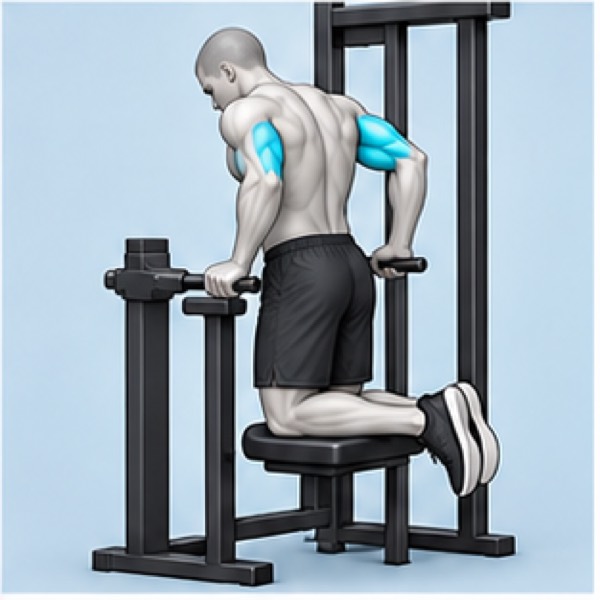
- Assisted dip: On a machine or with a band looped between the rings, so you can practice the full range while you build strength.
- Negatives: Jump into support, lower over 4–5 seconds and jump back up. They help you earn your first full ring dips.
Sets and reps
Start with sets of 3–8 clean reps; once you can do more than 12, add weight with a dip belt. To build muscle and strength: 6–12 reps, 3–4 sets. When you complete the range on every set, add a little weight. That's double progression.
To build a full session, see our chest workout at the gym.
Alternatives
Frequently asked questions
What muscles do ring dips work?
Your chest, especially the lower part, plus your triceps and front delts. Your lats and shoulder stabilizers also work to keep the rings close to your body.
Ring dips vs bar dips: which is better?
Bar dips are easier and better for adding weight. Ring dips demand much more shoulder control and work more stabilizers with just your bodyweight. Most people master bar dips before moving to rings.
What do you need before trying ring dips?
As a benchmark, about 10 clean bar dips and a steady 30-second support hold on the rings. If you're not there yet, practice the support hold and slow negatives.