 Zerolimits
Decline bench press
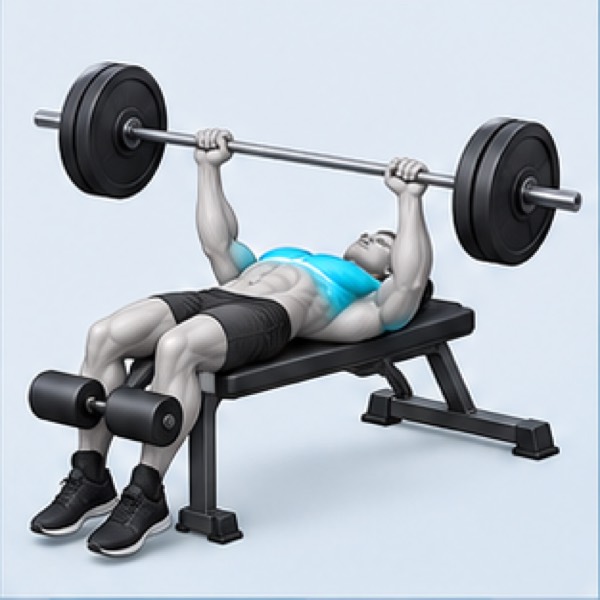
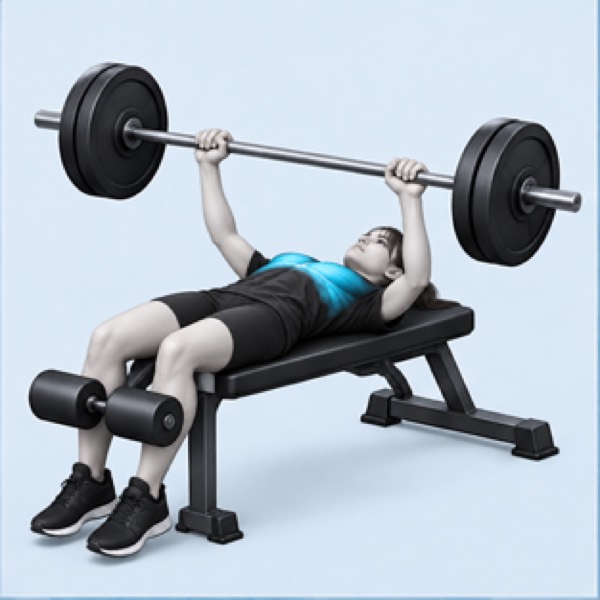
The decline bench press is a barbell press on a downward-tilted bench that mainly works your pecs, with more focus on the lower chest, plus your triceps. Your head sits lower than your hips, the range of motion is shorter than on a flat bench, and your front delts do less.
- Primary muscle
- Chest
- Also works
- Shoulders, Triceps
- Equipment
- Barbell
- Pattern
- Horizontal press
Muscles worked
Your pec major does most of the work, with more involvement from its lower fibers, the ones that run from your sternum and ribs to your upper arm. Your triceps straighten your elbows and carry a lot of the lockout. Your front delts help less than on the flat or incline press because your arms press toward your feet. A mild 15–20° decline feels close to a flat bench; steeper angles shorten the range even more.
How to do it
Setup
- Set the decline bench to about 15–30° and hook your ankles under the leg rollers so you don't slide.
- Lie down with your eyes under the bar and grip slightly wider than shoulder width, thumbs wrapped.
- Pull your shoulder blades back and down, and have a partner hand you the bar: unracking alone from this angle can pull you out of position.
Execution
- With the bar over your shoulders and arms locked, take a breath.
- Lower the bar over about 2 seconds to your lower chest, just above the bottom of your sternum, elbows about 45–60° from your torso.
- Touch without bouncing and press up and slightly toward your head until the bar is over your shoulders again.
- After your last rep, rack the bar before you unhook your feet.
Key cue: The bar comes down to your lower chest and finishes over your shoulders, feet locked under the rollers.
Common mistakes
- Lowering the bar to your neck or upper chest. On a decline the touch point is lower, near the bottom of your sternum.
- Setting the bench too steep. Past about 30°, the range gets very short and the position gets uncomfortable; 15–30° is plenty.
- Going heavy alone. If you miss a rep on a decline, it's hard to get out from under the bar; use a spotter or a Smith machine with the safeties set.
- Unhooking your feet before racking. Rack the bar first, then sit up slowly.
Variations
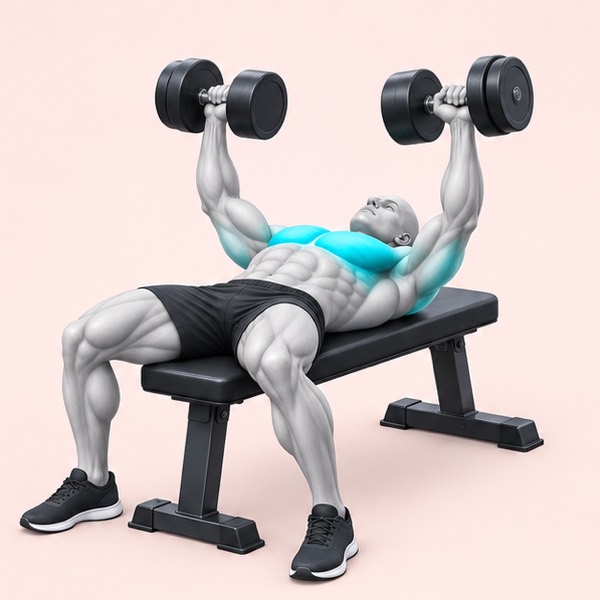
- Decline dumbbell press: More range of motion and no risk of getting pinned. The tricky part is getting into position: lie back with the dumbbells held tight to your chest.
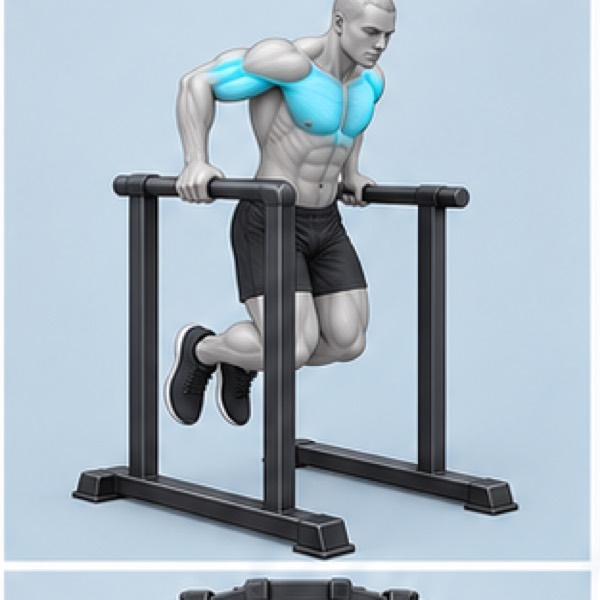
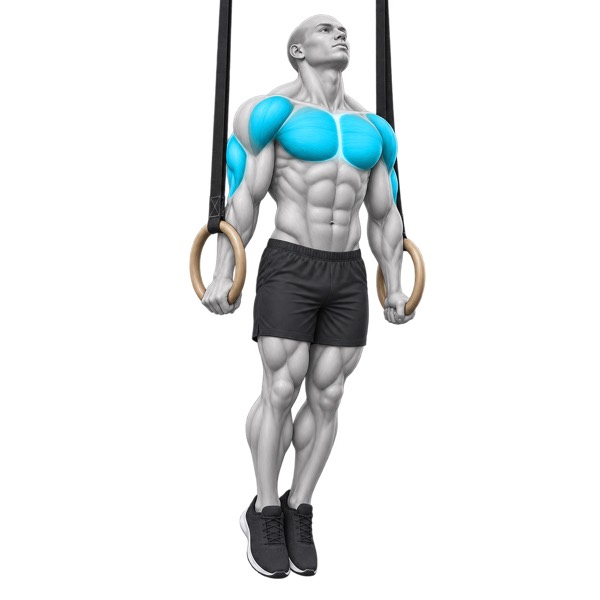
- Dips: Leaning your torso forward works the lower chest in a similar way, with just your bodyweight.
- High to low cable fly: An isolation exercise for the same area, done after your pressing.
Sets and reps
It works well in the 6–10 rep range, after your flat bench or in place of it. To build muscle and strength: 6–12 reps, 3–4 sets. When you complete the range on every set, add a little weight. That's double progression.
To build a full session, see our chest workout at the gym.
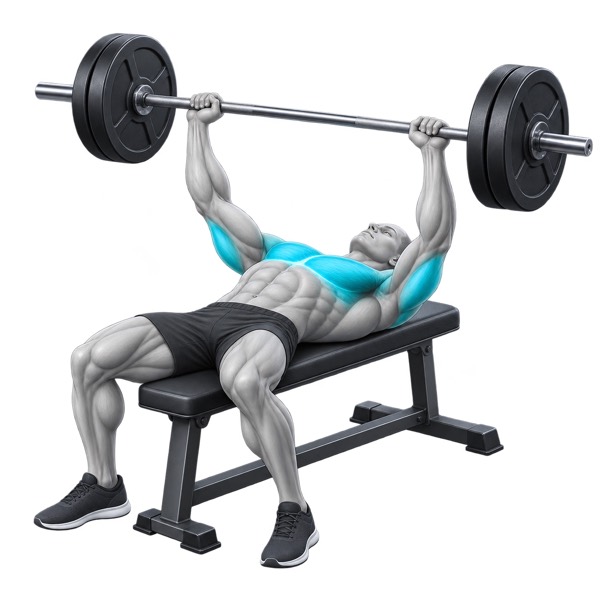
Alternatives
Frequently asked questions
What muscles does the decline bench press work?
Your pec major, with more emphasis on the lower chest, and your triceps. Your front delts do less than on the flat bench press because your arms press toward your feet.
Decline bench vs dips for lower chest: which is better?
Both train the lower chest well. The decline bench is easier to load and progress in small jumps. Dips demand more stability and strength relative to your bodyweight, but all you need is a set of parallel bars.
Why can you lift more on decline bench?
The bar travels a shorter distance and your arms press in a position where your chest and triceps are strong. Moving a bit more than on the flat bench is normal, so don't compare the two numbers.