 Zerolimits
T-bar row
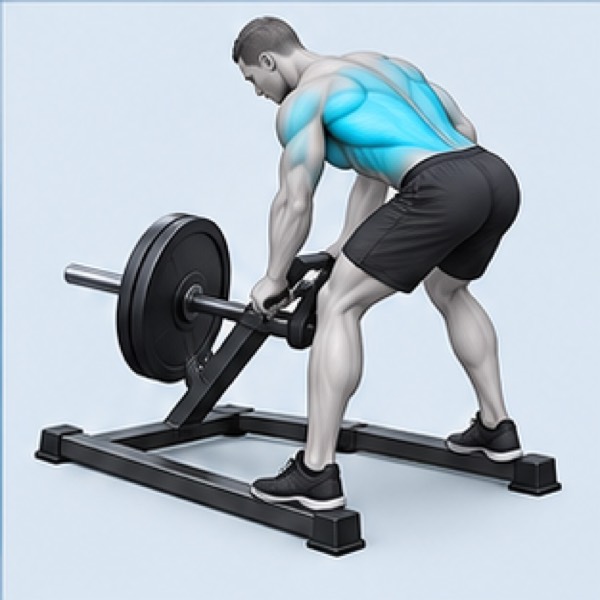
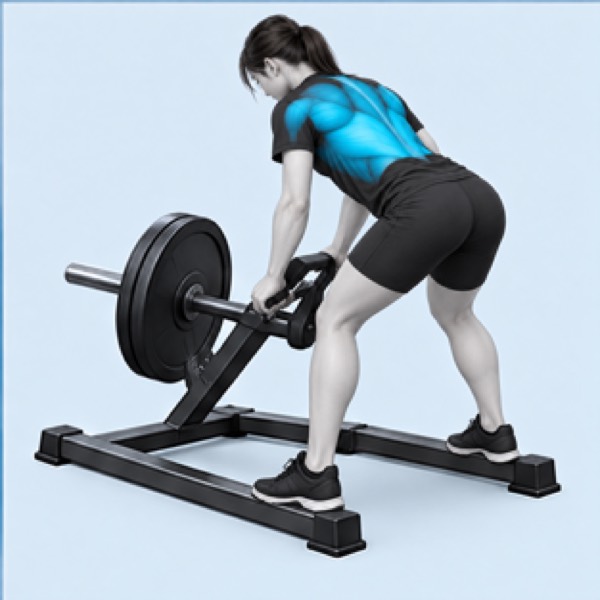
The T-bar row is a row with one end of the barbell anchored to the floor or to a machine. It mainly works your lats and mid-back, with help from your biceps and rear delts, and lets you go heavy with a comfortable neutral grip.
- Primary muscle
- Back
- Also works
- Biceps
- Equipment
- Barbell
- Pattern
- Horizontal pull
Muscles worked
It hits most of your back: the lats, the teres major, and the rhomboids and middle traps, which pull your shoulder blades together. Your rear delts and biceps help you pull, and your spinal erectors and hamstrings hold the bent-over position for the whole set. A close V-handle keeps your elbows tucked and shifts the work to your lats; a wide grip shifts it to your upper back.
How to do it
Setup
- Wedge one end of a barbell into a corner or a landmine and load plates on the other end.
- Straddle the bar and slide a close-grip V-handle under it, right behind the plates.
- Hinge at the hips until your torso is at about 45°, knees slightly bent and back neutral.
Execution
- With your arms straight, set your shoulders down and brace your abs.
- Row by driving your elbows back, close to your body, until the plates nearly touch your chest.
- Pause for a moment and squeeze your shoulder blades together.
- Lower under control until your arms are fully straight, without letting your torso rise.
Key cue: Bring your elbows back without shrugging your shoulders.
Common mistakes
- Standing up to move the weight. If your torso angle changes every rep, the load is too heavy: drop a plate and keep your torso still.
- Rounding your lower back. Keep your chest up and abs braced; if you can't hold it, switch to the chest-supported version.
- Cutting the range short. Pull until the handle is near your chest and let your arms straighten fully at the bottom.
- Loading 45 lb plates. They are so big they hit your chest early; 25 or 35 lb plates give you a longer range of motion.
Variations
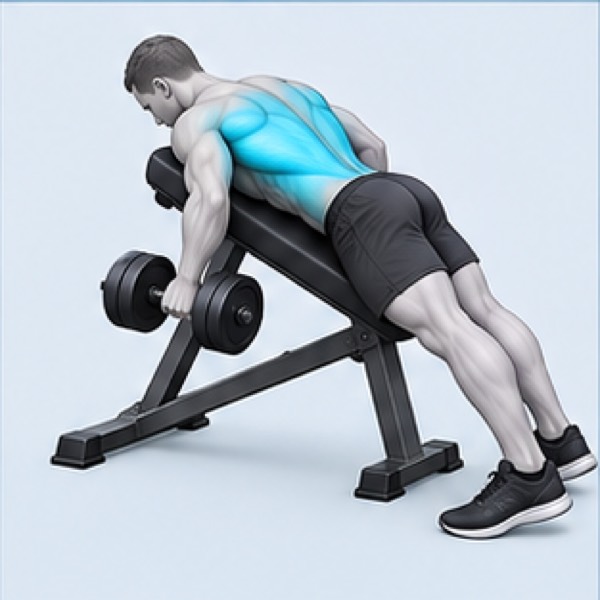
- Chest-supported T-bar row: Your chest rests on a pad, so your lower back is out of it. A better pick if your lower back tires before your upper back.
- Wide grip: A wide handle, or grabbing the plates themselves, flares your elbows and shifts the work to your upper back and rear delts.
Sets and reps
It works well heavy, in the 6–10 rep range, as long as your torso stays still. To build muscle and strength: 6–12 reps, 3–4 sets. When you complete the range on every set, add a little weight. That's double progression.
Alternatives
Frequently asked questions
What muscles does the T-bar row work?
Mainly your lats, rhomboids and middle traps. Your biceps and rear delts assist, and your lower back works to hold the bent-over position.
T-bar row vs barbell row: which is better?
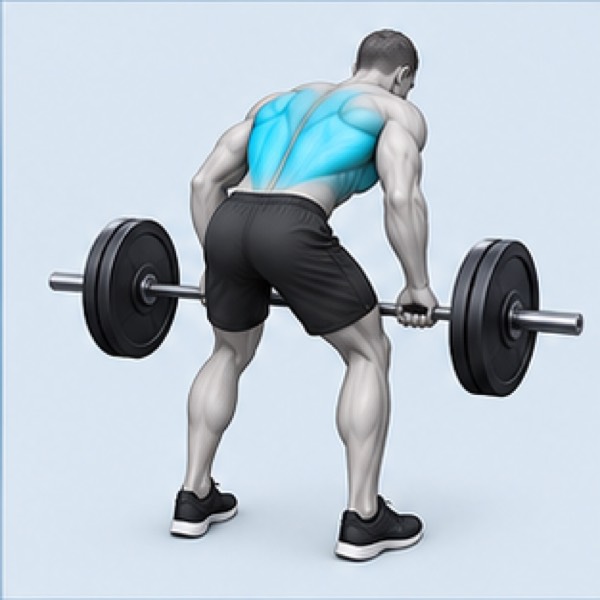
They train the same muscles. The T-bar row is usually easier to load: the neutral grip and anchored bar let you go heavy without the bar dragging up your thighs. The barbell row asks more of your lower back and your technique.
Is the T-bar row machine better than the free version?
The chest-supported machine takes your lower back out of it and lets you push close to failure safely. The free version works more stabilizers. Both build your back.