 Zerolimits
Single-leg calf raise
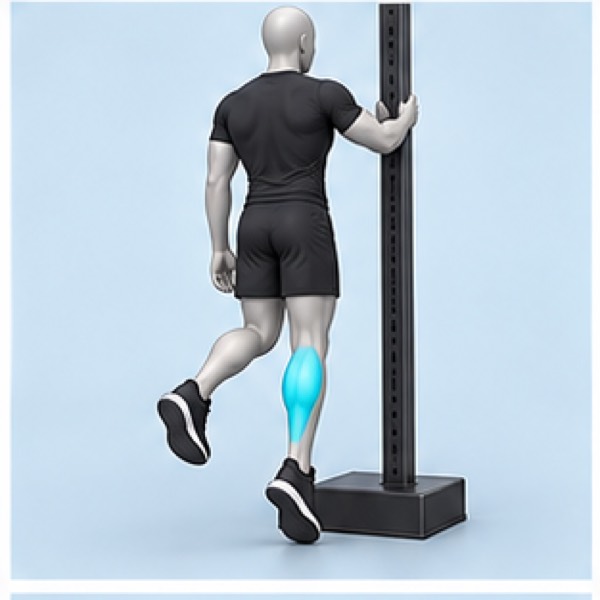
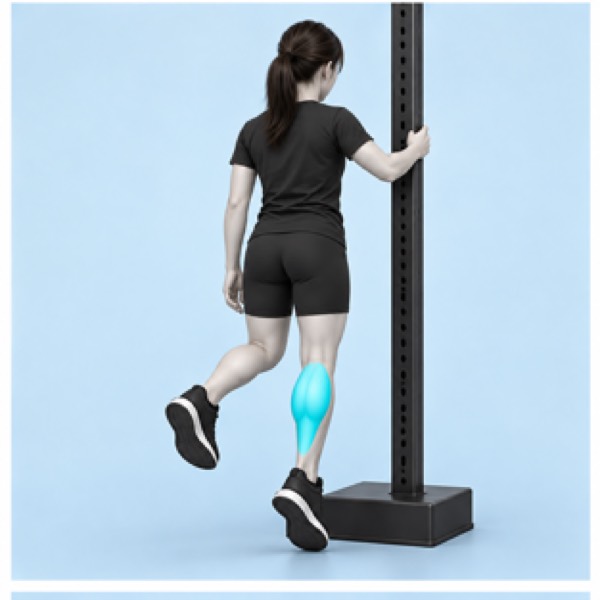
The single-leg calf raise is a calf raise on one foot, usually off the edge of a step. It works the gastrocnemius and soleus of each leg separately, and it's one of the best ways to train calves at home: your bodyweight on one foot is already a serious load.
- Primary muscle
- Calves
- Also works
- —
- Equipment
- Bodyweight
- Pattern
- Calf raise
Muscles worked
With a straight knee, your gastrocnemius (inner and outer heads) does most of the work and your soleus helps. Standing on one foot, your peroneals and tibialis posterior work harder to stop your ankle from rolling in or out. Bend your knee slightly and the work shifts toward the soleus. Training each leg on its own also shows you if one side is stronger.
How to do it
Setup
- Stand on a step with the ball of one foot on the edge and your heel hanging off.
- Hook your other foot behind your working ankle and hold a wall or railing just for balance.
Execution
- With your knee straight, lower your heel below the step as far as it goes.
- Hold for 1–2 seconds at the bottom without bouncing.
- Rise onto the ball of your big toe as high as you can and squeeze for a second.
- Lower over 3 seconds. Finish the set, then switch legs, always starting with your weaker side.
Key cue: Rise onto your big toe, not the outside edge of your foot.
Common mistakes
- Pushing with your hand. Your hand is only there for balance; if you pull on the railing to rise, the set counts for less. Use just your fingertips.
- Doing it on flat ground. You lose the whole stretched part of the range. Use a step, a plate or a thick book.
- Bending your knee to get up. Your quads take over. Keep the knee straight, even if you get fewer reps.
- Staying at bodyweight forever. Once you pass 20 slow reps, hold a dumbbell on the working side.
Variations
- Dumbbell single-leg calf raise: Hold a dumbbell on the working side and balance with the other hand. It keeps you progressing once bodyweight gets easy.
- Bent-knee version: With your knee clearly bent, the work shifts to the soleus. Useful at home if you have no seated calf machine.
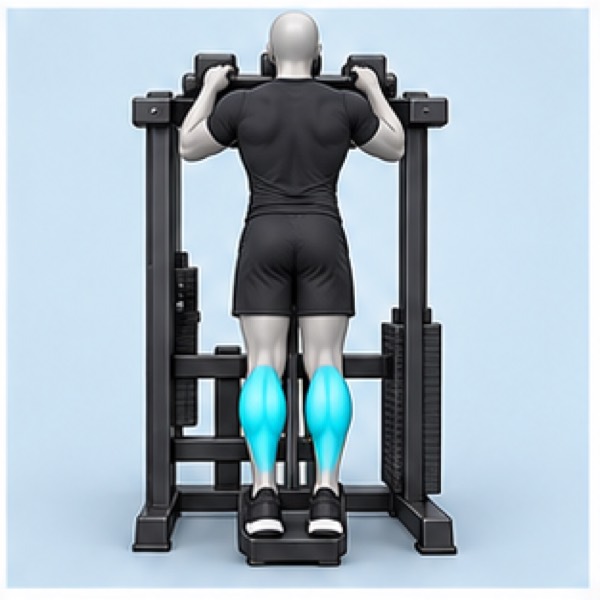
- Standing calf raise machine: The loaded version, for moving much more weight with both legs at once.
Sets and reps
With bodyweight, aim for 12–20 slow reps per leg; once you can do more than 20 with a pause at the bottom, add a dumbbell. To build muscle and strength: 12–20 reps, 2–3 sets. When you complete the range on every set, add a little weight. That's double progression.
Alternatives
Frequently asked questions
What muscles does the single-leg calf raise work?
The gastrocnemius and soleus of your working leg, with the gastrocnemius doing more when your knee is straight. Your peroneals and tibialis posterior stabilize the ankle.
Can you build your calves at home?
Yes. A step and your bodyweight on one leg is plenty of load to start. Once you pass 20 slow reps, hold a dumbbell, a jug of water or a loaded backpack on the working side.
How often should you train calves?
Two or three times a week, with 2–4 sets each time, works for most people. Calves recover quickly, so spreading your sets across the week usually works better than doing them all in one day.