 Zerolimits
Standing calf raise
The standing calf raise is the basic calf exercise: standing with the load on your shoulders, you raise and lower your heels off a step, usually on a standing calf raise machine. It mainly works your gastrocnemius, the visible calf muscle, along with the soleus underneath.
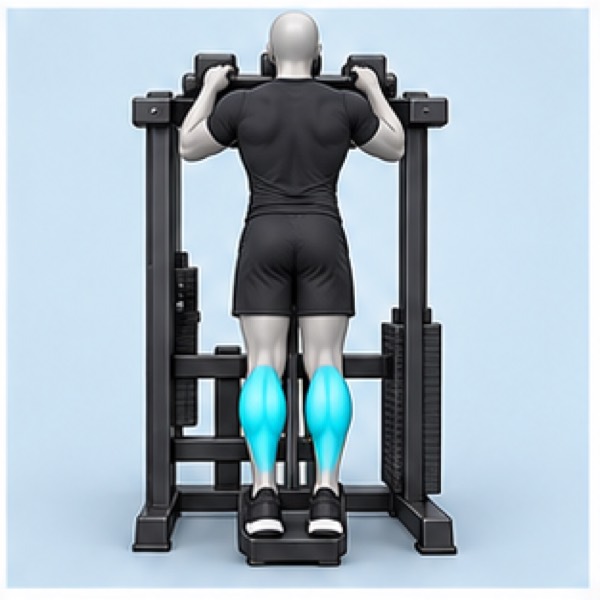
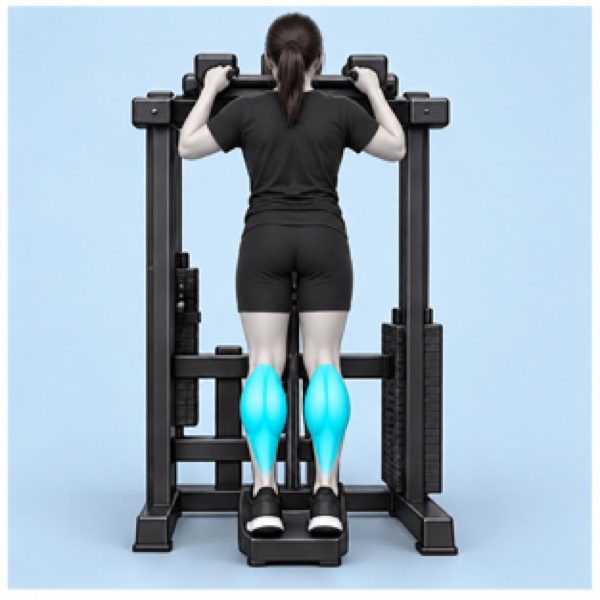
- Primary muscle
- Calves
- Also works
- —
- Equipment
- Machine
- Pattern
- Calf raise
Muscles worked
With straight knees, your gastrocnemius works at full strength: its two heads, inner and outer, give the calf its diamond shape. Your soleus, underneath, helps through the whole range. Turning your toes in or out shifts very little between the two heads; a full range of motion, especially the stretched bottom position, matters far more.
How to do it
Setup
- Set the shoulder pads so you have to bend your knees slightly to get under them.
- Place the balls of your feet on the edge of the platform, hip-width apart, toes straight and heels hanging off.
- Straighten your legs to lift the weight, without locking your knees hard.
Execution
- Lower your heels as far as they go, until you feel a stretch in your calves.
- Hold for 1–2 seconds at the bottom so your Achilles tendon can't bounce you out.
- Rise onto the ball of your big toe as high as you can and squeeze for a second.
- Lower over 2–3 seconds with your knees straight.
Key cue: Pause 1–2 seconds at the bottom, heels fully stretched, before every rep.
Common mistakes
- Bouncing. Fast reps turn your Achilles tendon into a spring and your calves do little. Pause at the bottom of every rep.
- Bending your knees to push. That's a mini squat, not a calf raise. If your knees move, the weight is too heavy.
- Half reps with a full stack. Moving the whole stack an inch won't grow your calves. Drop the weight until you can use the full range.
- Rolling onto the outside of your foot. Your ankle tips out and you lose range. Push through the ball of your big toe.
Variations
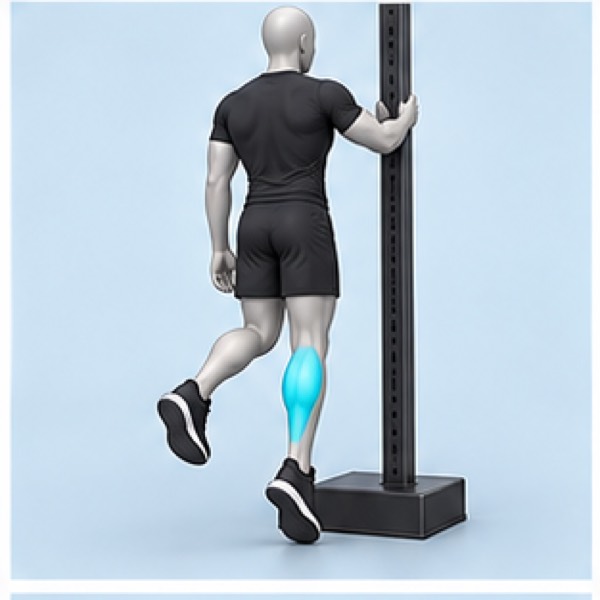
- Single-leg calf raise: On a step, with bodyweight or a dumbbell. Each leg works on its own, and it's a good way to train calves at home.
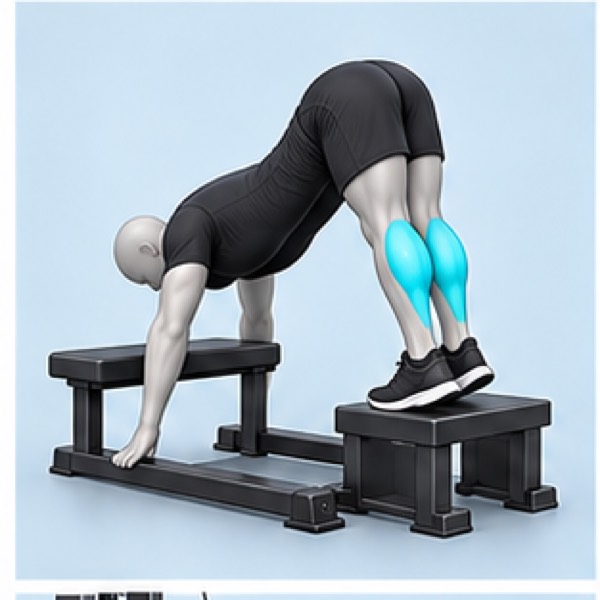
- Donkey calf raise: Bent forward with the load on your hips. It works the same muscles without loading your shoulders.
- Smith machine or leg press: If your gym has no calf machine, stand on a step under a Smith machine bar, or press the leg press platform with the balls of your feet.
Sets and reps
12–20 reps with a pause at the bottom is a good range; take each set close to failure, even when it burns. To build muscle and strength: 12–20 reps, 2–3 sets. When you complete the range on every set, add a little weight. That's double progression.
Alternatives
Frequently asked questions
What muscles does the standing calf raise work?
Mainly your gastrocnemius, the muscle most people mean by calves, with both of its heads. The soleus underneath helps through the whole range of motion.
How do you grow your calves?
Train them 2–3 times a week with a full range and a pause at the bottom, and take your sets close to failure. Pair a straight-knee exercise like this one with a seated version for the soleus, and add weight when you hit the top of your rep range. Genetics shape your calves, but everyone can improve them.
Should you point your toes in or out on calf raises?
It makes little difference. Turning your toes shifts a bit of work between the inner and outer heads of the gastrocnemius, but full range of motion matters far more. Toes straight or slightly turned out is the most comfortable for your ankles.