 Zerolimits
Smith machine squat
The Smith machine squat is a squat with the bar locked into guide rails. It mainly works your quads, with help from your glutes and adductors. Since you don't have to balance the bar, you can focus on the muscle and push closer to failure more safely.
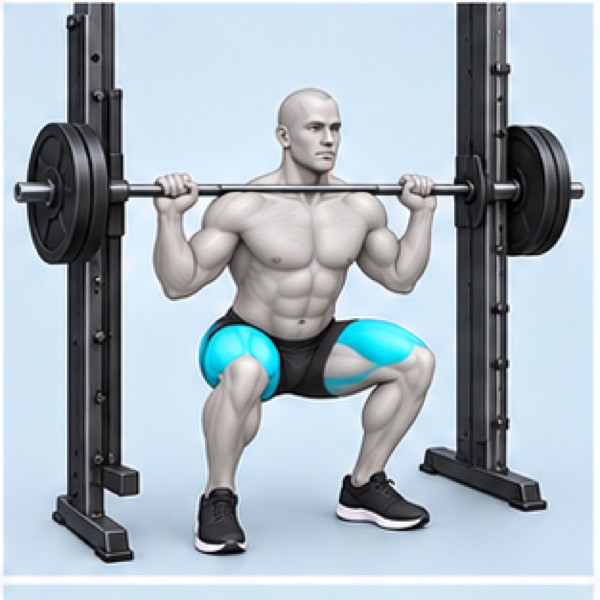
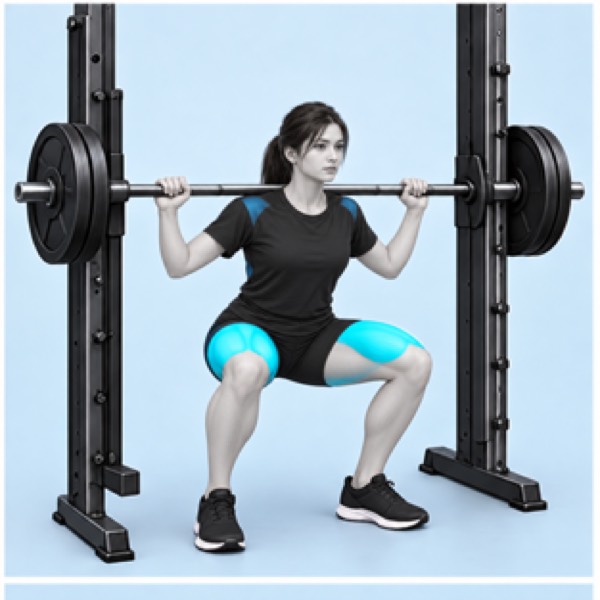
- Primary muscle
- Quads
- Also works
- Glutes, Hamstrings
- Equipment
- Machine
- Pattern
- Squat
Muscles worked
Your quads straighten your knees and do most of the work. Your glutes and adductor magnus extend your hips, mostly near the bottom. Your hamstrings help a little and your spinal erectors hold your torso. Foot position changes the split: with your feet under the bar or slightly forward, your knees travel more and your quads work harder; with your feet far forward, your shins stay vertical and your glutes take more of the load.
How to do it
Setup
- Set the bar at upper-chest height and put the safety stops just below your lowest position.
- Step under it with the bar on your upper traps, not your neck.
- Place your feet shoulder-width apart, about 4–8 inches in front of the bar.
- Unhook the bar by rotating it with your wrists.
Execution
- Take a breath, brace your abs and keep your back neutral.
- Bend your hips and knees together, knees tracking in line with your toes.
- Go at least to thighs parallel with the floor, without your pelvis tucking under.
- Drive up through your whole foot and, at the end of the set, rotate the bar to rack it.
Key cue: Set your feet before the first rep: the bar can't move, so you have to fit yourself to it.
Common mistakes
- Feet too far forward. You end up leaning back on the bar and your pelvis tucks under at the bottom; bring them back until you can squat with a neutral back.
- Going shallow because the machine feels safe. With the stops set, go to parallel or below; half squats skip the bottom range, where your glutes and adductors work most.
- Skipping the safety stops. If you miss a rep, the bar has nowhere to go; always set them just below your lowest point.
- Knees caving in on the way up. The guided bar makes it easy to load more than you control; drop the weight and push your knees out in line with your toes.
Variations
- Smith machine front squat: The bar sits on the front of your shoulders. Your torso stays even more upright and your quads take more of the work.
- Smith machine Bulgarian split squat: Rear foot up on a bench. You train each leg on its own without worrying about balance.
Sets and reps
It works well for 6–12 reps; because it's stable, sets of 10–12 close to failure are safe with the stops set. To build muscle and strength: 6–12 reps, 3–4 sets. When you complete the range on every set, add a little weight. That's double progression.
Alternatives
Frequently asked questions
What muscles does the Smith machine squat work?
Mainly your quads. Your glutes and adductors help, more so the deeper you go and the further forward your feet are, and your spinal erectors keep your torso rigid.
Smith machine squat vs barbell squat: which is better?
The barbell squat works more stabilizers and builds strength that carries over to other lifts. The Smith machine is more stable and easier to take close to failure. Both build your legs; if you want a bigger squat, use the barbell.
Where should your feet be on a Smith machine squat?
Start shoulder-width apart and 4–8 inches in front of the bar. If your heels lift, move them forward a little; if you lean back on the bar or your back rounds at the bottom, bring them back.