 Zerolimits
Cable glute kickback
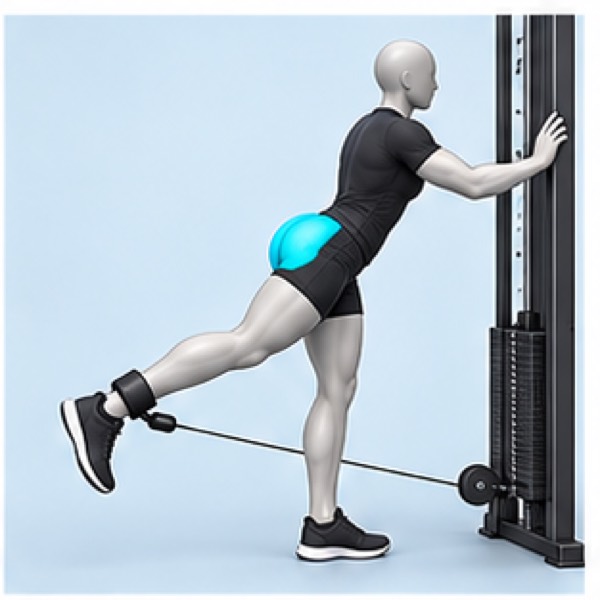
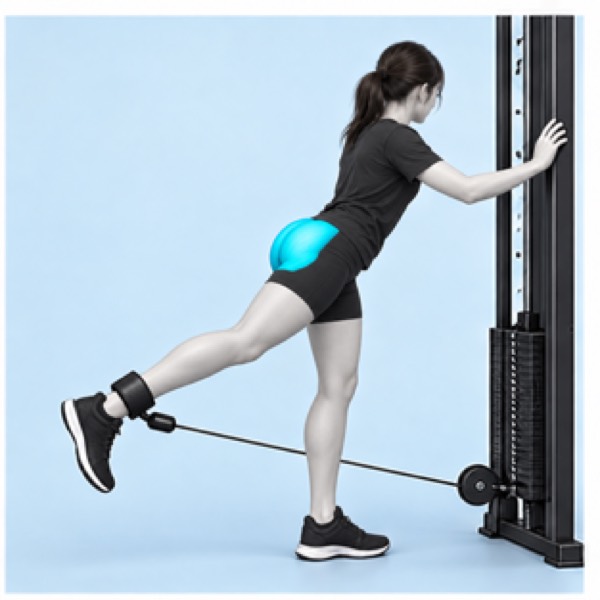
The cable glute kickback is a single-leg exercise where you drive one leg back against a low pulley using an ankle strap. It mainly works your glute max, with help from your hamstrings. You'll also see it called a cable kickback or standing glute kickback.
- Primary muscle
- Glutes
- Also works
- Hamstrings
- Equipment
- Cable
- Pattern
- Hip extension
Muscles worked
Your glute max extends your hip and does most of the work. Your hamstrings assist, more so the straighter your knee. The glute medius on your standing leg keeps your pelvis steady. Leaning your torso further forward starts you in more hip flexion, so your glutes work through a longer range. Kicking back and slightly out shifts more of the work to your upper glutes.
How to do it
Setup
- Attach an ankle strap to a low pulley and secure it around the ankle of your working leg.
- Face the machine, about one step away, and hold the frame.
- Lean your torso forward about 30–45° from the hips, standing knee slightly bent.
Execution
- Start with your working leg slightly in front of your standing leg, glute stretched.
- Drive the leg back by extending your hip, knee almost straight.
- Stop once your hip is fully extended, before your lower back arches, and squeeze your glute for a second.
- Return slowly to the start without letting the stack touch down.
Key cue: Drive through the hips without overextending your back.
Common mistakes
- Arching your back to lift the leg higher. More height isn't more glute; stop at full hip extension and keep your abs braced.
- Swinging the leg. If momentum lifts the weight, it's too heavy; drop the load and hold the top for a second.
- Turning your foot out and opening your hip. Your pelvis rotates and your glute does less; keep your hips square to the machine.
- Cutting the return short. If your foot doesn't come forward past your standing leg, you miss the part where your glute is most stretched.
Variations
- Diagonal kickback: Drive your leg back and slightly out, about 30°. You'll feel more of your upper and outer glute.
- Bent-knee kickback: Keep your knee at 90° the whole rep. Your hamstrings help less and the lever is shorter, so you'll use less weight.
- Glute kickback machine: Many gyms have a dedicated machine with a chest pad. It's more stable and lets you load heavier.
Sets and reps
It works best with moderate weight, 10–15 reps per leg and a pause at the top. To build muscle and strength: 10–15 reps, 2–4 sets. When you complete the range on every set, add a little weight. That's double progression.
Alternatives
Frequently asked questions
What muscles does the cable glute kickback work?
Mainly your glute max, which extends your hip. Your hamstrings assist, more so with a straight knee, and the glute medius on your standing leg keeps your pelvis stable.
Should you do kickbacks with a straight or bent knee?
With your knee almost straight, your hamstrings help more and the lever is longer. With your knee bent, your hamstrings do less and your glutes do more of the work alone. Both work; pick the one you feel most in your glutes.
Cable kickback vs hip thrust: which is better for glutes?
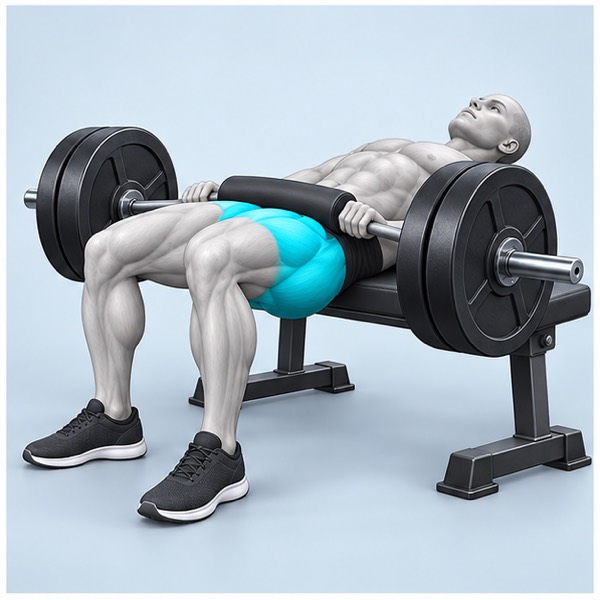
The hip thrust takes much more weight and works better as your main glute exercise. The kickback trains each leg on its own and is easy to feel. Use it as an accessory after hip thrusts or Romanian deadlifts.