 Zerolimits
Deadlift
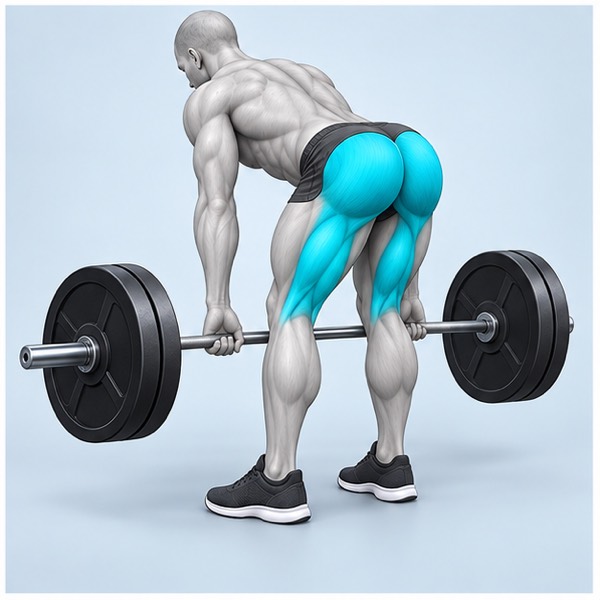
The deadlift, or conventional deadlift, means lifting a barbell off the floor until you're standing tall, extending your hips and knees together. It mainly works your glutes, hamstrings and spinal erectors, with help from your quads, upper back and grip.
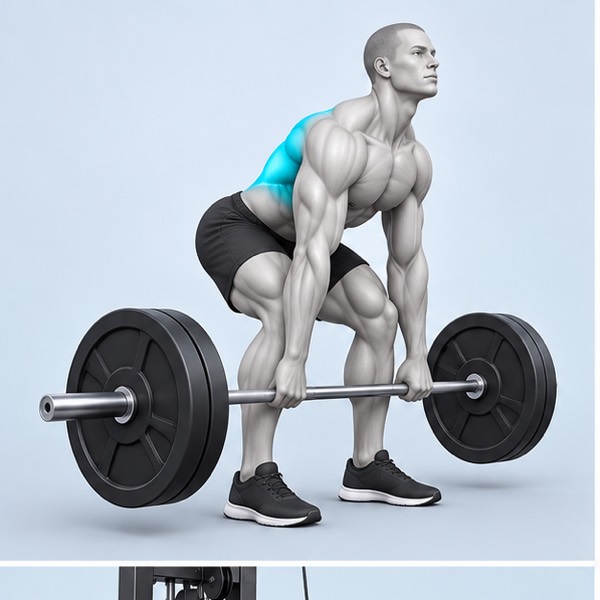
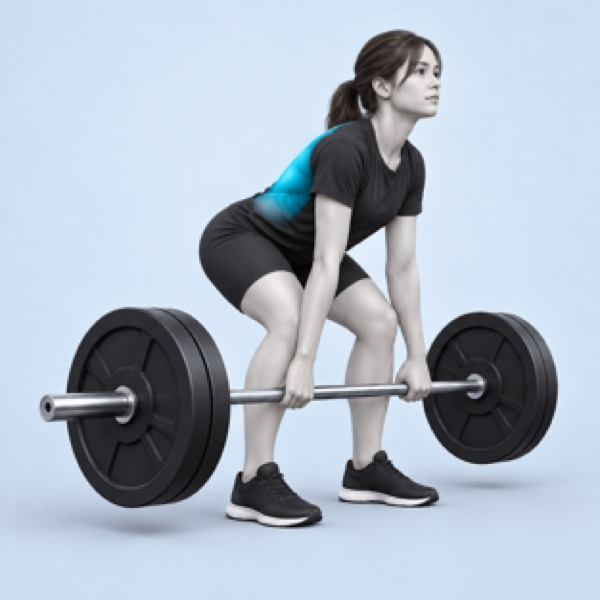
- Primary muscle
- Back
- Also works
- Glutes, Hamstrings
- Equipment
- Barbell
- Pattern
- Hip hinge
Muscles worked
Your glutes and hamstrings extend your hips and do most of the work, especially once the bar passes your knees. Your quads break the bar off the floor. Your spinal erectors hold your back neutral without moving, and your lats keep the bar against your legs. Your traps hold your shoulders in place and your forearms hang on to the bar. Starting with lower hips brings in more quads; higher hips put more on your hamstrings and lower back.
How to do it
Setup
- Feet hip-width apart, toes slightly out, bar over your midfoot about 1 inch from your shins.
- Grip the bar just outside your legs, both palms facing you. For very heavy sets, use a mixed grip or straps.
- Bend your knees until your shins touch the bar and lift your chest, hips between your knees and shoulders.
Execution
- Take a breath, brace your abs and pull lightly on the bar to tighten your arms.
- Push the floor away: hips and shoulders rise together and the bar travels straight up, brushing your legs.
- Once it passes your knees, drive your hips forward until you're standing tall with your glutes squeezed.
- To lower it, hips back first, then bend your knees once the bar clears them. Set it down, reset and repeat.
Key cue: Push the floor away and keep the bar against your legs.
Common mistakes
- Shooting your hips up first. If your legs straighten before the bar moves, the load shifts to your lower back: start with slightly lower hips.
- Rounding your lower back. Brace your abs and lats before you pull; if your back rounds as the bar leaves the floor, it's too heavy.
- Letting the bar drift away from you. The farther it travels from your body, the more it loads your back; it should brush your shins and thighs all the way.
- Leaning back at lockout. Finish standing straight with your glutes squeezed; hyperextending your lower back adds nothing.
Variations
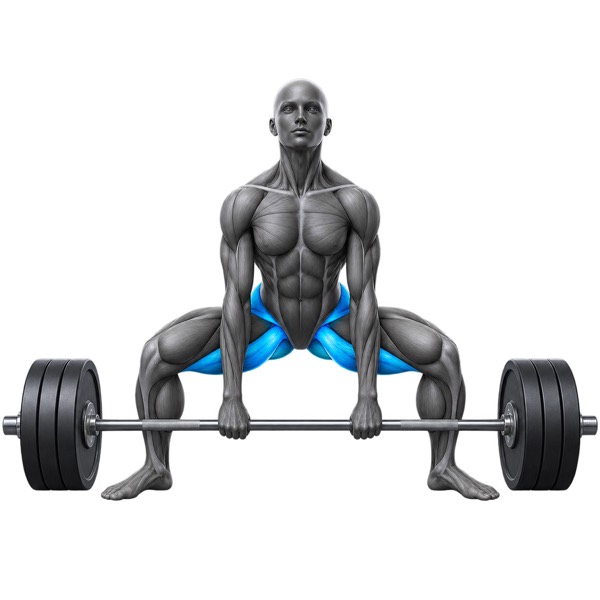
- Sumo deadlift: A very wide stance with your hands inside your legs. Your torso stays more upright and your quads and adductors do more.
- Romanian deadlift: You start standing and lower the bar to mid-shin with your knees almost fixed. More hamstring work.
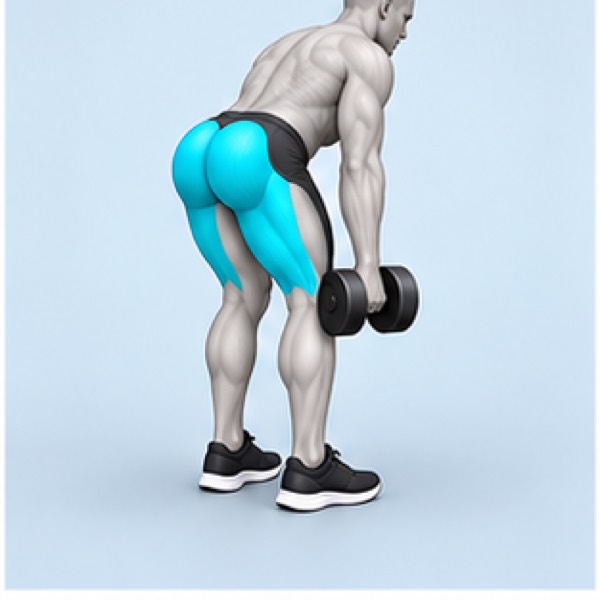
- Dumbbell Romanian deadlift: The dumbbells hang at your sides and weigh less. A good way to learn the movement before loading a barbell.
Sets and reps
Stay at the low end of the range, 6–8 reps: on long sets your form breaks down before your muscles do. To build muscle and strength: 6–12 reps, 3–4 sets. When you complete the range on every set, add a little weight. That's double progression.
Alternatives
Frequently asked questions
What muscles does the deadlift work?
Mainly your glutes, hamstrings and spinal erectors. Your quads, lats and traps also work, and your forearms hold on to the bar.
Conventional vs sumo deadlift: which is better?
Both work. Sumo keeps your torso more upright, shortens the range of motion and brings in more quads and adductors; conventional asks more of your hamstrings and back. Pick the one that lets you lift the most with good form.
What's the difference between a deadlift and a Romanian deadlift?
The deadlift starts from the floor with bent knees. The Romanian deadlift starts standing, the bar never touches the floor and your knees barely bend, so your hamstrings take more of the load.
Is the deadlift bad for your back?
Not with a neutral spine and a weight you control. Your spinal erectors work hard to hold position, which is how they get stronger. If you feel pain in your lower back, stop and lower the weight.