 Zerolimits
Dumbbell bench press
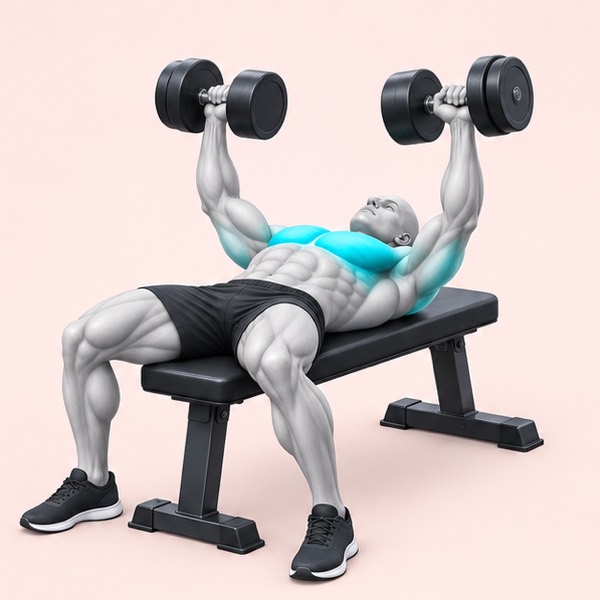
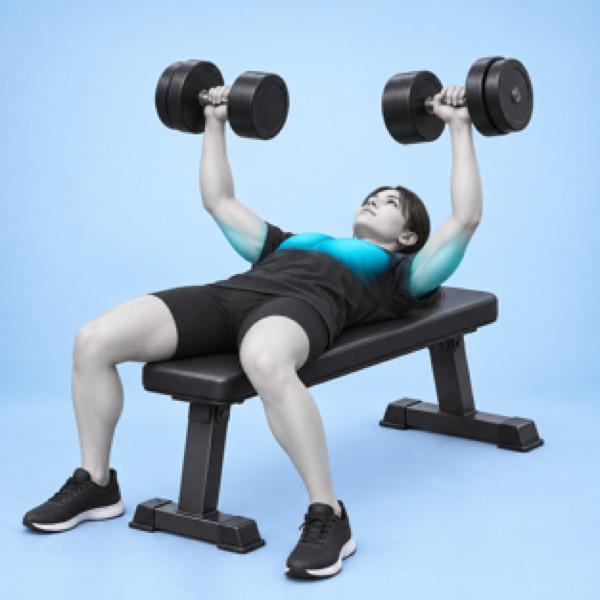
The dumbbell bench press is a chest press on a flat bench that mainly works your pecs, with help from your triceps and front delts. You hold a dumbbell in each hand instead of a barbell, which gives you more range of motion. It's also called the dumbbell chest press or flat dumbbell press.
- Primary muscle
- Chest
- Also works
- Shoulders, Triceps
- Equipment
- Dumbbells
- Pattern
- Horizontal press
Muscles worked
Your pec major does most of the work, and because the dumbbells can travel lower than a bar, it gets a bigger stretch. Your front delts help at the bottom and your triceps lock out your elbows at the top. Since each hand moves on its own, your rotator cuff and shoulder stabilizers work harder than with a barbell. Palms facing your feet puts more on your chest; a neutral grip, palms facing each other, tucks your elbows and brings in more triceps.
How to do it
Setup
- Sit on the end of the bench with the dumbbells standing on your thighs.
- Lie back and, as you do, kick the dumbbells up with your knees to bring them beside your chest.
- Plant your feet, pull your shoulder blades together and press the dumbbells over your chest.
Execution
- Lower the dumbbells over about 2 seconds to the sides of your chest, elbows about 45° from your torso and forearms vertical.
- Stop when you feel a stretch in your chest, with the dumbbells beside your chest, a little lower than a bar could go.
- Press up and slightly in until they're over your shoulders, a few inches apart.
- When you're done, bring the dumbbells to your chest, lift your knees and rock up to sitting with them on your thighs.
Key cue: Forearms vertical the whole way: the dumbbells come down beside your chest and finish over your shoulders.
Common mistakes
- Dropping the dumbbells out to the sides after the set. It yanks your shoulder with your arm wide open; bring them to your chest and sit up with them.
- Clanking the dumbbells together at the top. It adds nothing and costs you control; stop a few inches apart.
- Sinking your elbows far below the bench. A little more range than a barbell is fine; if you feel a pull at the front of your shoulder, stop sooner.
- Picking dumbbells you can't get into position. If you can't kick them up with your knees, you won't control them either; go lighter or have someone hand them to you.
Variations
- Incline dumbbell press: Set the bench to about 30° to shift the work to your upper chest.
- Neutral grip: Palms facing each other tuck your elbows. It's often easier on the shoulders and puts more on your triceps.
- Barbell bench press: You move more total weight and can progress in smaller jumps, at the cost of some range.
Sets and reps
It works well for 8–12 reps; with very heavy dumbbells, the hardest part is getting them into position, not the press. To build muscle and strength: 6–12 reps, 3–4 sets. When you complete the range on every set, add a little weight. That's double progression.
To build a full session, see our chest workout at the gym.
Alternatives
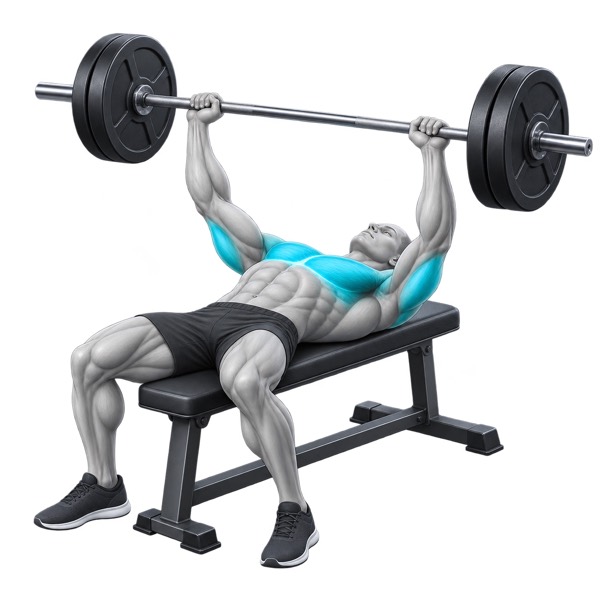 Barbell bench pressBarbell
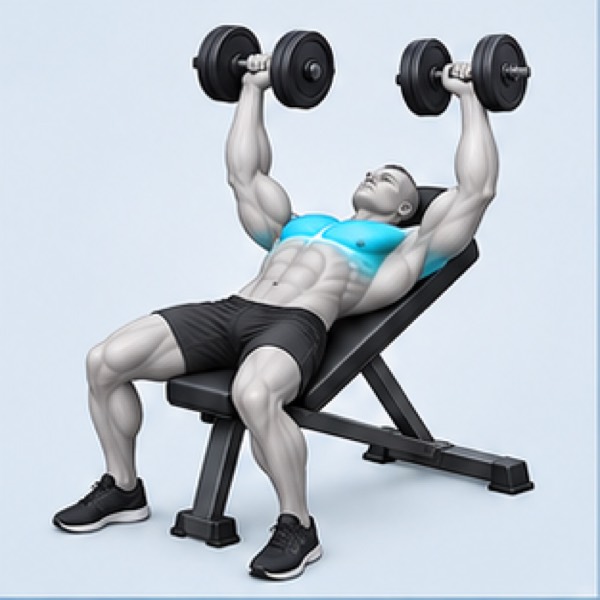 Incline dumbbell pressDumbbells
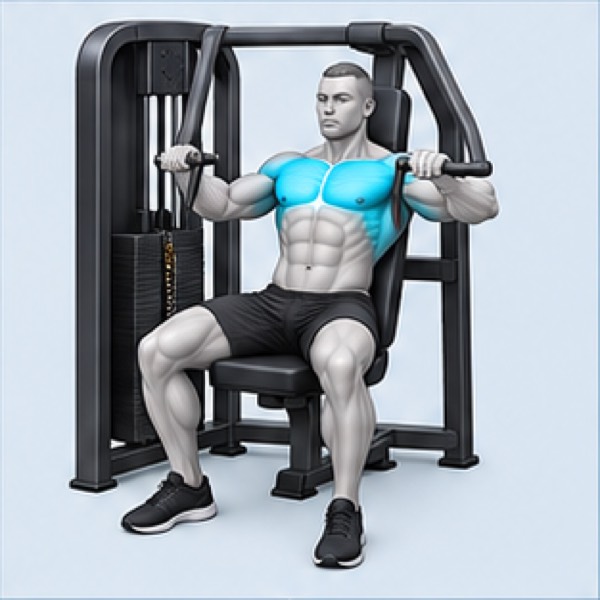 Machine chest pressMachine
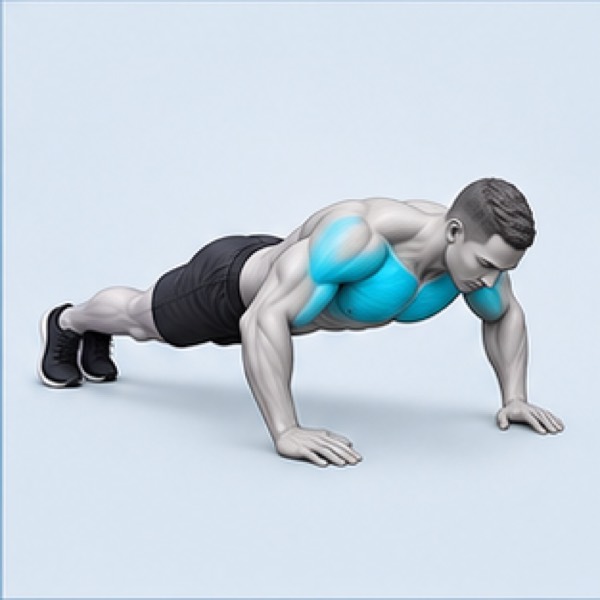 Push-upBodyweight
Frequently asked questions
What muscles does the dumbbell bench press work?
Mainly your pec major. Your triceps and front delts help you press, and your shoulder stabilizers work harder than with a barbell because each arm moves on its own.
Dumbbell vs barbell bench press: which is better?
Dumbbells give you more range and fix side-to-side differences. The barbell lets you lift more and progress in finer steps. Using both across your week is a good setup.
What dumbbell weight equals my barbell bench?
As a rough guide, each dumbbell ends up around 40% of your barbell weight because of the extra stability needed. If you bench 185 lb, try a pair of 70–75 lb dumbbells and adjust.