 Zerolimits
Barbell bench press
The barbell bench press is a lying press on a flat bench that mainly works your pecs, with help from your triceps and front delts. You lower the bar to your chest and press it until your arms are straight. It's also called the flat bench press or just bench.
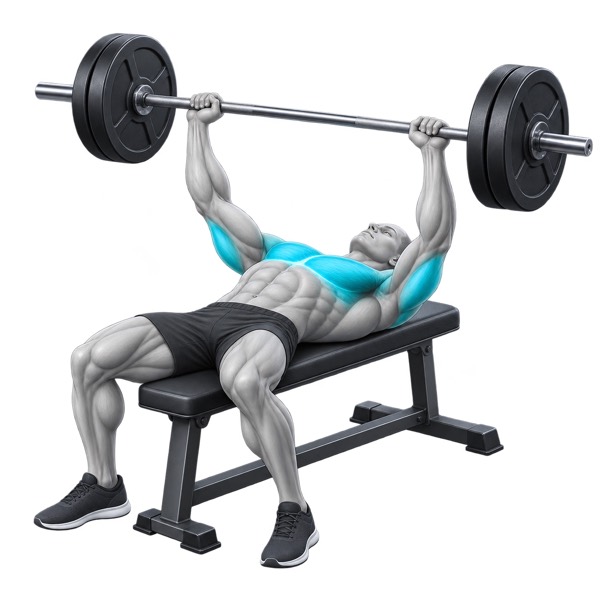
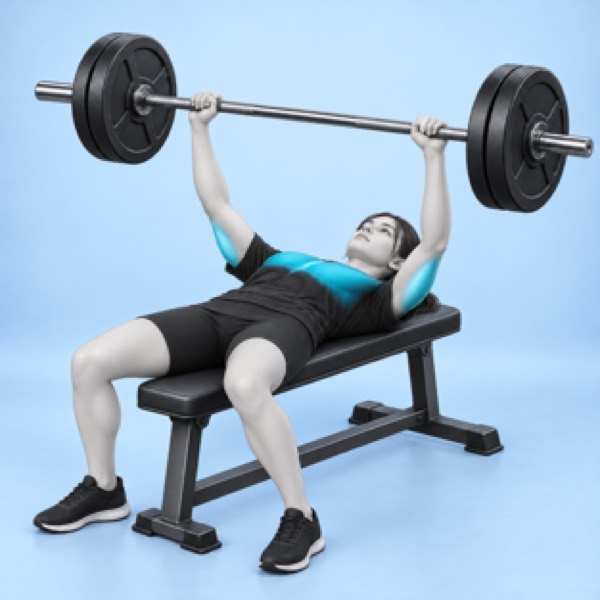
- Primary muscle
- Chest
- Also works
- Shoulders, Triceps
- Equipment
- Barbell
- Pattern
- Horizontal press
Muscles worked
Your pec major does most of the work, bringing your arms forward and across as you press. Your front delts help most near the bottom, and your triceps finish locking out your elbows at the top. Your lats and upper back don't move the bar, but they control it on the way down and keep your shoulder blades still. A close grip shifts work to your triceps; a wider grip puts more on your chest and shortens the range.
How to do it
Setup
- Lie down with your eyes right under the bar and your feet flat on the floor, slightly behind your knees.
- Grip the bar a little wider than shoulder width, thumbs wrapped around it and wrists stacked over your forearms.
- Pull your shoulder blades back and down, lift your chest and keep a natural arch in your lower back with your glutes on the bench.
- Unrack the bar with straight arms and bring it over your shoulders.
Execution
- Take a breath and lower the bar over about 2 seconds to your lower chest, around the bottom of your sternum.
- Keep your elbows at roughly 45–70° from your torso, not tucked to your sides and not flared straight out.
- Touch your chest without bouncing and press up and slightly back until the bar is over your shoulders again.
- Breathe out past the hardest point and keep your shoulder blades pinned between reps.
Key cue: Shoulder blades back and down: the bar comes down to your sternum and finishes over your shoulders.
Common mistakes
- Bouncing the bar off your chest. You lose tension and control; pause for a split second at the touch and press from there.
- Flaring your elbows to 90°. It loads the front of your shoulder; tuck them to about 45–70° and the bar will land a bit lower on your chest.
- Lifting your butt off the bench to grind out a rep. If that happens, the weight is too heavy: drive with your legs but keep your hips down.
- Going heavy without safeties or a spotter. Set the rack safeties just below chest height or ask someone to spot you.
Variations
- Close-grip bench press: Hands at shoulder width put more work on your triceps. Useful for building a stronger lockout.
- Wide grip: A wider grip shortens the range and stretches your chest more. If your shoulder complains, go back to a medium grip.
- Incline barbell press: Setting the bench at 30–45° shifts the work to your upper chest and front delts.
Sets and reps
For strength, heavy sets of 4–6 reps work well; for chest size, 6–10 with clean form. To build muscle and strength: 6–12 reps, 3–4 sets. When you complete the range on every set, add a little weight. That's double progression.
To build a full session, see our chest workout at the gym.
Alternatives
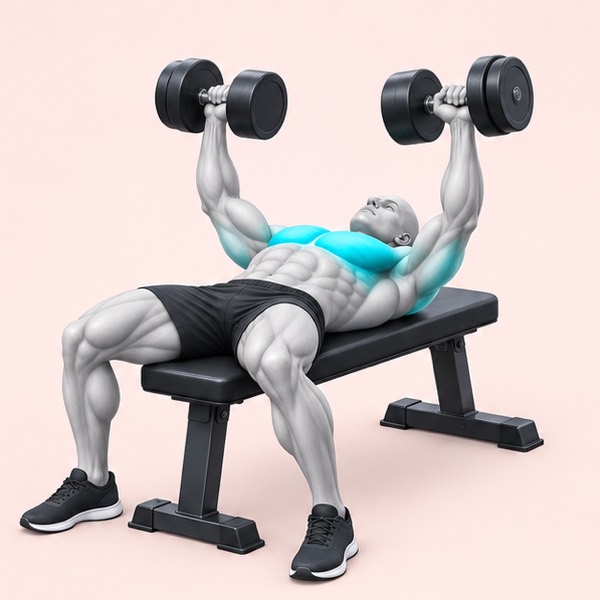 Dumbbell bench pressDumbbells
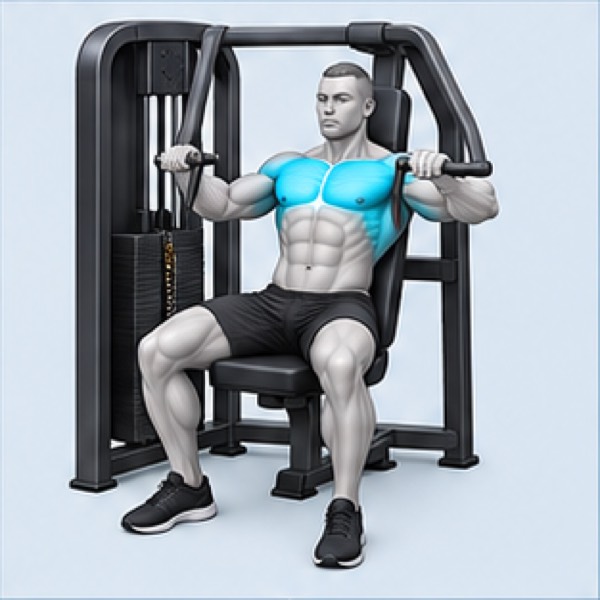 Machine chest pressMachine
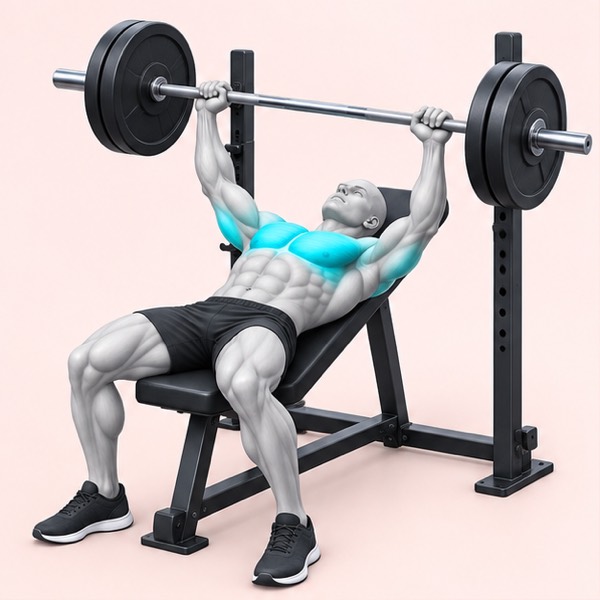 Incline barbell pressBarbell
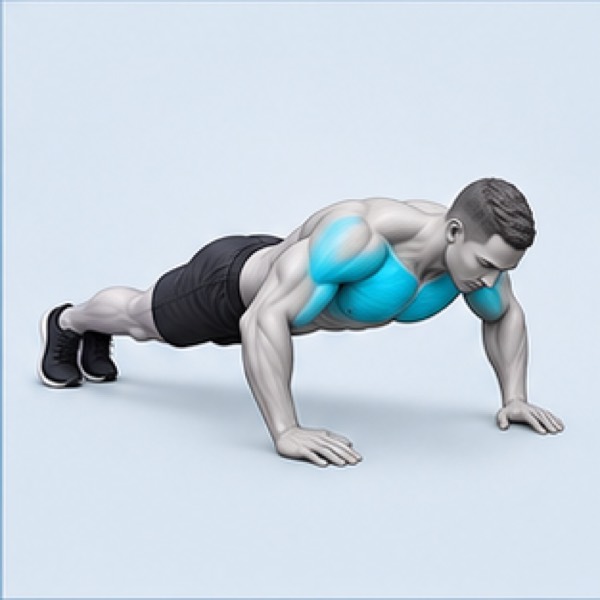 Push-upBodyweight
Frequently asked questions
What muscles does the bench press work?
Mainly your pec major. Your triceps and front delts help you press, and your lats and upper back stabilize the bar on the way down.
What's the best grip for bench press?
For most people, slightly wider than shoulder width, with your forearms vertical when the bar touches your chest. A close grip loads your triceps more; a wide grip, more chest and shoulder. Use the medium grip as your base and the others as variations.
Barbell vs dumbbell bench press: which is better?
The barbell lets you lift more and add weight in small 5 lb jumps. Dumbbells give you more range and make each arm work on its own. Both build your chest; many programs do the barbell first and dumbbells after.