 Zerolimits
Incline dumbbell curl
The incline dumbbell curl is a curl done seated on an incline bench, and it mainly works your biceps brachii, especially the long head. With your arms hanging behind your body, your biceps start every rep in a deep stretch. It's also called the incline curl or seated incline dumbbell curl.
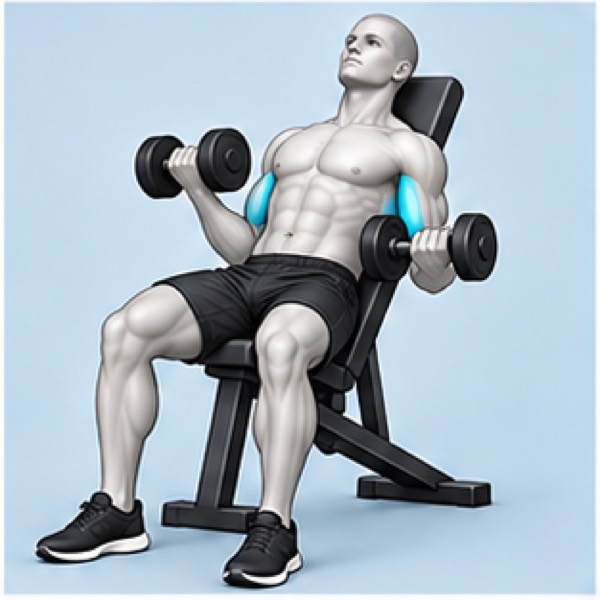
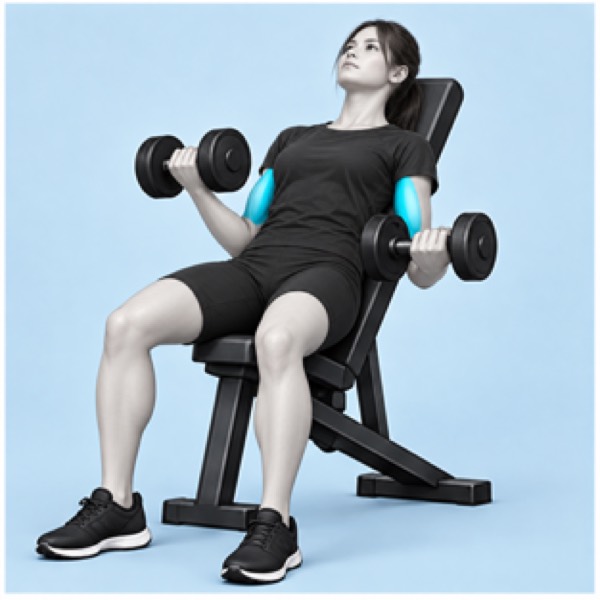
- Primary muscle
- Biceps
- Also works
- —
- Equipment
- Dumbbells
- Pattern
- Elbow flexion
Muscles worked
Your biceps brachii does most of the work, with help from the brachialis and brachioradialis. The long head of the biceps also crosses the shoulder: with your arm behind your torso, it's more stretched than in any standing curl, which is why this one tends to leave you sorer. The lower the bench, the bigger the stretch and the less weight you'll handle.
How to do it
Setup
- Set the bench back to 45–60°.
- Sit with your back and head against the pad and a dumbbell in each hand.
- Let your arms hang straight down, behind your torso, palms facing forward.
Execution
- Curl the dumbbells by bending only at the elbows; your upper arms keep pointing at the floor.
- Stop when your forearms are nearly vertical and squeeze for a moment.
- Lower slowly, over about 3 seconds, until your arms are fully straight.
- Keep your shoulders against the pad for the whole set.
Key cue: Your elbows stay behind your body, pointing at the floor, from start to finish.
Common mistakes
- Bringing your elbows forward as you curl. Your arms stop being behind you and it turns into a regular curl lying back. Let your elbows hang and end the rep sooner.
- Setting the bench lower than your shoulders tolerate. If you feel a pull at the front of your shoulder, raise the back to 60°.
- Lifting your shoulders off the pad. Leaning forward to help costs you the stretch. Keep your back and head on the bench.
- Using your standing-curl dumbbells. Your biceps are weaker in a stretched position. Start a little lighter than you'd curl standing.
Variations
- Incline hammer curl: Palms facing each other. The same stretch, with more work for the brachialis and brachioradialis.
- Bayesian cable curl: Face away from a low pulley, one arm at a time. Your arm sits in the same position and the cable keeps tension at the top.
Sets and reps
8–12 or 10–15 reps both work; prioritize the slow lowering, since the stretched part is what sets this curl apart. To build muscle and strength: 10–15 reps, 2–4 sets. When you complete the range on every set, add a little weight. That's double progression.
Alternatives
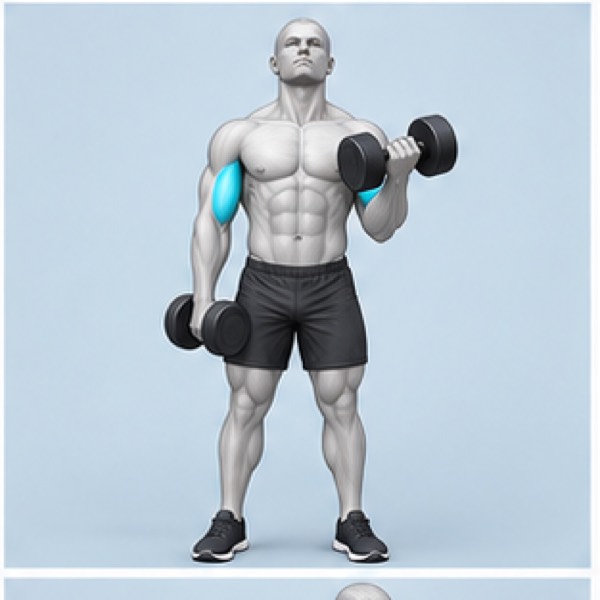
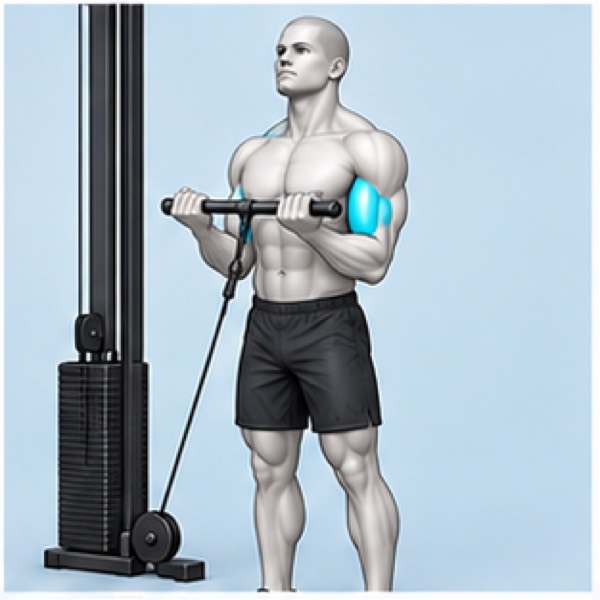
Frequently asked questions
What muscles does the incline dumbbell curl work?
Mainly your biceps brachii, especially the long head, which works from a deeper stretch than in a standing curl. The brachialis and brachioradialis assist.
What incline should the bench be for incline curls?
Between 45° and 60°. At 45° you get more stretch; if the front of your shoulder complains, go up to 60°. Below 45° usually puts too much strain on the shoulder.
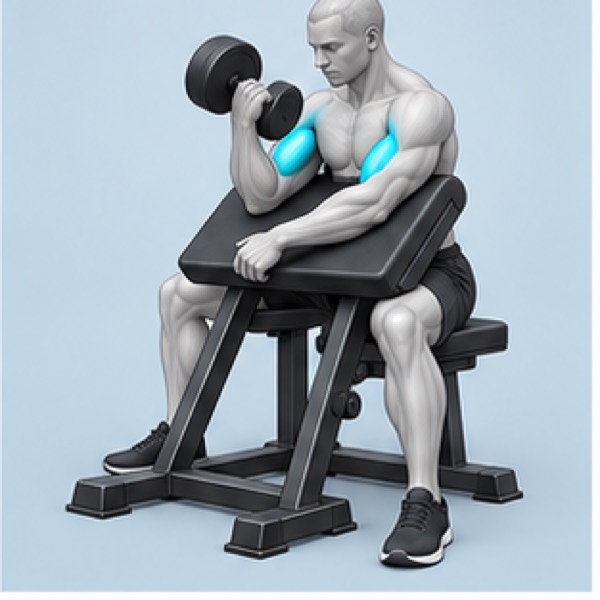
Incline curl vs preacher curl?
They're opposites. On the incline your arm sits behind your body and stretches the long head. On the preacher bench your arm is in front, so the biceps is shortened at the shoulder. Doing both across the week is a good combination.