 Zerolimits
Dumbbell lunge
The dumbbell lunge is a long step forward with a dumbbell in each hand, lowering until your back knee nearly touches the floor, then stepping back. It mainly works the quads and glutes of your front leg. You'll also see it called the forward lunge, and it's often done as walking lunges.
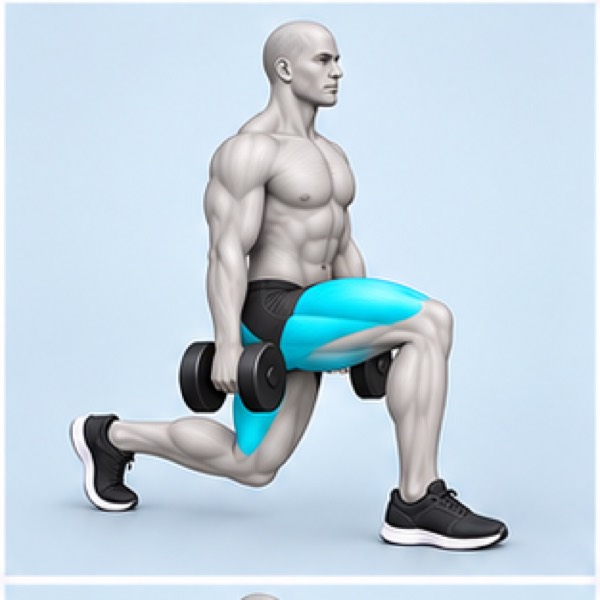
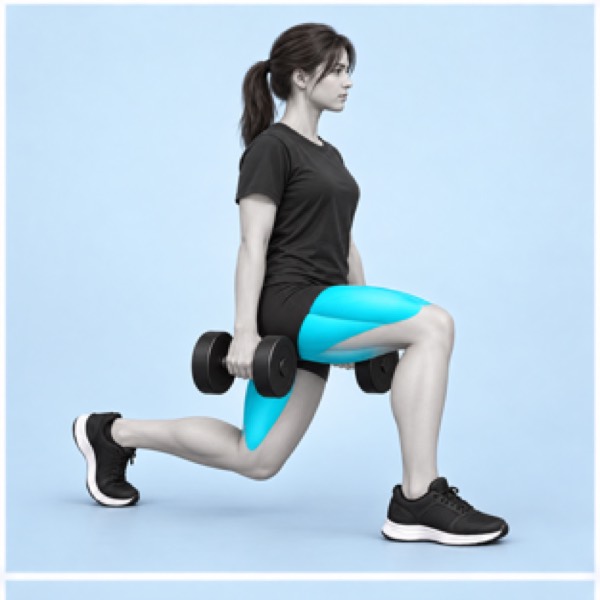
- Primary muscle
- Quads
- Also works
- Glutes, Hamstrings
- Equipment
- Dumbbells
- Pattern
- Lunge
Muscles worked
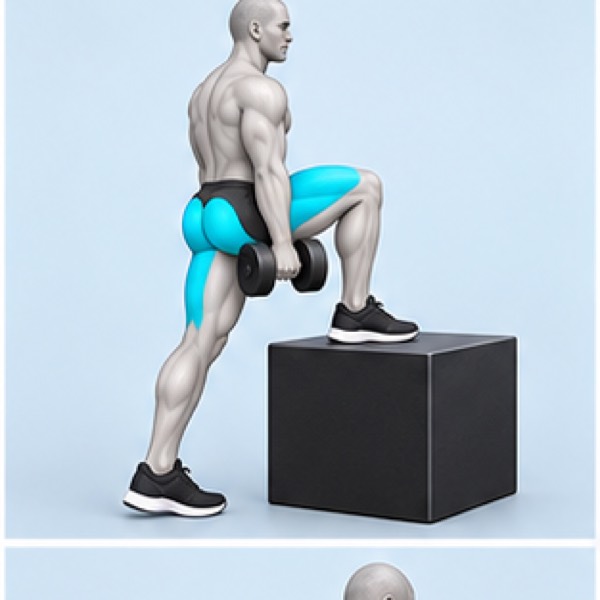
Your front leg does almost all the work. Your quads, both the vasti and the rectus femoris, control the descent and straighten your knee on the way up, while your glute max and adductor magnus extend your hip. Your glute med keeps your knee and pelvis from caving in. Your hamstrings help stabilize but work little. A short step and upright torso let your knee travel forward and shift work to your quads; a long step with a slight forward lean favors your glutes.
How to do it
Setup
- Hold a dumbbell in each hand, arms hanging at your sides.
- Stand with your feet hip-width apart and your abs braced.
Execution
- Step forward far enough that both knees end up around 90° at the bottom.
- Drop straight down until your back knee almost touches the floor, weight spread across your whole front foot.
- Push through the heel and midfoot of your front leg to return to the start in one motion.
- Alternate legs, or finish all reps on one side before switching.
Key cue: Control the descent and spread pressure across your whole foot.
Common mistakes
- Stepping on a tightrope. You lose balance and your knee twists. Keep your feet hip-width apart, like you're on two rails.
- Falling forward onto the front leg. Your knee absorbs the impact. Land and lower straight down under control.
- Taking too short a step. Your front heel lifts and your knee takes extra stress. Lengthen the step until your whole foot stays down.
- Letting your front knee cave in. Push it out in line with your toes, and drop the weight if you can't.
Variations
- Walking lunges: Instead of stepping back, you travel forward with each rep. More continuous, with a bit more glute work; you need 10–15 yards of space.
- Reverse lunge: You step back instead. Easier to balance, and usually kinder to the knees.
- Barbell lunge: With a bar on your back you can load more, but balance is harder. Use a rack or a Smith machine if you're new to it.
Sets and reps
Count reps per leg: 8–12 per side. With heavy dumbbells your grip often gives out before your legs, so use straps if you need them. To build muscle and strength: 6–12 reps, 3–4 sets. When you complete the range on every set, add a little weight. That's double progression.
Alternatives
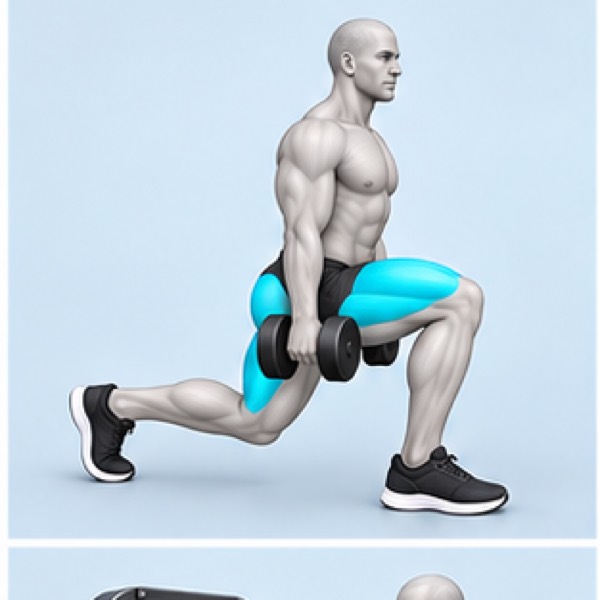
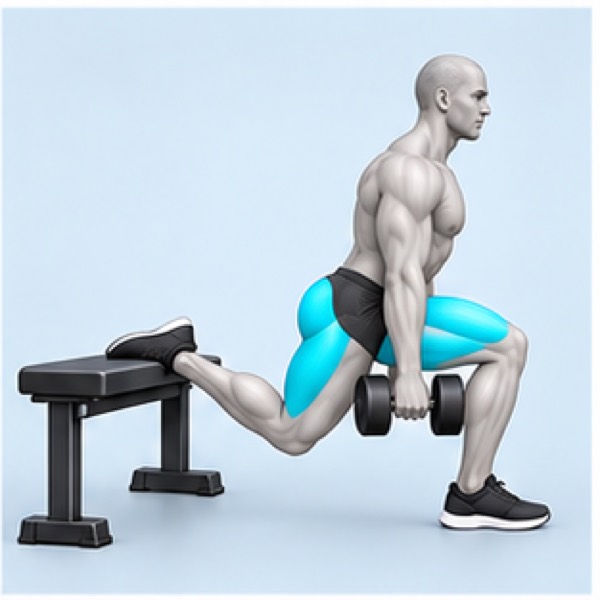
Frequently asked questions
What muscles do dumbbell lunges work?
Mainly the quads and glute max of your front leg, with help from the adductor magnus. Your glute med and core stabilize, and your hamstrings do relatively little.
Forward lunges vs reverse lunges: which is better?
Forward lunges make you brake your body as you land: more quad work and more stress on the knee. Reverse lunges keep your weight over the standing leg, so they're easier to control and usually better tolerated by the knees.
Do lunges work glutes or quads more?
Both. A short step and upright torso shift the work to your quads; a long step with a slight forward lean shifts it to your glutes. Set it up for whichever you want to prioritize.