 Zerolimits
Reverse lunge
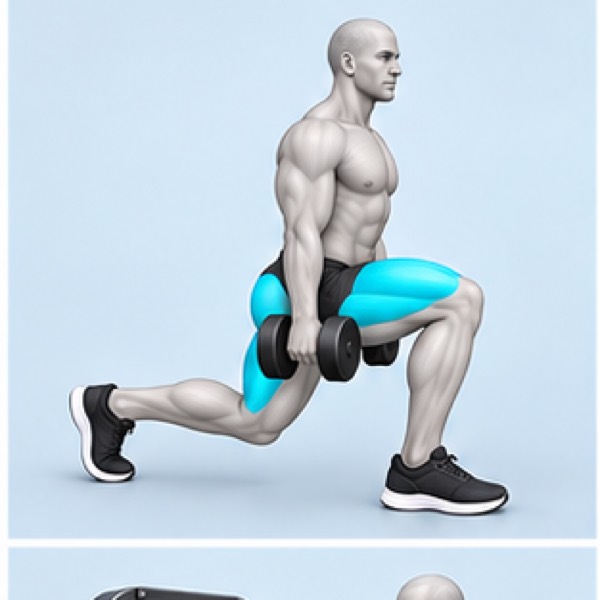
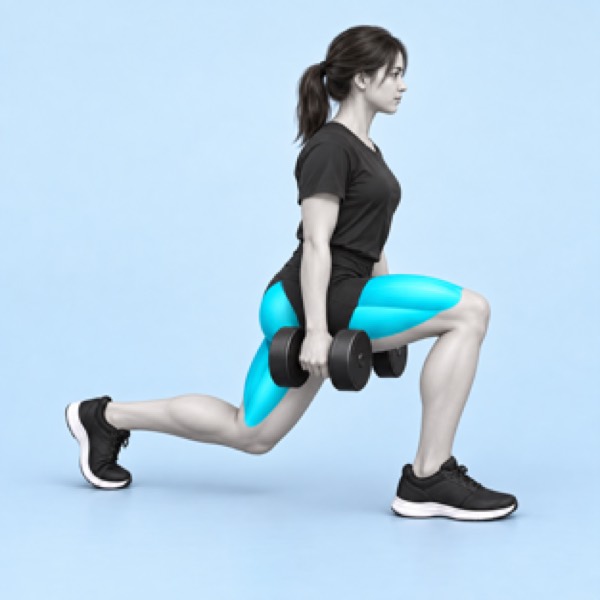
The reverse lunge is a lunge where you step backward instead of forward. It mainly works the quads and glutes of your front, standing leg. People also call it the backward lunge or step-back lunge, and it's the easiest lunge variation to control.
- Primary muscle
- Quads
- Also works
- Glutes, Hamstrings
- Equipment
- Dumbbells
- Pattern
- Lunge
Muscles worked
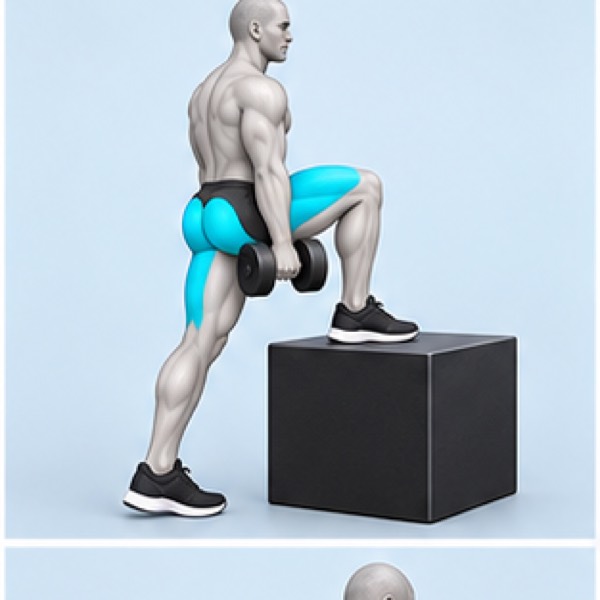
Your front leg carries almost all the load. Your quads control the descent and straighten your knee on the way up, while your glute max and adductor magnus extend your hip. Because your front shin stays more vertical than in a forward lunge, your hip does a bit more work and your knee a bit less. Your glute med keeps your pelvis level, and your hamstrings contribute little. Leaning your torso slightly forward adds glute work.
How to do it
Setup
- Hold a dumbbell in each hand and stand with your feet hip-width apart.
- Spread your weight across your whole foot and brace your abs.
Execution
- Take a long step back and land on the ball of your back foot.
- Lower by bending both knees until your back knee nearly touches the floor, most of your weight on your front foot.
- Drive up through the heel and midfoot of your front leg.
- Bring your back leg in next to the other and repeat, alternating sides or staying on one leg.
Key cue: Control the descent and spread pressure across your whole foot.
Common mistakes
- Pushing off your back leg to stand up. Your front leg does less. Think of the front leg lifting you while the back leg only balances.
- Dropping your back knee into the floor. You lose tension and can bang your knee. Lower over 2 seconds and stop an inch short.
- Stepping back in line with your front foot. You'll wobble. Keep your feet hip-width apart.
- Letting your front knee cave in on the way up. Push it out in line with your toes.
Variations
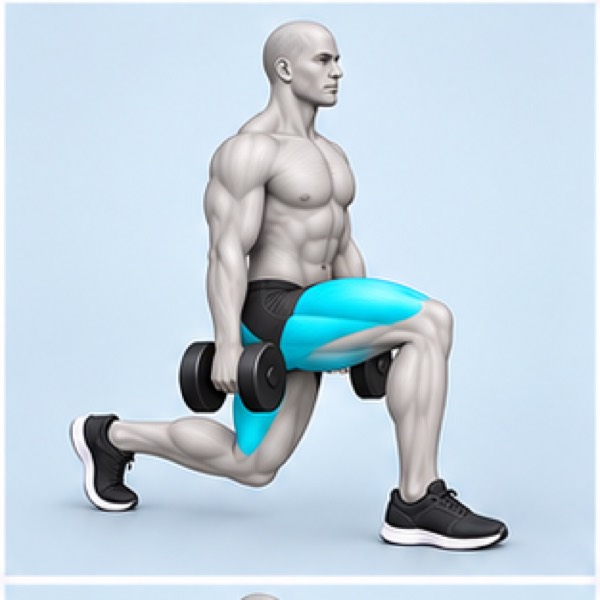
- Deficit reverse lunge: Standing with your front foot on a plate or a 2–4 inch step lets you sink deeper. More range and more glute and quad work.
- Offset reverse lunge: Hold one dumbbell on the side opposite your front leg. Your glute med and core work harder to keep you from tipping.
- Barbell or Smith machine reverse lunge: To go heavier than dumbbells allow without your grip limiting you.
Sets and reps
Count per leg: 8–12 per side. If your grip gives out before your legs, switch to a barbell or use straps. To build muscle and strength: 6–12 reps, 3–4 sets. When you complete the range on every set, add a little weight. That's double progression.
Alternatives
Frequently asked questions
What muscles does the reverse lunge work?
Mainly the quads and glute max of your front leg, helped by the adductor magnus. Your glute med stabilizes your pelvis, and your hamstrings do little.
Reverse lunge vs forward lunge: which is better?
The reverse lunge is easier to control because your weight doesn't travel forward, and it works your hips slightly more. The forward lunge forces you to brake your body and asks more of your quads and knees. For most people, the reverse lunge is the better starting point.
Is the reverse lunge better if your knees hurt?
Many people tolerate it better: your shin stays more vertical and there's no hard braking. If it still hurts, cut the range or the load, and see a professional if the pain sticks around.