 Zerolimits
Pull-up
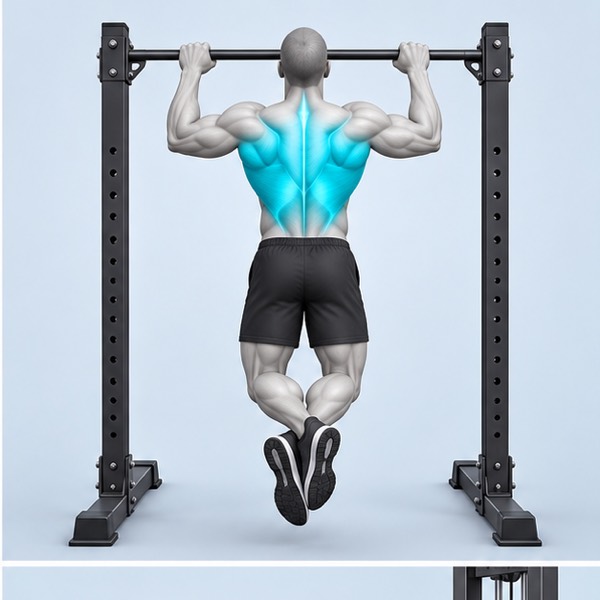
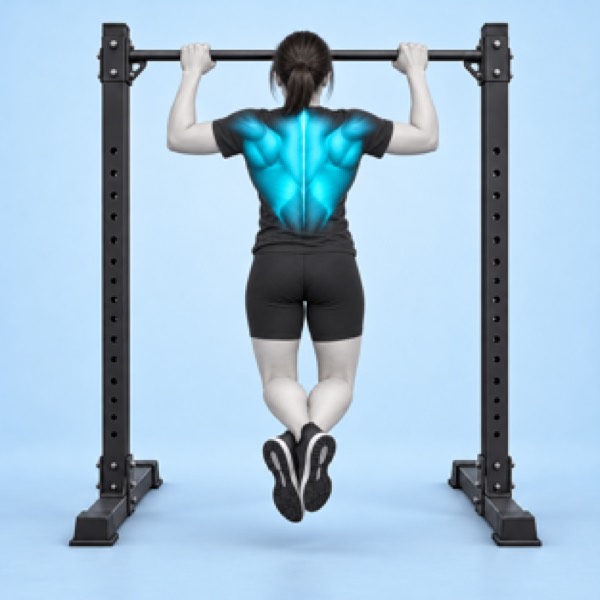
The pull-up is a vertical pull where you lift your own body from a bar with an overhand grip, palms facing away. It mainly works your lats and upper back, with help from your biceps and forearms. It's the classic test of back strength relative to your bodyweight.
- Primary muscle
- Back
- Also works
- Biceps
- Equipment
- Bodyweight
- Pattern
- Vertical pull
Muscles worked
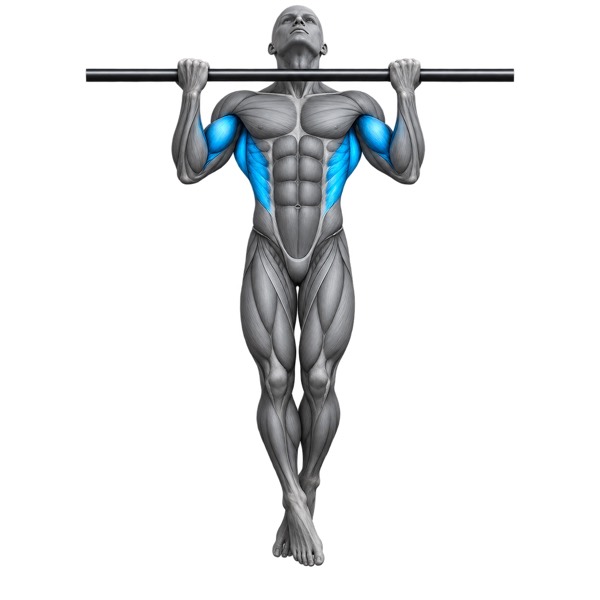
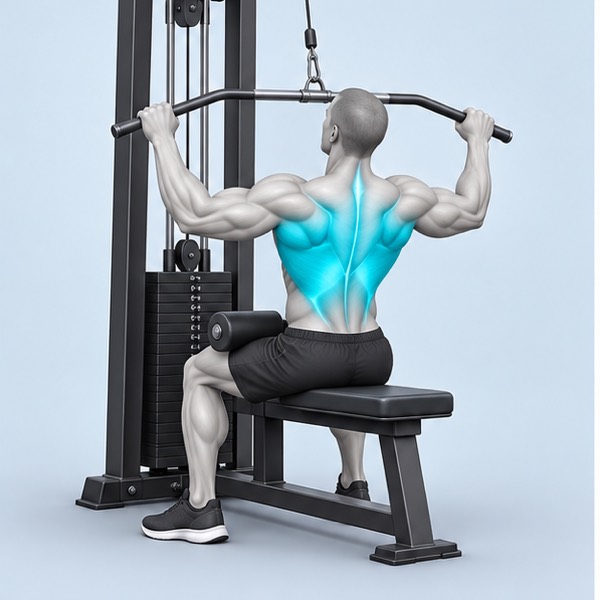
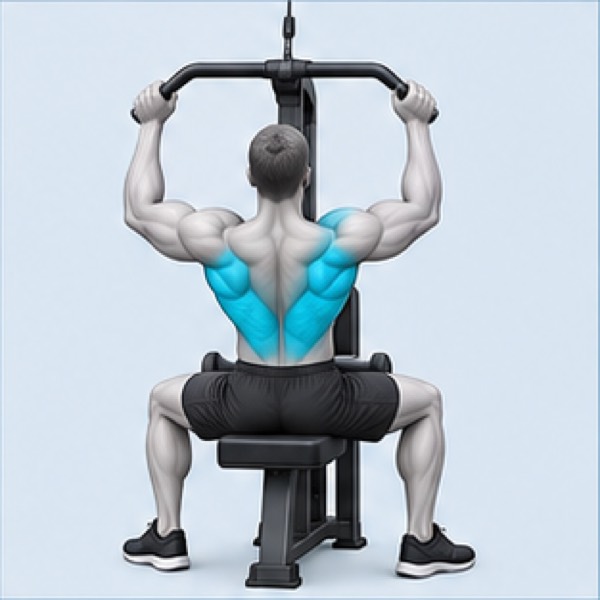
Your lats and teres major pull your arms down and do most of the work. Your middle and lower traps and rhomboids pull your shoulder blades down and together, and your rear delts help near the top. Your biceps, brachialis and brachioradialis bend your elbows, and your abs keep you from swinging. An underhand grip brings in more biceps; a very wide grip shortens the range without working your lats any harder.
How to do it
Setup
- Grab the bar with your palms facing away and your hands slightly wider than your shoulders.
- Hang with your arms straight, legs together, and your glutes and abs tight so you don't swing.
Execution
- Start by pulling your shoulders down, away from your ears, before you bend your elbows.
- Pull by driving your elbows down and toward your sides, chest aimed at the bar.
- Keep going until your chin clears the bar, without craning your neck to get there.
- Lower over 2–3 seconds to a full dead hang and start the next rep without bouncing.
Key cue: Drive your elbows to your back pockets and your chest to the bar.
Common mistakes
- Doing half reps. If your arms don't straighten at the bottom or your chin doesn't clear the bar, the rep doesn't count: do fewer, but full ones.
- Swinging or kicking your way up. Squeeze your glutes and abs, keep your legs together, and pause for a moment at the bottom of every rep.
- Pulling with your shoulders shrugged. If your shoulders ride up to your ears, your upper traps and biceps take over: set your shoulder blades down before you pull.
- Craning your neck to clear the bar. It's fake range; if your chin can't get there with your head neutral, that's where the rep ends.
Variations
- Chin-up: Palms facing you, hands shoulder-width apart. It brings in more biceps, and most people get a rep or two more.
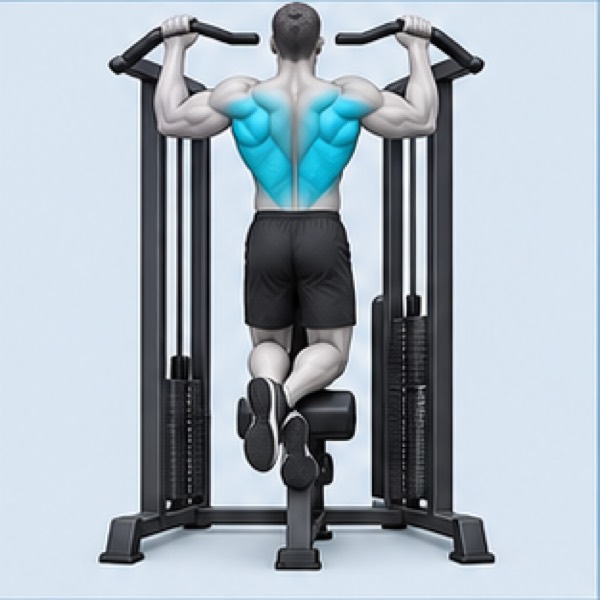
- Assisted pull-up: A machine or resistance band takes off part of your bodyweight. Use it to practice the full range until you can do strict reps.
- Weighted pull-up: Add a dip belt or hold a dumbbell between your feet. Use it once you can do more than 12 clean reps.
Sets and reps
If you can't do 5 reps yet, mix assisted pull-ups and slow negatives; once you get past 12, add weight. To build muscle and strength: 6–12 reps, 3–4 sets. When you complete the range on every set, add a little weight. That's double progression.
Alternatives
Frequently asked questions
What muscles do pull-ups work?
Mainly your lats, teres major and upper back: the middle and lower traps and rhomboids. Your biceps and forearms bend your elbows, and your abs keep your body steady.
How do I do my first pull-up?
Do negatives 2–3 times a week: jump or step up to the top and lower yourself over 3–5 seconds. Add assisted pull-ups or heavy lat pulldowns. Once you can control 5 slow negatives in a row, your first rep is close.
Pull-ups vs lat pulldowns: which is better?
They train the same muscles. Pull-ups demand more core and body control, but they're hard to progress in small steps. The lat pulldown lets you pick the exact load and train close to failure safely. Most people do best using both.
Pull-up vs chin-up: what's the difference?
Both build your lats. Chin-ups use an underhand grip, bring in more biceps and usually allow a rep or two more. Pull-ups load your brachioradialis and upper back a bit more. Pick based on how your wrists and elbows feel.