 Zerolimits
Incline barbell press
The incline barbell press is a bench press with the backrest set to 30–45° that mainly works your upper chest, with help from your front delts and triceps. It's also called the incline bench press. It's the go-to heavy compound lift for building the upper part of your pecs.
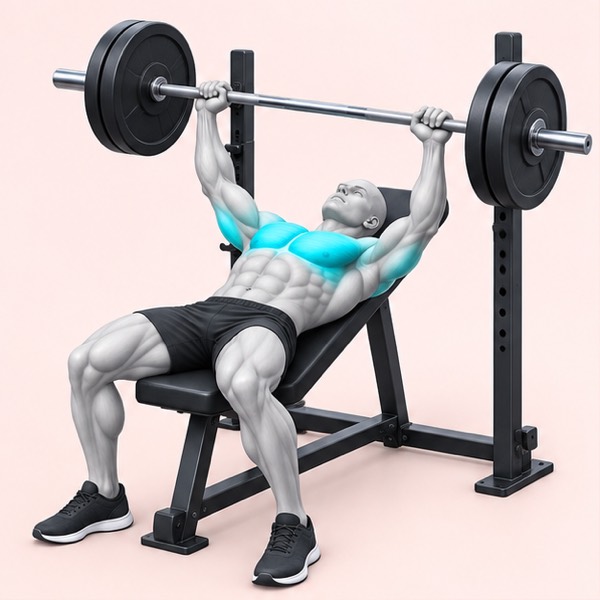
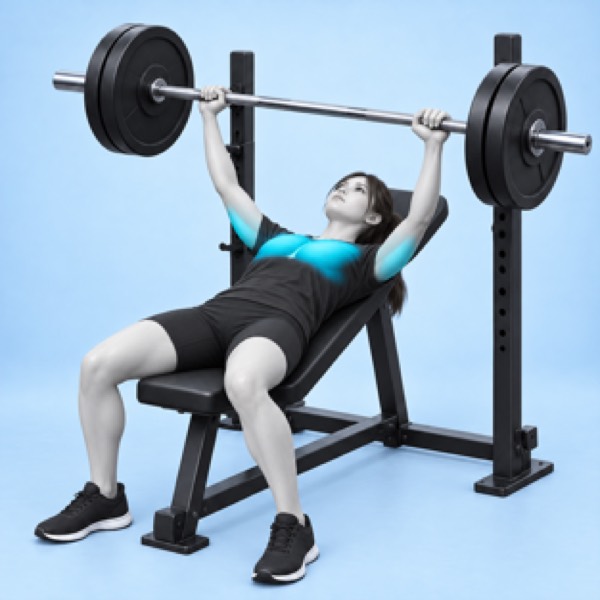
- Primary muscle
- Chest
- Also works
- Shoulders, Triceps
- Equipment
- Barbell
- Pattern
- Horizontal press
Muscles worked
Your pec major is still the main mover, but on an incline its clavicular head, the upper part that attaches to your collarbone, does more of the work. Your front delts get more involved than on a flat bench, and your triceps lock out your elbows at the top. The angle sets the balance: around 30°, your chest still leads; past 45°, the lift looks more and more like a shoulder press.
How to do it
Setup
- Set the backrest to about 30° and adjust the seat so your eyes sit right under the bar when you lie back.
- Grip the bar slightly wider than shoulder width, thumbs wrapped around it.
- Pull your shoulder blades back and down, lift your chest and plant your feet.
- Unrack the bar with straight arms and bring it over your shoulders.
Execution
- Lower the bar over about 2 seconds to your upper chest, a couple of inches below your collarbones.
- Keep your forearms vertical and your elbows about 45–60° from your torso.
- Touch without bouncing and press almost straight up until the bar is over your shoulders.
- Keep your glutes on the seat and your shoulder blades pinned for the whole set.
Key cue: The bar touches just below your collarbones and travels straight up, not toward your face or your stomach.
Common mistakes
- Setting the bench too steep. Past 45° it becomes more of a shoulder press; about 30° is plenty for your upper chest.
- Lowering the bar to mid-chest. On an incline the touch point is higher, near your collarbones; any lower and your forearms tilt and you lose strength.
- Arching so hard your chest ends up flat. An exaggerated arch turns the incline into a flat press; lift your chest but keep a natural curve in your lower back.
- Lifting your glutes off the seat. If you need to do that to finish the rep, the weight is too heavy.
Variations
- Incline dumbbell press: More range and each arm working on its own. Often easier on the shoulders.
- Smith machine incline press: The guided bar lets you focus on pressing and train close to failure without a spotter.
- Barbell bench press: With the bench flat, the work spreads across your whole chest and you can lift more.
Sets and reps
It works well for 6–10 reps; expect to lift a bit less than on your flat bench. To build muscle and strength: 6–12 reps, 3–4 sets. When you complete the range on every set, add a little weight. That's double progression.
To build a full session, see our chest workout at the gym.
Alternatives
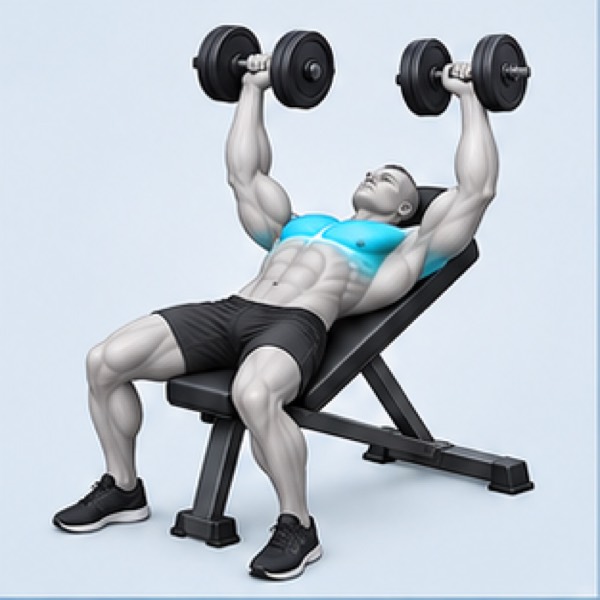 Incline dumbbell pressDumbbells
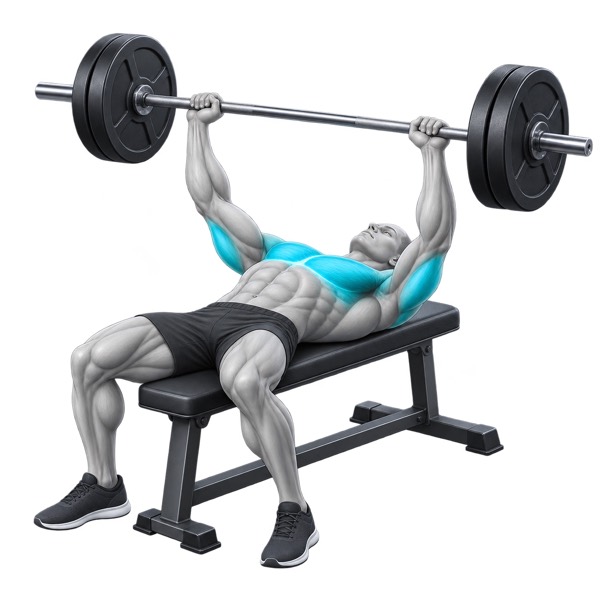 Barbell bench pressBarbell
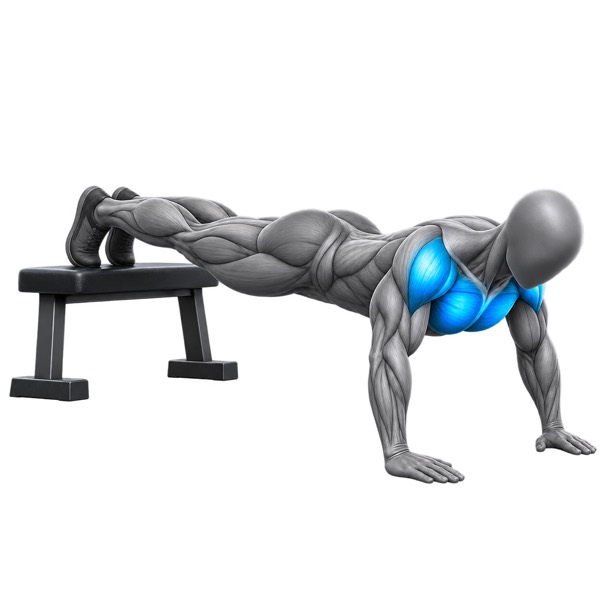 Decline push-upBodyweight
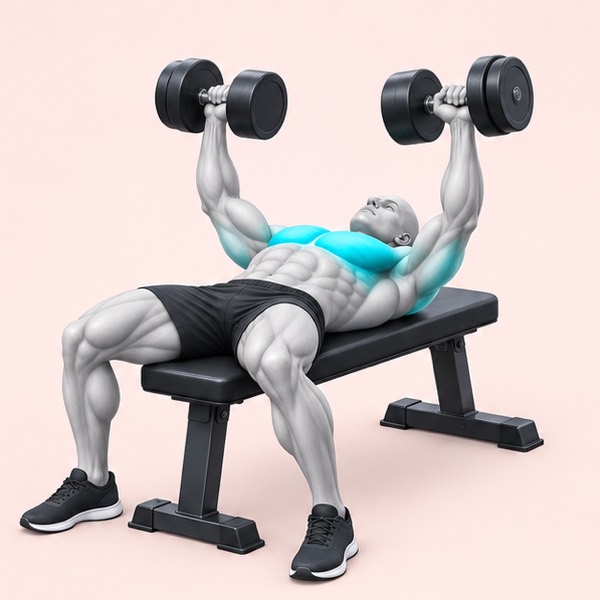 Dumbbell bench pressDumbbells
Frequently asked questions
What muscles does the incline bench press work?
Your upper chest, front delts and triceps. The steeper the bench, the more your shoulders take over from your chest, which is why it pays to stay at or below 45°.
What's the best angle for incline bench press?
Between 30 and 45°. At about 30°, your upper chest works hard without your shoulders taking all the load. Past 45°, it looks more and more like an overhead press.
Incline barbell vs dumbbell press: which is better?
The barbell lets you lift more and progress in small jumps. Dumbbells give you more range and make each arm work on its own. Both build your upper chest; pick the one your shoulders handle better.