 Zerolimits
Cable lateral raise
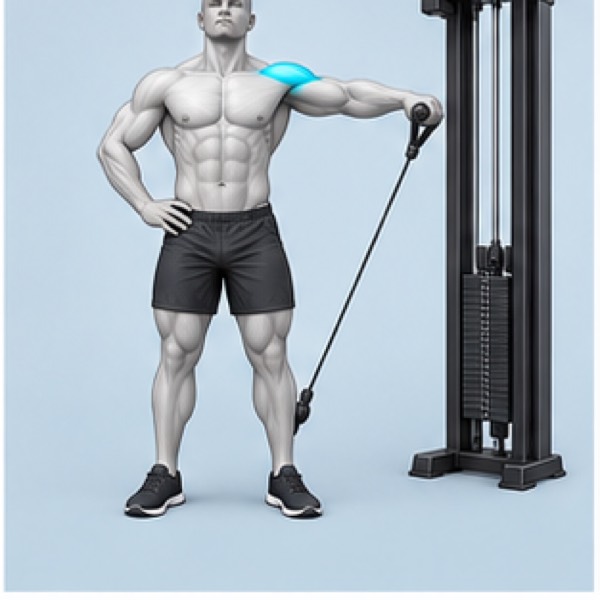
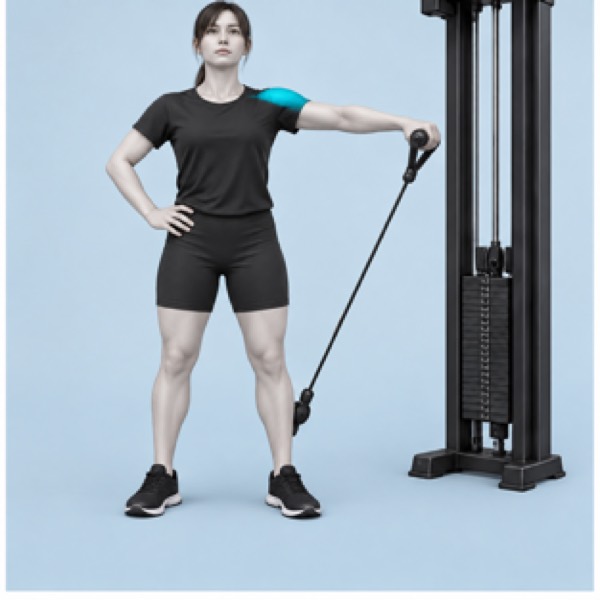
The cable lateral raise is an isolation exercise for your side delts: you raise your arm out to the side against a low pulley. Compared with dumbbells, the cable keeps tension on your delts from the very start of the rep, right where a dumbbell barely loads them.
- Primary muscle
- Shoulders
- Also works
- —
- Equipment
- Cable
- Pattern
- Shoulder isolation
Muscles worked
Your side delt does almost all the work, lifting your arm away from your body to shoulder height. Your supraspinatus helps in the first few degrees, and your front delt chips in, more so if your arm drifts in front of your body. Your upper traps take over if you shrug or go past horizontal. Running the cable behind your back starts your arm slightly further back, and many lifters feel it more in the side delt.
How to do it
Setup
- Set the pulley to its lowest position with a single handle.
- Stand side-on to the machine and grab the handle with your far hand, so the cable crosses in front of your body.
- Hold the machine with your free hand and let your working arm hang in front of your hip, elbow slightly bent.
Execution
- Set your shoulder down and raise your arm out to the side, leading with your elbow, not your hand.
- Stop when your arm is parallel to the floor, elbow and hand at the same height.
- Hold for a moment at the top without shrugging.
- Lower over 2–3 seconds until your hand is back in front of your hip, without letting the stack rest.
Key cue: Drive your elbow toward the side wall, not your hand toward the ceiling.
Common mistakes
- Shrugging as you lift. Your traps steal the work. Set your shoulder down before you start and stop at shoulder height.
- Swinging your torso. If you lean to move the cable, it's too heavy. Cable stacks jump in big increments; if you can't handle the next plate, add reps at the same one.
- Bending your elbow more and more. It turns into an upright row and your side delt loses tension. Keep the same elbow angle for the whole set.
- Letting the weight drop. Constant tension is the point of the cable; if the stack falls on the way down, you lose half the rep.
Variations
- Behind-the-back cable raise: The cable runs behind your back. Your arm starts slightly further back and many lifters feel it more in the side delt.
- Cuff lateral raise: Attach the cable to an ankle cuff around your wrist instead of holding a handle. It takes your forearm out of it and lets you focus on your elbow.
- Dumbbell lateral raise: No machine needed and both arms at once. Tension is low at the bottom and peaks at the top.
Sets and reps
It works best with light weight and 12–15 reps per arm, starting with your weaker side. To build muscle and strength: 10–15 reps, 2–4 sets. When you complete the range on every set, add a little weight. That's double progression.
Alternatives
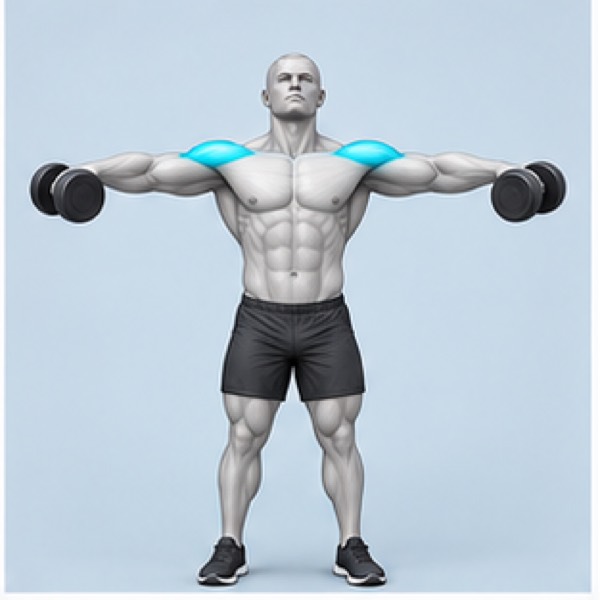 Lateral raiseDumbbells
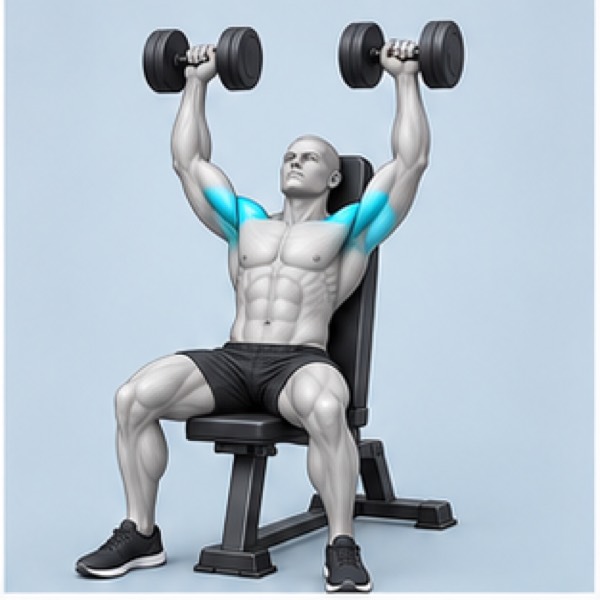 Dumbbell shoulder pressDumbbells
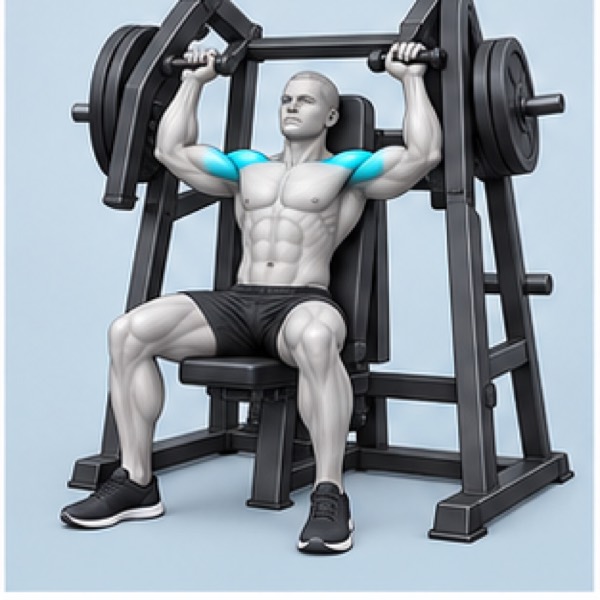 Machine shoulder pressMachine
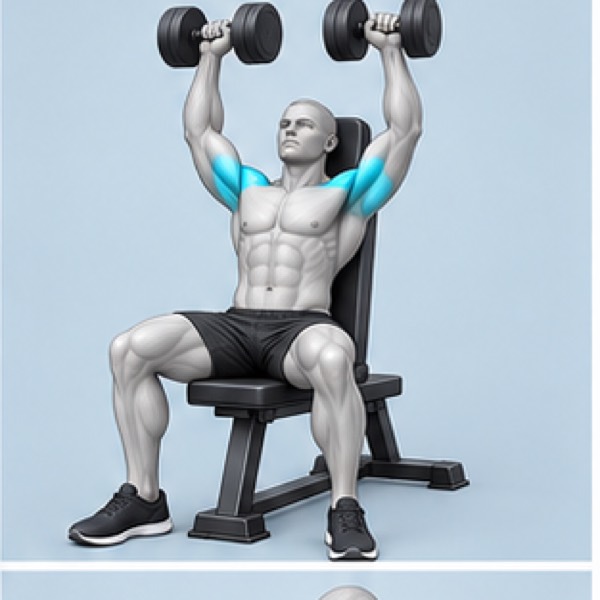 Arnold pressDumbbells
Frequently asked questions
What muscles does the cable lateral raise work?
Mainly your side delts, the part of your shoulder that adds width. Your supraspinatus helps at the start, your front delt assists, and your upper traps join in if you shrug.
Cable vs dumbbell lateral raise: which is better?
They train the same muscle. The cable keeps tension from the bottom of the rep; the dumbbell loads you mostly at the top. Both build your shoulders: pick one as a staple and progress it, or use both.
What height should the cable be for lateral raises?
At the lowest setting or around wrist height. That way the tension starts at the bottom. Set it higher and you lose tension at the start, and the movement looks less like a lateral raise.