 Zerolimits
Dumbbell shoulder press
The dumbbell shoulder press, also called the dumbbell overhead press, is a press where you drive two dumbbells from shoulder height to overhead. It mainly works your front and side delts, with help from your triceps, and you can do it seated or standing.
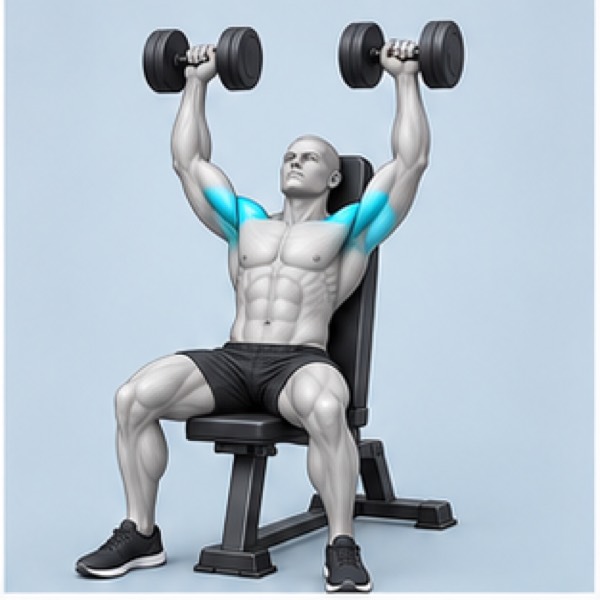
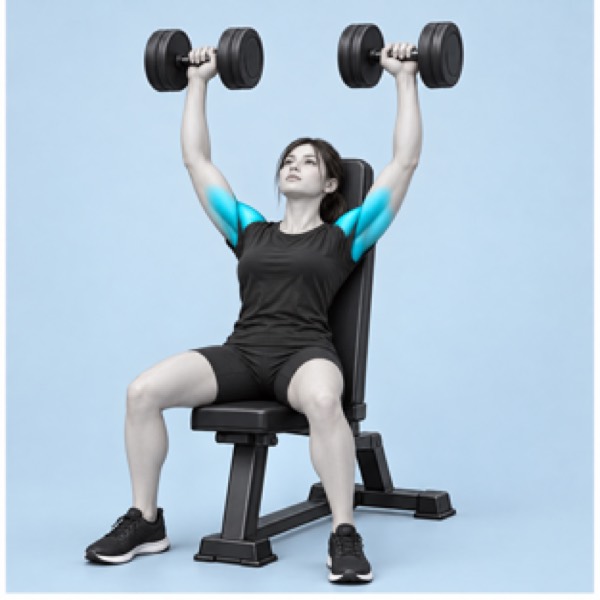
- Primary muscle
- Shoulders
- Also works
- Triceps
- Equipment
- Dumbbells
- Pattern
- Vertical press
Muscles worked
Your front delts do most of the work and your side delts help, more so the wider your elbows go. Your triceps straighten your elbows in the top half. Your upper traps and serratus anterior rotate your shoulder blades upward so your arms can go all the way overhead. Since each arm moves on its own, your shoulder stabilizers work harder than with a barbell, and standing up makes your core hold your trunk steady.
How to do it
Setup
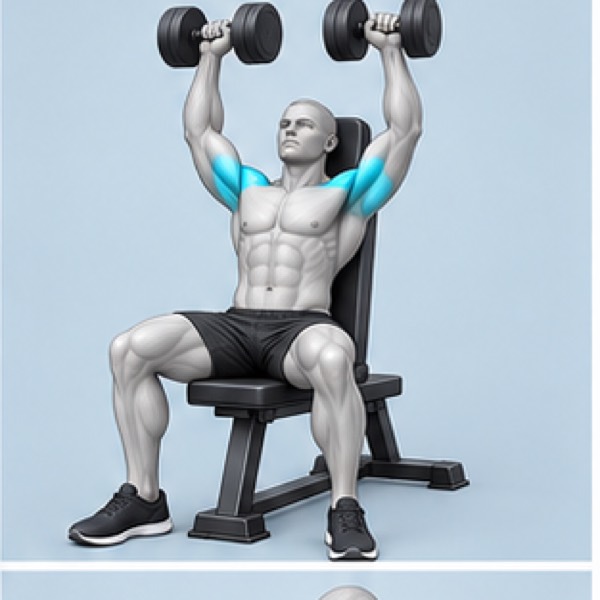
- Set the bench back to 75–90° and sit with your back against the pad and your feet planted.
- Rest the dumbbells on your thighs and kick them up to your shoulders one at a time with a knee drive.
- Hold them at ear height, elbows slightly in front of your body, palms facing forward or turned slightly in.
Execution
- Press up and slightly in until your arms are straight, without clanging the dumbbells together.
- At the top, the dumbbells sit over your shoulders, not in front of your face.
- Lower over 2–3 seconds until the dumbbells reach chin or ear height.
- Start the next rep without bouncing and without lifting your back off the pad.
Key cue: Avoid arching your back as you press.
Common mistakes
- Arching your lower back. With the bench too reclined or too much weight, you lean back and turn it into an incline press. Keep the bench nearly upright and your abs braced.
- Flaring your elbows straight out to the sides. Many people's shoulders don't like it. Bring them about 30° forward, in line with your shoulder blades.
- Cutting the range short. Lowering only a few inches lets you go heavier, but your shoulders do less. Bring the dumbbells down to chin height.
- Clanging the dumbbells at the top. You lose tension and stability. Stop when they're about an inch apart.
Variations
- Standing dumbbell press: With no back support, your core and stabilizers work harder. You'll use less weight.
- Neutral-grip press: Palms facing each other and elbows in front. Usually easier on the shoulders.
- Arnold press: Adds a wrist rotation: you start with your palms facing you and finish with them facing forward.
Sets and reps
It works well for 6–12 reps; with heavy dumbbells, getting them to your shoulders usually fails before the press does. To build muscle and strength: 6–12 reps, 3–4 sets. When you complete the range on every set, add a little weight. That's double progression.
Alternatives
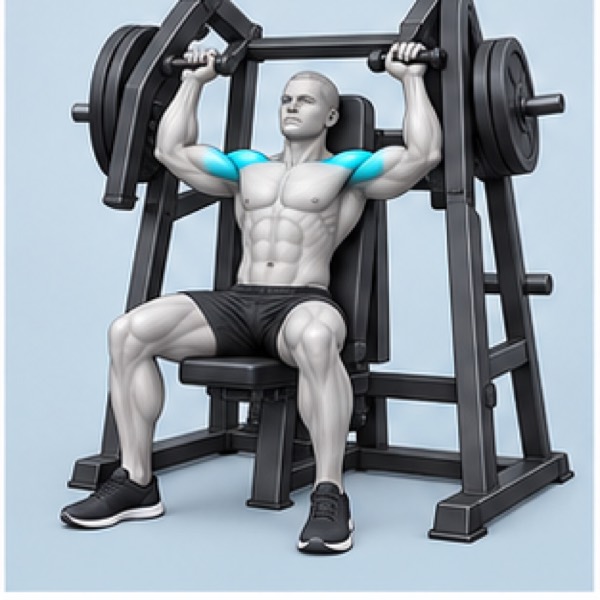
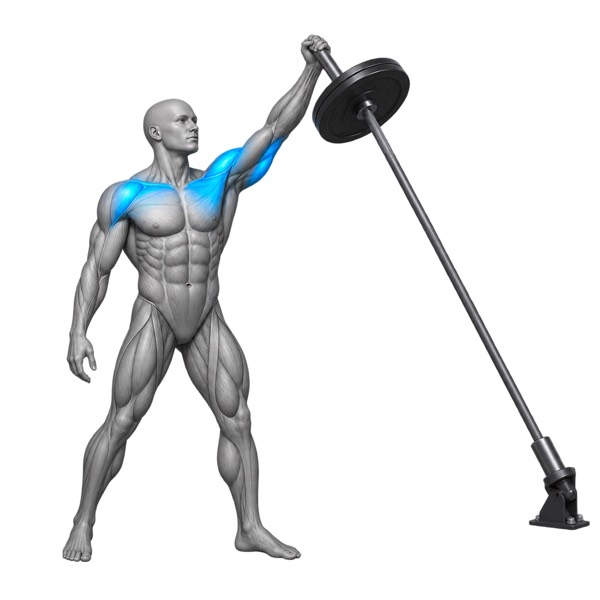
Frequently asked questions
What muscles does the dumbbell shoulder press work?
Mainly your front and side delts, with help from your triceps. Your upper traps and serratus anterior position your shoulder blades, and standing brings in your core.
Seated vs standing dumbbell shoulder press: which is better?
Seated with back support, you move more weight and isolate your shoulders better. Standing works your core and stability more, but with less load. For building your shoulders, seated is usually more practical.
Dumbbell vs barbell overhead press: which should I do?
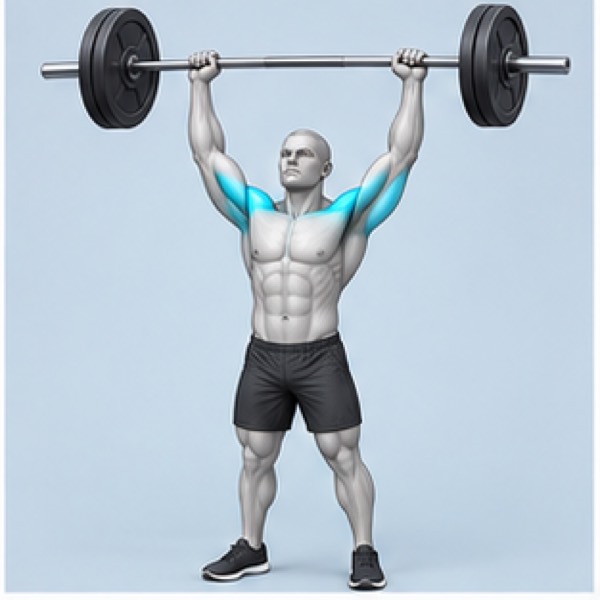
The barbell lets you move more weight and progress in small jumps of 5 lb or less. Dumbbells let each arm work on its own, let you adjust your elbow angle and give you a bit more range. Both build your shoulders.