 Zerolimits
Cable wood chop
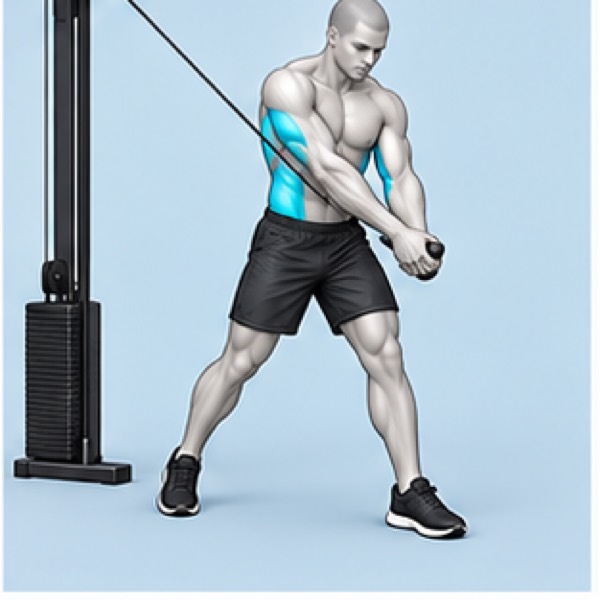
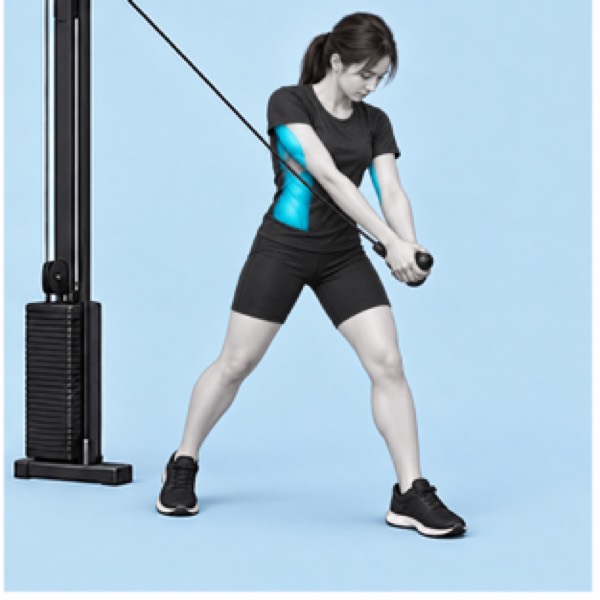
The cable wood chop, or cable woodchopper, is a rotational exercise where you pull a cable handle diagonally from high to low by turning your torso, and it mainly works your obliques. Your rectus abdominis, glutes and shoulders help.
- Primary muscle
- Core
- Also works
- —
- Equipment
- Cable
- Pattern
- Trunk rotation
Muscles worked
Your obliques do the main work: the external oblique on one side and the internal oblique on the other rotate your trunk, then slow the rotation on the way back. Your rectus abdominis and transverse abdominis keep your spine stiff. Your glutes and hips turn with you and transfer force from the floor, while your shoulders and lats hold the handle. Going low to high puts more work on your shoulders and finishes you in a tall, extended position.
How to do it
Setup
- Set the pulley to its highest position with a single handle or a rope.
- Stand side-on to the machine, a long step away, feet a bit wider than shoulder-width and knees slightly bent.
- Grab the handle with both hands above the shoulder nearest the machine, arms almost straight.
Execution
- Brace your abs and pull diagonally toward your opposite hip, turning your shoulders and hips together.
- Pivot on the foot nearest the machine so your knee and hip follow the turn.
- Finish with your hands outside your opposite knee, chest up and back straight.
- Return slowly, controlling the cable. Do all your reps on one side, then switch.
Key cue: Turn your hips and chest together; your nearly straight arms just guide the handle.
Common mistakes
- Pulling with your arms. If your elbows bend, it turns into an awkward row. Keep your arms nearly straight and let your body's rotation move the handle.
- Turning with your feet planted. All the rotation comes from your lower back. Let your back foot pivot so the turn is shared by your hips and upper back.
- Hunching over at the finish. Ending rounded and staring at the floor turns it into a twisting crunch. Stop at knee height with your chest up.
- Going too heavy. If the cable yanks you back to the start, the weight is too much. Pick a load you can control on the way back.
Variations
- Low-to-high wood chop: Low pulley: pull from outside your knee to above your opposite shoulder. Same oblique work, more shoulder.
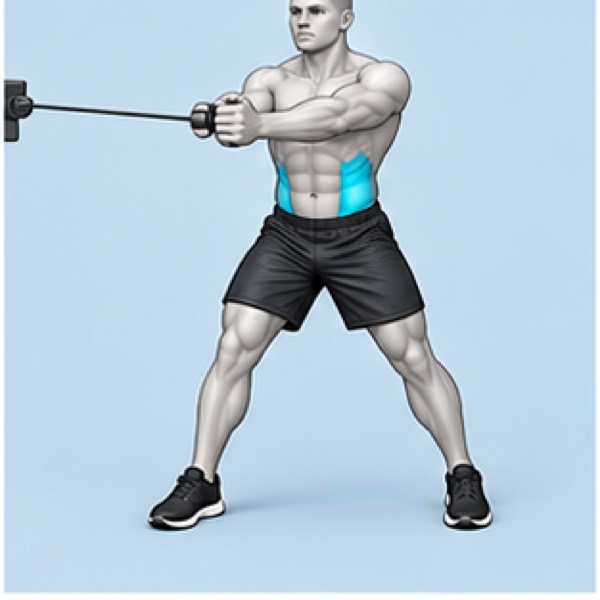
- Horizontal wood chop: Pulley at chest height and a level turn. The easiest version for learning to rotate from your hips.
- Half-kneeling wood chop: With one knee down, your hips help less and your trunk does more of the work.
Sets and reps
Do 10–15 reps per side with a weight you can control on the way back. To build muscle and strength: 10–15 reps, 2–4 sets. When you complete the range on every set, add a little weight. That's double progression.
Alternatives
Frequently asked questions
What muscles does the cable wood chop work?
Mainly your obliques, which rotate your trunk and slow the turn on the way back. Your rectus abdominis and transverse abdominis assist, and your glutes and shoulders move with you.
High-to-low or low-to-high wood chop?
Both train your obliques. High to low is easier to learn and you can load it a bit more. Low to high works your shoulders more and finishes you upright. Alternate them by training block or do both.
Cable wood chop vs Pallof press?
They complement each other. In the wood chop you rotate your trunk; in the Pallof press you hold still while the cable tries to twist you. One builds strength through rotation, the other strength to resist it.