 Zerolimits
Farmer's carry
The farmer's carry, or farmer walk, means walking with a heavy weight in each hand. It works your core, which keeps your torso upright, plus your grip, traps and shoulders. It's one of the simplest exercises there is for building grip and trunk strength.
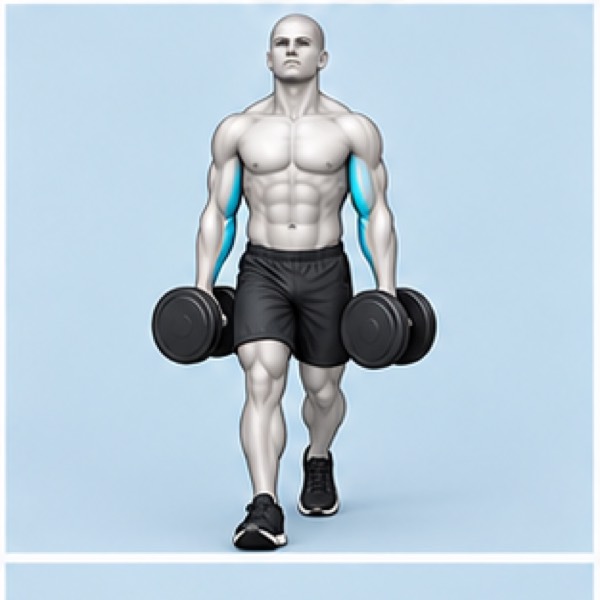
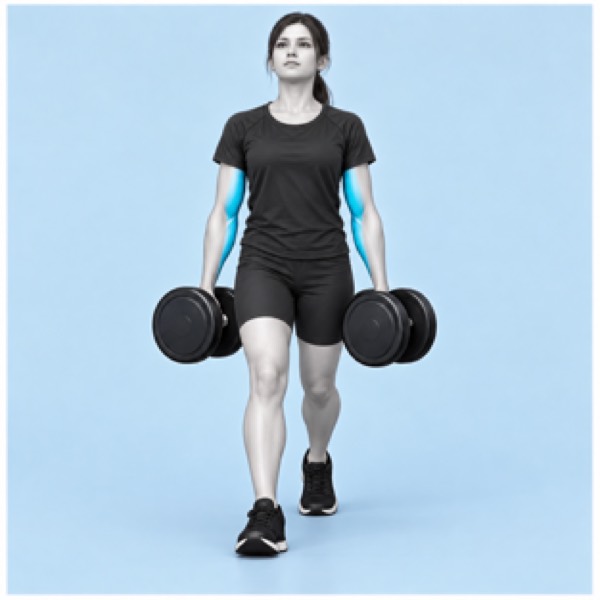
- Primary muscle
- Core
- Also works
- Shoulders, Back
- Equipment
- Dumbbells
- Pattern
- Carry
Muscles worked
Your core works isometrically: the transverse abdominis, obliques and quadratus lumborum stop your torso from tipping with every step. Your forearm flexors hold the dumbbells, and grip is usually the first thing to go. Your traps and delts keep your shoulders in place so the weight doesn't drag them down. As you walk, your glute medius steadies your hips on each step.
How to do it
Setup
- Set two heavy dumbbells or kettlebells beside your feet.
- Pick them up like a deadlift: hips back, neutral spine, and stand by pushing the floor away.
- Once standing, set your shoulders down and back, arms straight at your sides and abs braced.
Execution
- Walk with short, quick steps, heel to toe, eyes forward.
- Keep your torso vertical: don't lean to either side or forward.
- Don't let the dumbbells swing or bang into your legs.
- Cover 20–40 meters or walk for 30–60 seconds, then set the weights down with the same hip hinge you used to pick them up.
Key cue: Walk tall and avoid leaning to either side.
Common mistakes
- Going too light. If you walk comfortably and your grip isn't struggling, it isn't a farmer's carry. Finishing each trip should be hard.
- Shrugging your shoulders up. Squeeze the handles and pull your shoulders down, away from your ears.
- Leaning or swaying. If one side drops or your torso bends, the weight is too heavy or your steps are too long.
- Dumping the weights. When you finish, bend your hips and knees and set the dumbbells down with a flat back, not a rounded one.
Variations
- Suitcase carry: Weight in one hand only. The obliques and quadratus lumborum on the opposite side work much harder to keep you from leaning.
- Farmer handles or trap bar: They let you load far more than dumbbells. This is the version used in strongman events.
- Kettlebell rack carry: The kettlebells sit at shoulder height, resting on your forearms. It works your upper back more and forces you to breathe while staying braced.
Sets and reps
Do trips of 20–40 meters or 30–60 seconds, with 1–2 minutes of rest between rounds. For time or distance: 3–4 rounds. Once you finish every round with good form, add load, distance or difficulty.
Alternatives
Frequently asked questions
What muscles does the farmer's carry work?
Your core (obliques, transverse abdominis and quadratus lumborum), your grip and forearms, your traps and your shoulders. Your legs and glute medius work as you walk under load.
How heavy should a farmer's carry be?
Start with roughly a quarter of your bodyweight in each hand. A good target is walking 30 meters with half your bodyweight in each hand, your full bodyweight in total, without your grip opening.
What is the farmer's carry good for?
Building grip, trap and trunk strength that carries over to deadlifts, rows and lifting heavy things in daily life. It's also a good finisher for building work capacity at the end of a session.