 Zerolimits
Russian twist
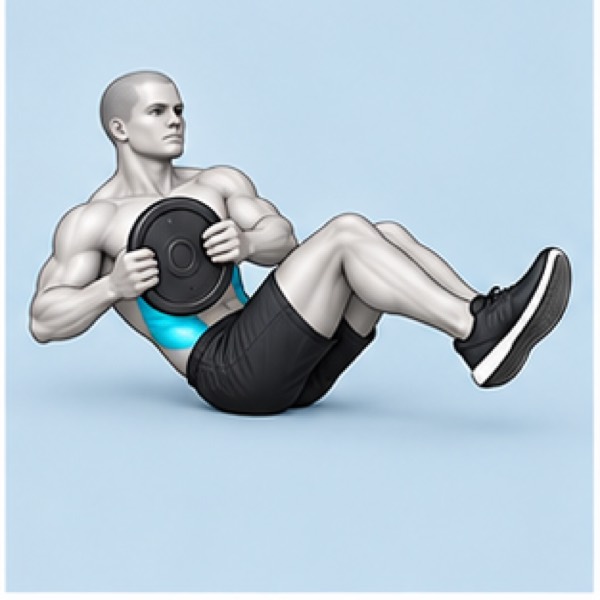
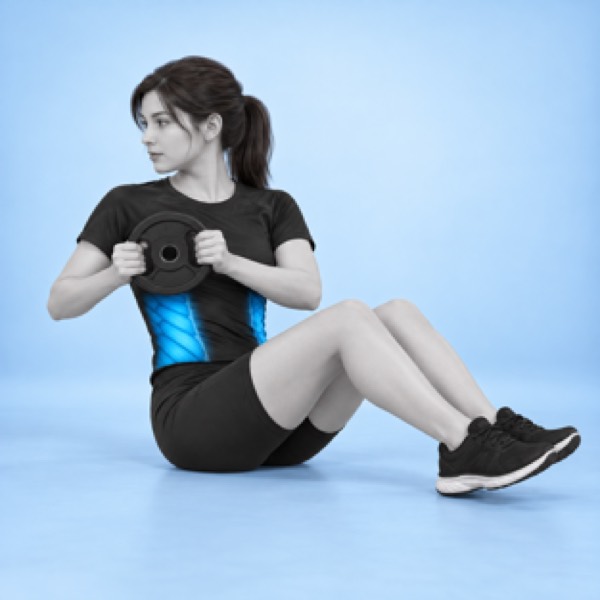
The Russian twist is an ab exercise where you sit leaning back and rotate your torso from side to side, and it mainly works your obliques. Your rectus abdominis and hip flexors hold you in position. You can do it with bodyweight, a weight plate or a medicine ball.
- Primary muscle
- Core
- Also works
- —
- Equipment
- Bodyweight
- Pattern
- Trunk rotation
Muscles worked
Your external and internal obliques rotate your trunk to each side and slow the turn before you change direction. Your rectus abdominis works isometrically to hold your torso at about 45°, and your hip flexors (iliopsoas and rectus femoris) hold your legs up, especially if your feet are off the floor. With a plate or medicine ball, your obliques work harder to brake each turn. If you only move your arms, they barely work.
How to do it
Setup
- Sit on a mat with your knees bent and your heels on the floor.
- Lean back to about 45° with a straight back and your chest up.
- Clasp your hands or hold a plate in front of your chest, elbows slightly bent.
Execution
- Turn your shoulders and chest to one side until your hands are beside your hip.
- Come back to center under control and turn to the other side.
- Hold the lean and a straight back for the whole set, without slumping or sitting up.
- Spend 1–2 seconds on each turn and breathe at each change of side.
Key cue: Rotate your shoulders and chest, not just your arms.
Common mistakes
- Moving only your arms. If the plate travels side to side while your chest faces forward, your obliques barely work. Point your sternum to each side.
- Rounding your back. Slumping takes tension off your abs and loads your lower back. Lift your chest and lean back less if you need to.
- Going too fast. Slapping the floor at full speed turns it into a swing. Brake every turn.
- Adding weight too soon. Start with bodyweight and add a 5–10 lb plate once you can do 20 controlled reps.
Variations
- Feet off the floor: Lifting your heels makes your abs and hip flexors hold your legs up. Harder and less stable.
- Weighted Russian twist: Hold a plate or medicine ball close to your chest. The farther you hold it from your body, the harder it is to brake each turn.
Sets and reps
Do 12–20 slow reps, counting each side as one; when that gets easy, add weight rather than speed. To build muscle and strength: 12–20 reps, 2–3 sets. When you complete the range on every set, add a little weight. That's double progression.
Alternatives
Frequently asked questions
What muscles does the Russian twist work?
Mainly your obliques, which rotate your trunk and brake each turn. Your rectus abdominis and hip flexors work isometrically to hold you in the leaned-back position.
Is the Russian twist bad for your back?
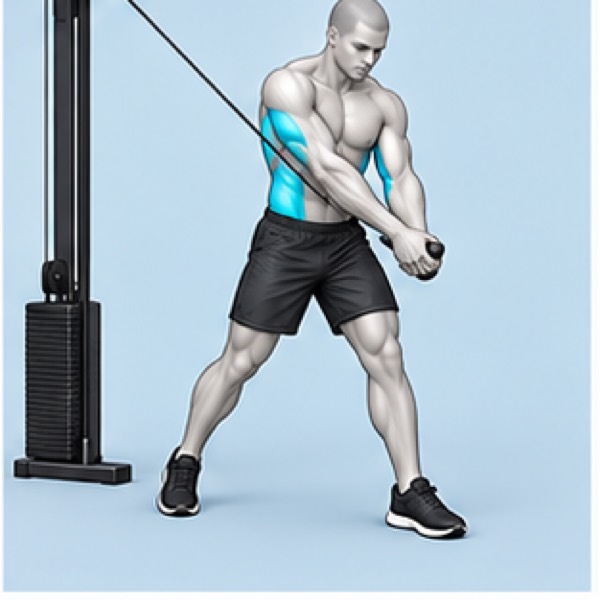
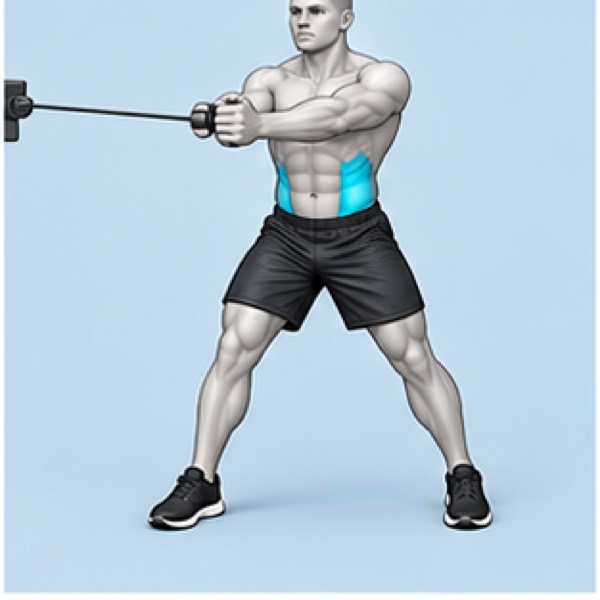
For most people, no, as long as you rotate with control and a straight back. It combines flexion and rotation, so if it bothers your lower back, swap it for the Pallof press or cable wood chop, which train your obliques without rounding your spine.
Should you do Russian twists with weight?
Start without weight until you can do 20 controlled reps. Then add a 5–10 lb plate or medicine ball. Adding weight gradually beats speeding up: speed takes work away from your obliques.