 Zerolimits
Pallof press
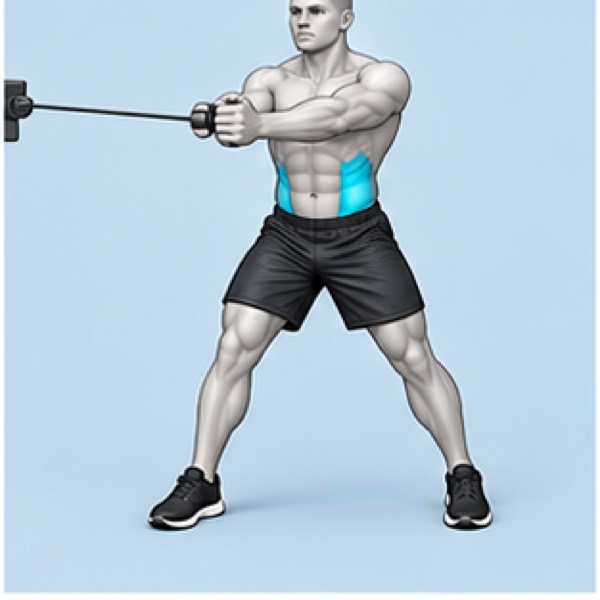
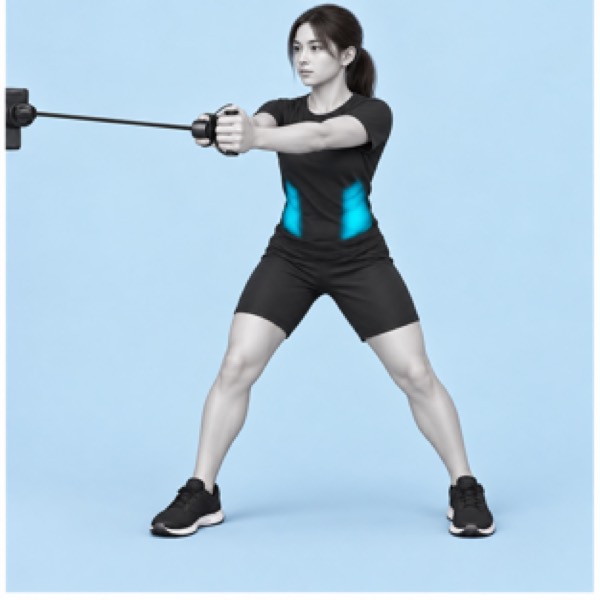
The Pallof press is an anti-rotation exercise where you stand side-on to a cable, press the handle straight out and hold without letting the cable twist you, and it mainly works your obliques and transverse abdominis. It's named after physical therapist John Pallof and works with a cable or a resistance band.
- Primary muscle
- Core
- Also works
- —
- Equipment
- Cable
- Pattern
- Core stability
Muscles worked
Your external and internal obliques and your transverse abdominis work isometrically to stop your trunk from turning toward the machine. Your rectus abdominis keeps your ribs and pelvis in place, and your glutes, especially the glute medius, keep your hips from rotating. Your shoulders and chest just press the handle out. The difficulty comes from the weight, your distance from the cable and how far you press: with your arms straight, the lever is longest.
How to do it
Setup
- Set the cable at chest height with a single handle.
- Hold it with both hands and step 1–2 paces sideways until the cable is taut.
- Feet hip-width apart, knees slightly bent and hands against your sternum.
Execution
- Brace your abs and glutes and press the handle straight out until your arms are straight.
- Hold for 2–3 seconds with your arms extended, without your torso or hands drifting toward the machine.
- Bring your hands back to your chest slowly, still resisting the pull.
- Do all your reps on one side, then turn around for the other.
Key cue: Press straight out and don't let the cable turn you.
Common mistakes
- Rotating toward the machine. If your hands drift toward the cable, the weight is too heavy or you're standing too far away. Drop a plate or step in.
- Leaning to compensate. If you tilt away from the cable, your posture does the obliques' job. Stay upright.
- Arching your lower back as you press. Tuck your pelvis slightly and keep your ribs down.
- Skipping the pause. The work happens in the seconds with your arms extended; without them, it's just a light press.
Variations
- Half-kneeling Pallof press: With one knee down, your base is narrower and your hips help less. Harder with the same weight.
- Band Pallof press: Same movement with a band anchored at chest height. Good for home workouts or warm-ups.
- Pallof press with overhead raise: From the extended position, raise your arms overhead without twisting or arching. The longer lever makes it harder.
Sets and reps
Do 10–15 reps per side with a 2–3 second pause, or hold 20–30 seconds with your arms extended. To build muscle and strength: 10–15 reps, 2–4 sets. When you complete the range on every set, add a little weight. That's double progression.
Alternatives
Frequently asked questions
What muscles does the Pallof press work?
Mainly your obliques and transverse abdominis, which stop your trunk from rotating. Your rectus abdominis and glutes assist, and your shoulders just hold the handle.
What is the Pallof press good for?
It trains your abs to resist rotation, which is what they do when you carry a load in one hand, push or change direction. Your spine doesn't move, so it puts little load on your lower back, and the cable makes it easy to progress.
How much weight should I use for the Pallof press?
Not much. Pick a weight you can hold for 2–3 seconds with straight arms without your hands drifting. To make it harder, first step farther from the machine, then add plates.