 Zerolimits
Decline push-up
The decline push-up is a push-up with your feet up on a bench or box that works your chest, with more emphasis on the upper chest, plus your front delts and triceps. With your feet higher than your hands, more of your bodyweight goes onto your arms, so it's harder than a regular push-up.
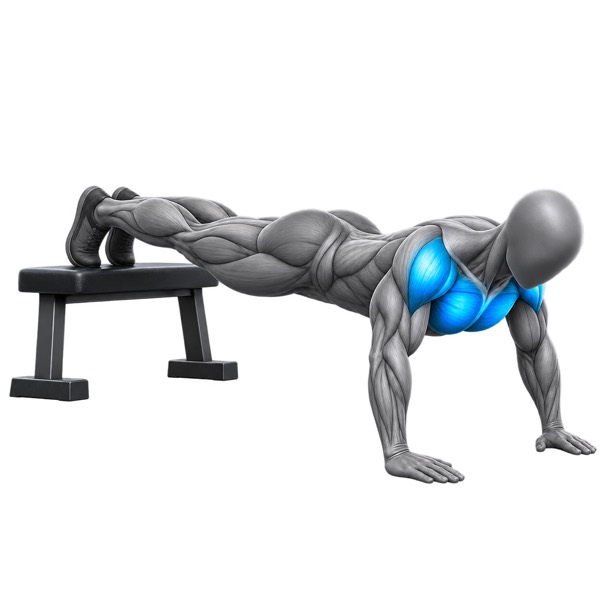
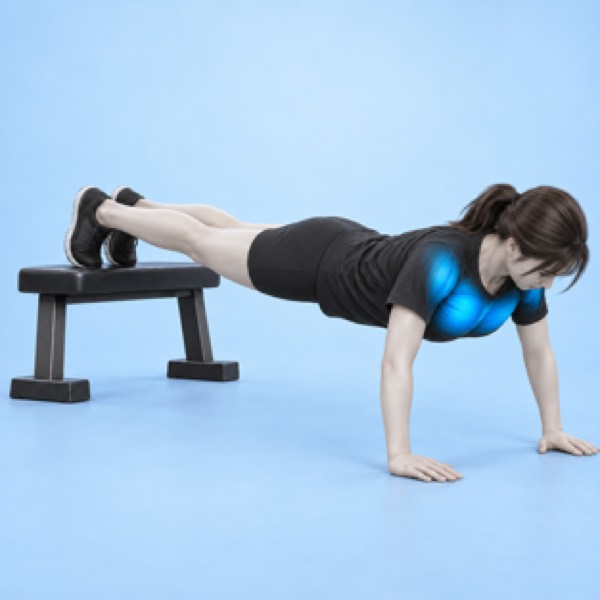
- Primary muscle
- Chest
- Also works
- Shoulders, Triceps
- Equipment
- Bodyweight
- Pattern
- Horizontal press
Muscles worked
Your pec major still does most of the work, but with your body angled downward the press looks like an incline press, so the upper (clavicular) part of your chest works harder. Your front delts do more than in a regular push-up and your triceps straighten your elbows. Your abs and glutes keep your body in a straight line. The higher your feet, the more weight you push and the more your shoulders take over.
How to do it
Setup
- Put your feet on a bench or box about 12–24 inches high, resting on your toes.
- Place your hands on the floor slightly wider than your shoulders, directly under them or a little forward.
- Line up your heels, hips and head and squeeze your glutes and abs.
Execution
- Lower your chest toward the floor over about 2 seconds, elbows about 45° from your body.
- Go down until your chest is a couple of inches off the floor, without reaching with your head to get there first.
- Push the floor away until your arms are straight, spreading your shoulder blades slightly at the top.
- Keep your hips in line for the whole set: no sagging and no piking.
Key cue: Body straight as a board from heels to head; once your hips drop, the set is over.
Common mistakes
- Setting your feet too high on day one. The higher you go, the more your shoulders take over; start with a 12–16 inch bench and raise it once you hit 15 clean reps.
- Letting your hips sag. With your feet up, your lower back tends to drop; squeeze your glutes and abs or use a lower bench.
- Piking your hips to make it easier. The work shifts to your shoulders and it stops being a decline push-up; keep your body straight.
- Leading with your head. If your nose reaches the floor before your chest, you cut the range short; look at the floor slightly ahead of your hands.
Variations
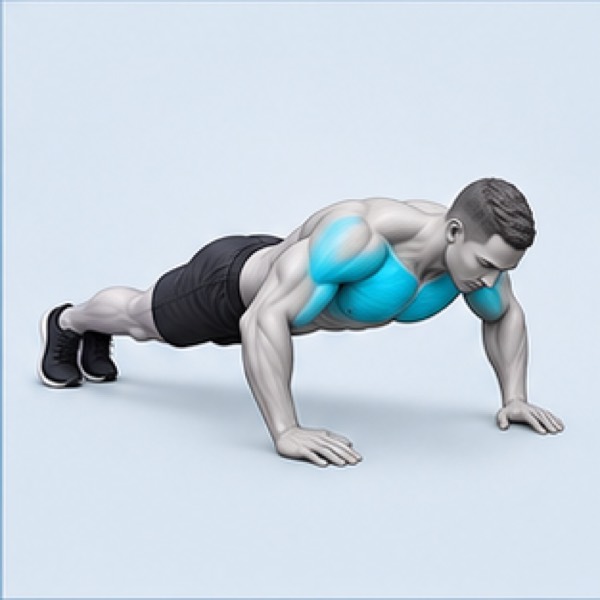
- Push-up: The feet-on-the-floor version. If you can't do 8 clean decline push-ups, build strength here first.
- Pike push-up: Hips piked up and head lowering toward the floor: the work moves almost entirely to your shoulders.
- Weighted or banded: A plate on your upper back, or a band across your back held under your hands, adds load once you can do more than 20.
Sets and reps
Once you can do more than 12–15 in a row, raise your feet or add weight to get back into range. To build muscle and strength: 6–12 reps, 3–4 sets. When you complete the range on every set, add a little weight. That's double progression.
To build a full session, see our chest workout at the gym.
Alternatives

Frequently asked questions
What muscles do decline push-ups work?
Your pec major, with more emphasis on the upper chest, plus your front delts and triceps. Your abs and glutes work to keep your body straight.
Do decline push-ups work the lower chest?
No. Despite sharing a name with the decline bench, raising your feet puts your arms at an incline-press angle, so they hit your upper chest and front delts more. For the lower chest, dips are a better pick.
Are decline push-ups harder than regular push-ups?
Yes. With your feet up, your arms support more of your bodyweight, and the higher your feet, the harder it gets. If you can't do 8 regular push-ups in a row, start there.