 Zerolimits
Pike push-up
The pike push-up is a push-up with your hips high and your body in an upside-down V, and it mainly works your shoulders and triceps. Raising your hips turns the push into a near-vertical press, like a bodyweight overhead press. It's the standard stepping stone to the handstand push-up.
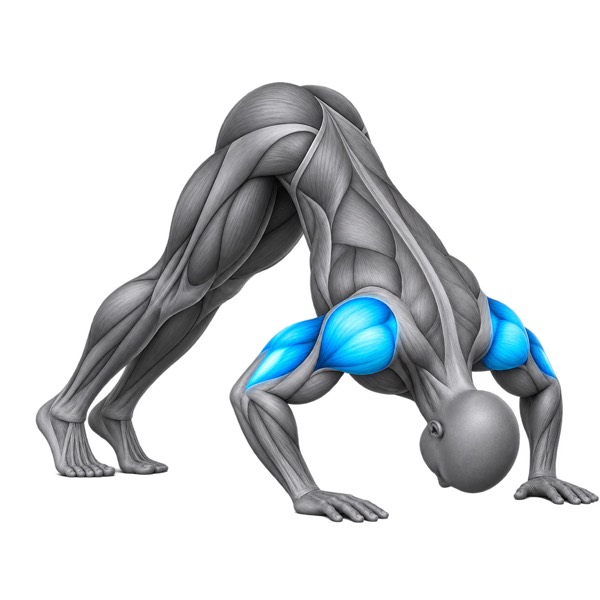
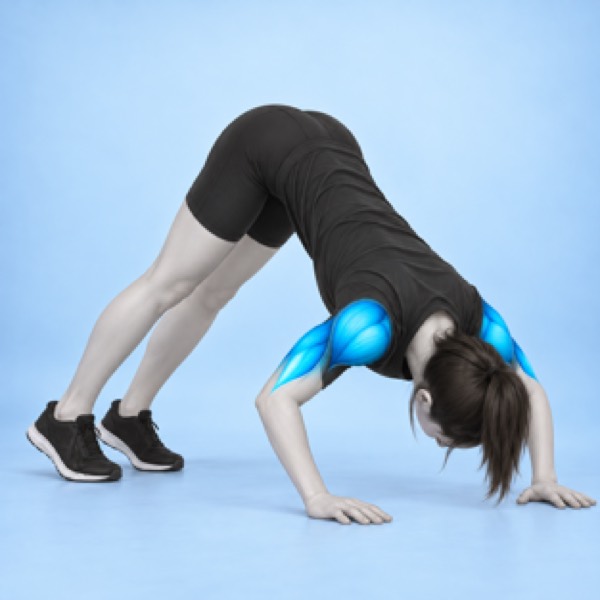
- Primary muscle
- Shoulders
- Also works
- Triceps
- Equipment
- Bodyweight
- Pattern
- Vertical press
Muscles worked
Your front delts do most of the work and your triceps straighten your elbows. Your upper chest helps, more so if your hips drop and your torso gets more horizontal. Your serratus anterior and traps keep your shoulder blades steady. The more vertical your torso, the more of your body weight lands on your shoulders: putting your feet on a bench makes it much harder.
How to do it
Setup
- Start in a push-up position with your hands slightly wider than your shoulders.
- Walk your feet toward your hands and lift your hips into an upside-down V, legs straight or slightly bent.
- Spread your weight between your hands and the balls of your feet, head between your arms.
Execution
- Bend your elbows and lower the top of your head toward a spot on the floor a few inches in front of your hands.
- Let your elbows track back at about 45° from your body, not out to the sides.
- Go down until your head nearly touches the floor, hips high the whole time.
- Push the floor away until your arms are straight and you're back in the V.
Key cue: Keep your hips high and lower your head in front of your hands, so your head and hands form a triangle.
Common mistakes
- Letting your hips sag. Your body flattens out and it becomes a regular push-up that works your chest. Walk your feet closer and think about pushing your hips toward the ceiling.
- Lowering your head straight between your hands or behind them. Your shoulders end up in a weak position. Aim for a spot in front of your hands so your head and hands form a triangle.
- Flaring your elbows out to the sides. It loads the front of your shoulder and shortens the useful range. Keep them angled back.
- Doing half reps. A few inches of bending does very little. Go until your head nearly touches the floor; if you can't yet, put a folded mat under your head as a target and remove it over time.
Variations
- Feet-up pike push-up: With your feet on a bench or box, your torso gets more vertical and more weight goes onto your shoulders. Move to it once you can do 12 clean reps on the floor.
- Wall handstand push-up: Upside down with your feet against a wall. You press close to your full body weight: the bodyweight version of a heavy overhead press.
- Deficit pike push-up: Hands on two yoga blocks or parallettes, so your head can travel below your hands for a longer range of motion.
Sets and reps
Once you can do more than 12–15 in a row, put your feet up on a bench: with bodyweight moves, you progress by changing the angle, not by piling on reps. To build muscle and strength: 6–12 reps, 3–4 sets. When you complete the range on every set, add a little weight. That's double progression.
Alternatives
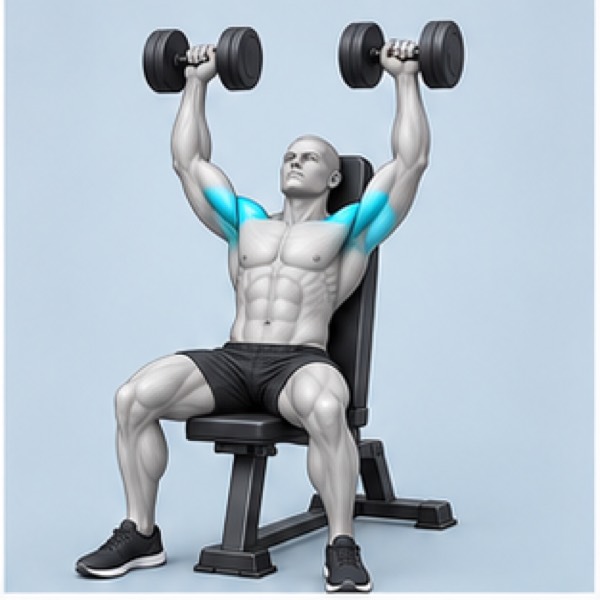 Dumbbell shoulder pressDumbbells
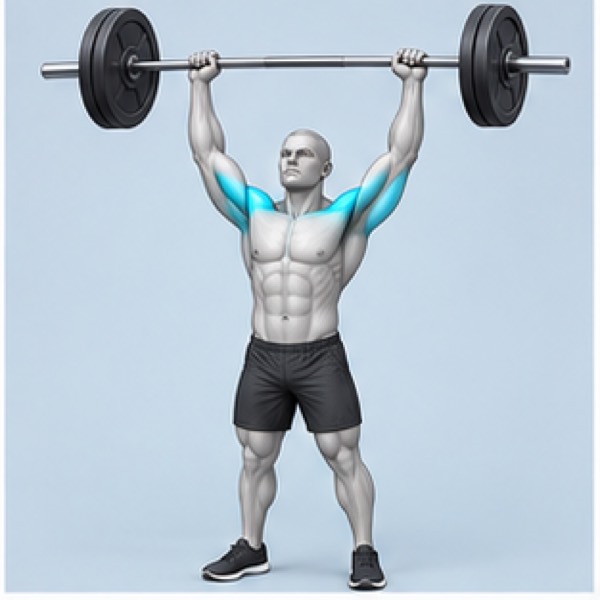 Overhead pressBarbell
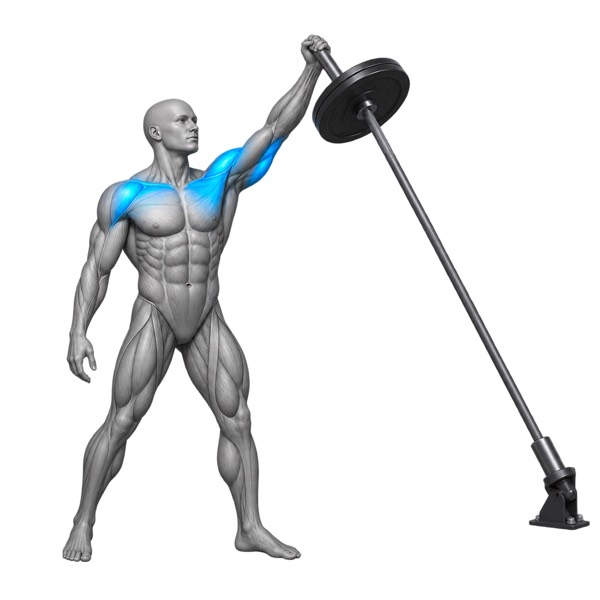 Landmine pressBarbell
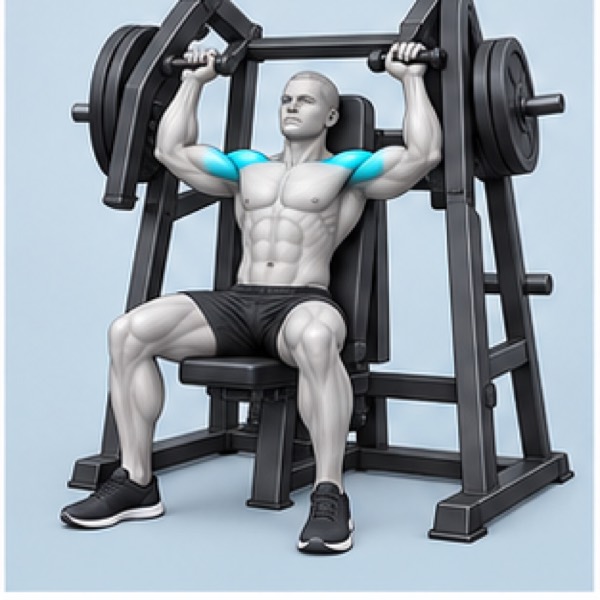 Machine shoulder pressMachine
Frequently asked questions
What muscles do pike push-ups work?
Mainly your front delts and triceps. Your upper chest, serratus anterior and traps help you press and keep your shoulder blades stable.
Can pike push-ups replace the overhead press?
They train the same movement without weights. To keep progressing, you'll need to raise your feet and later move to handstand push-ups, since unlike a barbell you can't add load in small jumps.
Pike push-ups vs regular push-ups: what's the difference?
Regular push-ups mainly work your chest; pike push-ups mainly work your shoulders. The higher your hips, the closer the movement gets to an overhead press. You can do both in the same routine.