 Zerolimits
Dumbbell chest fly
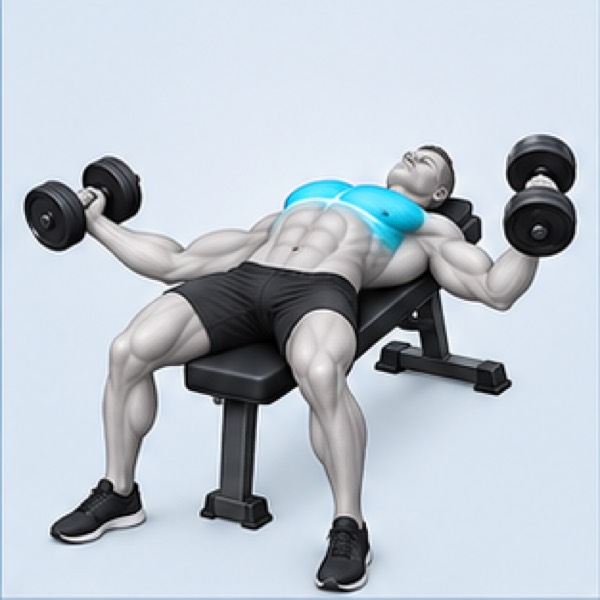
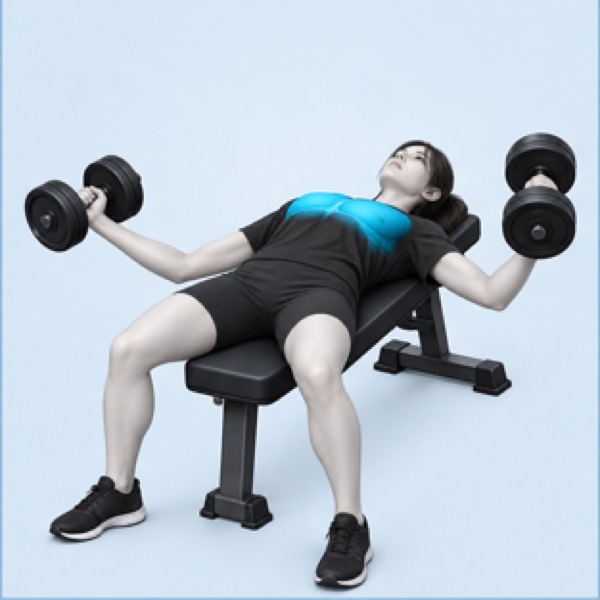
The dumbbell chest fly is an isolation exercise that mainly works your pecs, with help from your front delts. Lying on a bench, you open your arms in a wide arc with your elbows almost straight, then bring them back together over your chest. It loads the stretched position hard. It's also called the flat dumbbell fly.
- Primary muscle
- Chest
- Also works
- Shoulders
- Equipment
- Dumbbells
- Pattern
- Chest isolation
Muscles worked
Your pec major does nearly everything, closing your arms from the open position until they meet over your chest. Tension peaks at the bottom, with your chest stretched, and almost disappears at the top, when the dumbbells are stacked over your shoulders. Your front delts assist and your biceps hold the elbow bend. A flat bench works your whole chest; an incline bench at 30° shifts the focus to your upper chest.
How to do it
Setup
- Lie on a flat bench with a dumbbell in each hand and press them over your chest, palms facing each other.
- Plant your feet, pull your shoulder blades back slightly and bend your elbows a little, about 15–20°.
Execution
- Open your arms out to the sides on an arc, keeping the same elbow bend, over 2–3 seconds.
- Lower until your elbows are level with the bench or slightly below and you feel a stretch in your chest.
- Bring your arms back along the same arc, like you're hugging a tree, until the dumbbells are about 6–8 inches apart.
- Stop there and start the next rep: touching them at the top adds nothing for your chest.
Key cue: Elbows locked at a slight bend: if they bend and straighten, you've switched to a press.
Common mistakes
- Bending your elbows on the way down and straightening them on the way up. It turns into a press with a poor range; lower the weight and keep the bend fixed.
- Going too deep with heavy weight. With your arms nearly straight the lever is long, and your shoulders and biceps take the strain; stop with your elbows at bench level.
- Using your pressing dumbbells. The lever here is much longer: start with less than half the weight you use on the dumbbell press.
- Arching hard or lifting your hips to get the weight up. If you need to, it's too heavy.
Variations
- Incline dumbbell fly: Set the bench at 30° to feel it more in your upper chest. The technique stays the same.
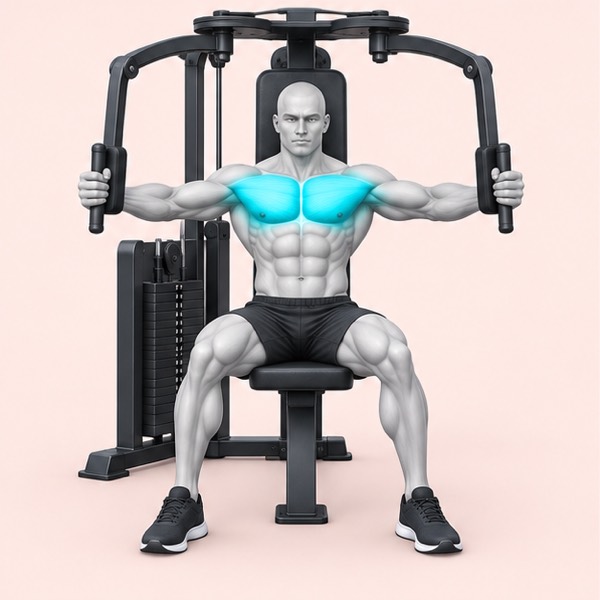
- Machine chest fly: The machine keeps tension at the top and lets you train close to failure safely.
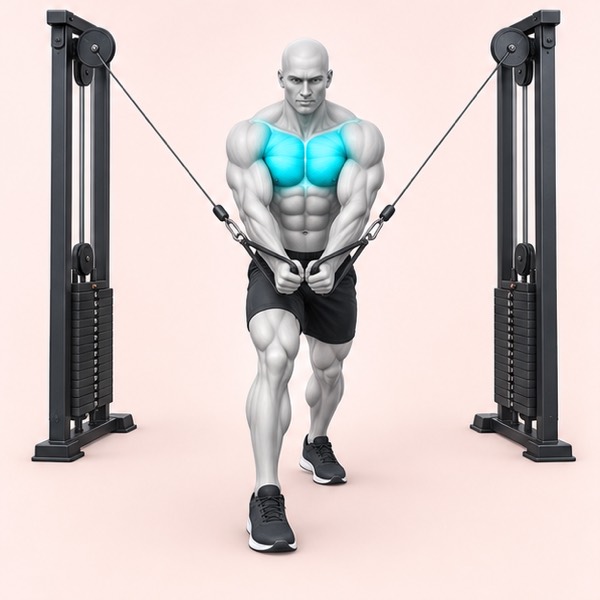
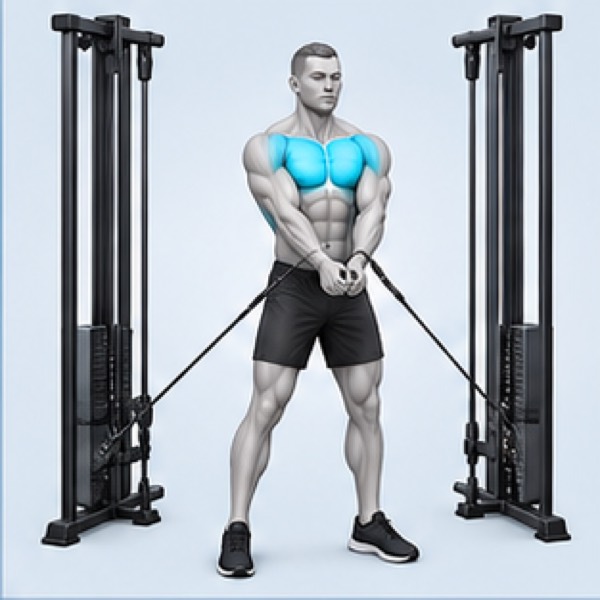
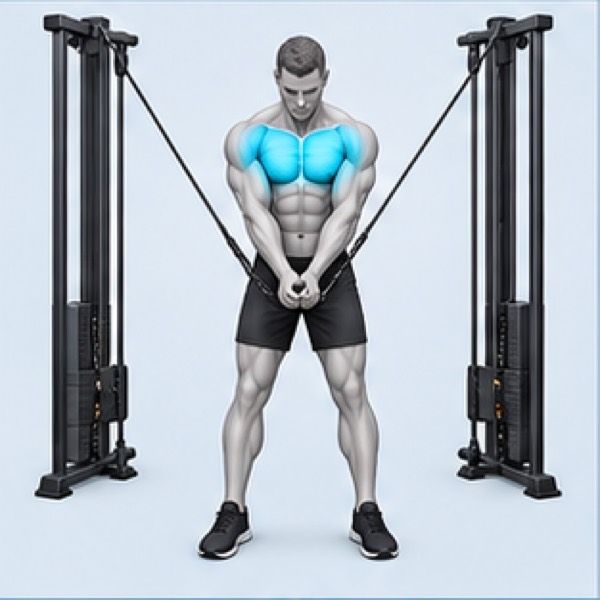
- Cable crossover: The cable pulls through the whole rep, even with your hands together, where a dumbbell stops loading your chest.
Sets and reps
Stick to 10–15 reps with a weight you can control on the way down; heavy low-rep sets aren't worth the strain on your shoulders and biceps. To build muscle and strength: 10–15 reps, 2–4 sets. When you complete the range on every set, add a little weight. That's double progression.
To build a full session, see our chest workout at the gym.
Alternatives
Frequently asked questions
What muscles does the dumbbell chest fly work?
Mainly your pec major, with help from your front delts. Your biceps stabilize your elbows and your triceps barely work, since your elbows don't straighten.
Dumbbell fly vs cable fly: which is better?
Dumbbells load your chest hard in the stretched position and very little at the top. Cables keep tension through the whole range. Both work; doing one of each during the week covers both positions.
How low should you go on dumbbell flyes?
Until you feel a solid stretch in your chest, usually with your elbows at bench level or a bit below. If you feel a pull at the front of your shoulder, stop sooner and go lighter.