 Zerolimits
Low to high cable fly
The low to high cable fly is a standing fly that mainly works your upper chest, with help from your front delts. With the pulleys at the bottom, you sweep your hands up on a diagonal until they meet in front of your upper chest. You'll also see it called the low cable fly or upward cable fly.
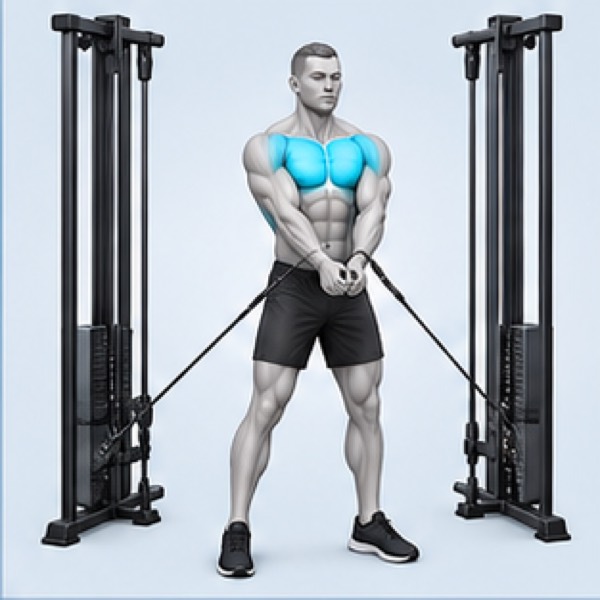
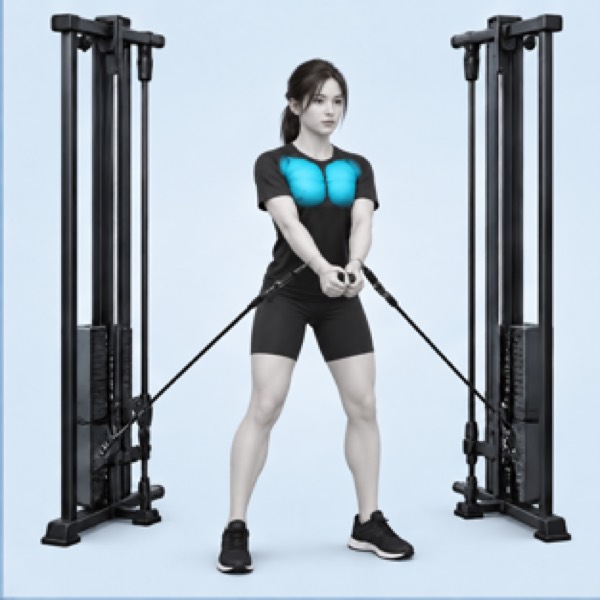
- Primary muscle
- Chest
- Also works
- Shoulders
- Equipment
- Cable
- Pattern
- Chest isolation
Muscles worked
Your pec major works with the focus on its clavicular head, the part that attaches to your collarbone and pulls your arm up and in. Your front delts help a lot at this angle, especially if your hands rise above chin height. Your biceps hold the elbow bend and your abs keep your torso still. If you mostly feel it in your shoulders, finish a little lower.
How to do it
Setup
- Set both pulleys to the lowest position with a single handle on each.
- Grab the handles and step forward to the center, feet hip-width apart.
- Let your arms hang down and slightly behind your hips, palms facing forward and elbows slightly bent.
Execution
- Lift your chest, set your shoulders down and brace your abs.
- Sweep your hands up and in on a diagonal, tracing an upside-down V.
- Bring your hands together in front of your upper chest, no higher than your chin, and squeeze for a second.
- Lower slowly along the same path over 2–3 seconds until you feel a stretch in your chest.
Key cue: Drive your hands diagonally toward your chin with locked elbows; if your shoulders shrug, finish lower.
Common mistakes
- Turning it into a curl. If your elbows bend as you lift, your biceps take over; lock the bend and lower the weight.
- Raising your hands overhead. Above chin height the work shifts to your shoulders; finish in front of your upper chest.
- Shrugging at the top. Your traps kick in and your chest does less; keep your shoulders down.
- Leaning back to heave the weight up. If your torso rocks, it's too heavy: your abs should keep it still.
Variations
- High to low cable fly: The opposite angle, from high to low, for your lower chest.
- Incline bench cable fly: With a bench set to 30° between two low pulleys, your back is supported and you can't rock your torso.
- Single-arm low to high fly: One arm at a time, free hand on the frame. Helps you feel your upper chest on each side.
Sets and reps
It works best for 12–15 reps with a light weight that doesn't make you shrug. To build muscle and strength: 10–15 reps, 2–4 sets. When you complete the range on every set, add a little weight. That's double progression.
To build a full session, see our chest workout at the gym.
Alternatives
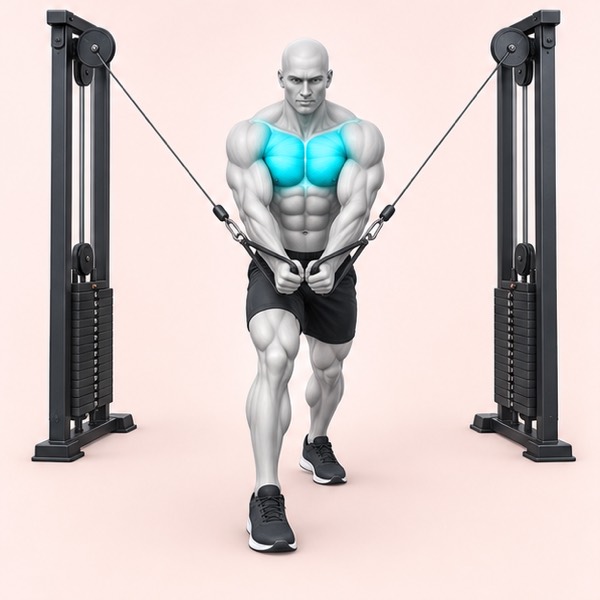 Cable crossoverCable
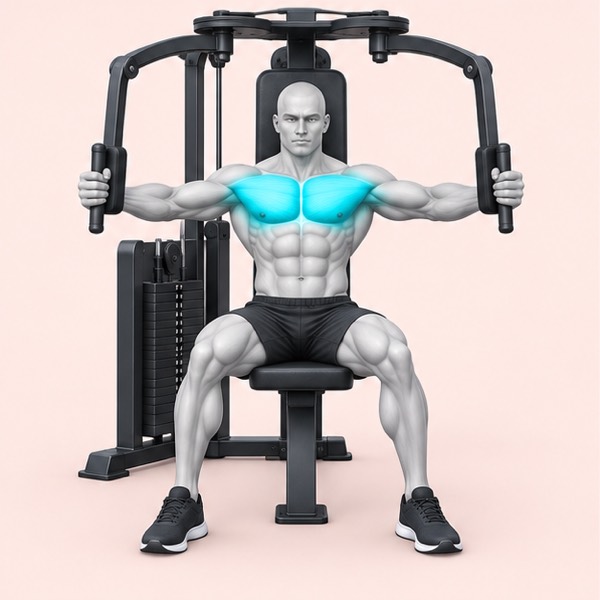 Machine chest flyMachine
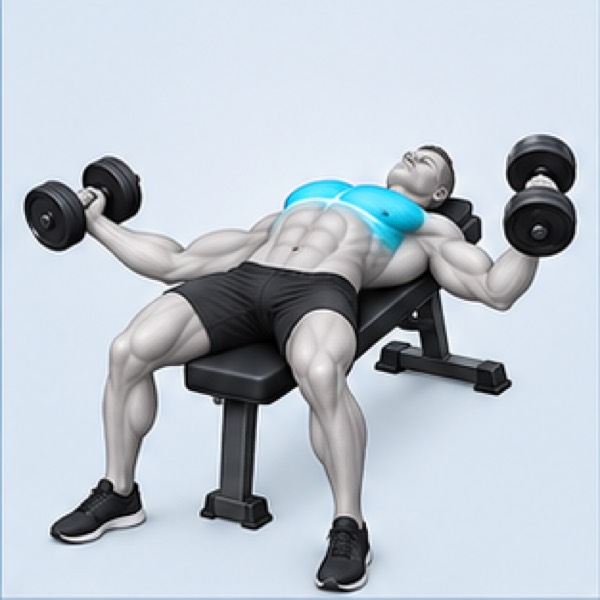 Dumbbell chest flyDumbbells
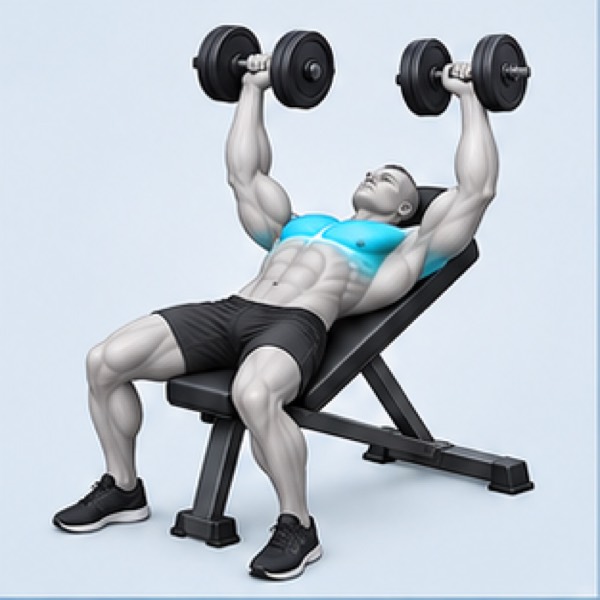 Incline dumbbell pressDumbbells
Frequently asked questions
What muscles does the low to high cable fly work?
Your upper chest, with a lot of help from your front delts. Your biceps stabilize your elbows, your abs stop your torso from rocking, and your triceps barely work.
Is the low to high cable fly good for upper chest?
Yes. Your arms rise on a diagonal, which is the movement the clavicular head of your chest performs. Pair it with an incline press to train that area both heavy and with isolation.
Low to high vs high to low cable fly: which should you do?
They complement each other. Low to high works more of your upper chest; high to low, more of your lower chest. If you only do one, pick the area you want to bring up.