 Zerolimits
High to low cable fly
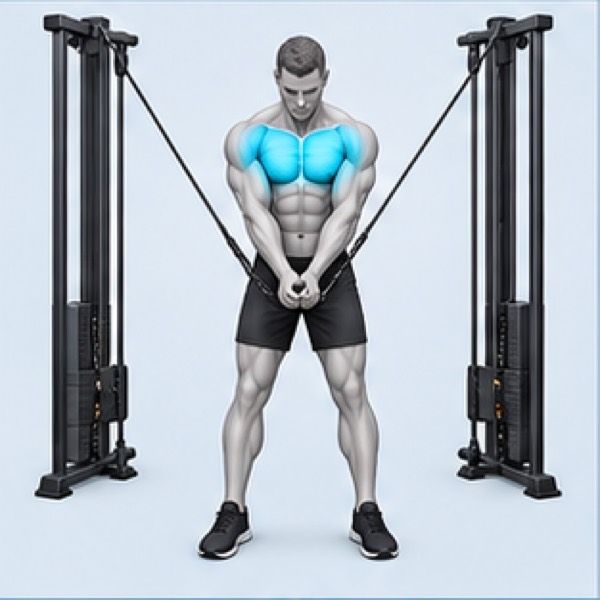
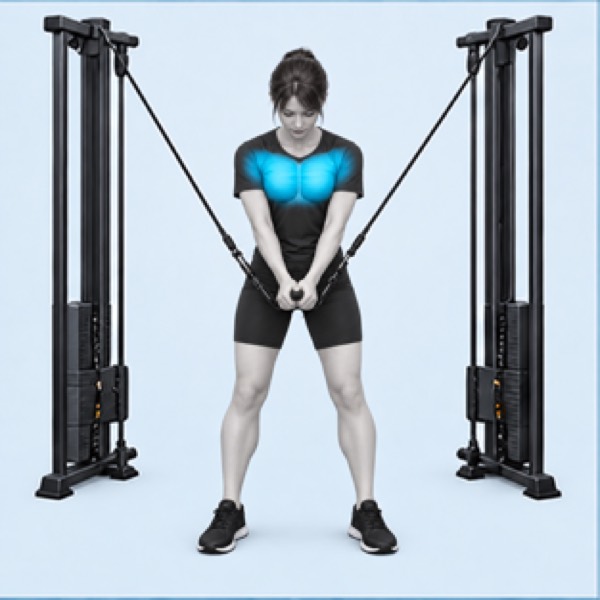
The high to low cable fly is a standing fly that mainly works your pecs, with extra focus on the lower chest. With the pulleys set above your head, you sweep your hands down and in until they meet in front of your hips. You'll also see it called the high cable fly or downward cable fly.
- Primary muscle
- Chest
- Also works
- Shoulders
- Equipment
- Cable
- Pattern
- Chest isolation
Muscles worked
Your pec major does nearly all the work. Because your arms travel down on a diagonal toward your hips, the effort lands mostly on its lower fibers, the ones that run from your ribs and lower sternum to your upper arm. Your front delts do less than in a flat fly, and your biceps hold the elbow bend. The higher the pulleys and the lower your hands finish, the more you'll feel your lower chest.
How to do it
Setup
- Set both pulleys above head height with a single handle on each.
- Grab the handles and step forward, feet hip-width apart or one slightly ahead.
- Keep your torso nearly upright, chest up, arms up and out to the sides with a slight bend in your elbows.
Execution
- Sweep your hands down and in on a diagonal, tracing a V.
- Bring your hands together in front of your hips or belly button, arms almost straight.
- Squeeze your lower chest for a second without shrugging.
- Return the same way over 2–3 seconds until your hands are slightly above your shoulders and you feel a stretch.
Key cue: Your hands travel down toward your hips, not toward your chest: that angle is what makes this exercise.
Common mistakes
- Leaning far forward. With your torso at 45°, the angle turns into a flat fly; stay close to upright.
- Pushing down by bending your elbows. It becomes a triceps press; lock the elbow bend and lower the weight.
- Finishing with your hands at chest height. That works your mid chest; take them down to your hips to load the lower chest.
- Letting your shoulders creep up on the way back. Keep them down and end the stretch before you lose that position.
Variations
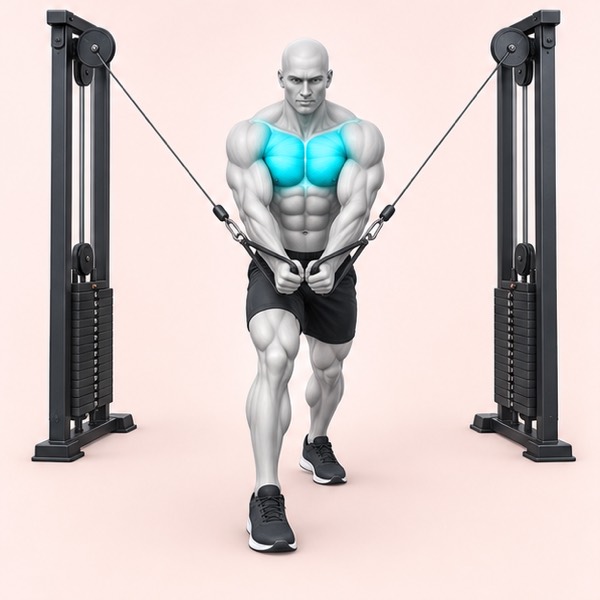
- Cable crossover: Torso leaning forward and hands crossing at the end. It works your chest more generally.
- Low to high cable fly: The opposite angle, from low to high, for your upper chest.
- Single-arm high to low fly: One arm at a time, free hand on the frame. Lets you cross past your midline and focus on each side.
Sets and reps
It works well for 12–15 controlled reps at the end of your chest workout. To build muscle and strength: 10–15 reps, 2–4 sets. When you complete the range on every set, add a little weight. That's double progression.
To build a full session, see our chest workout at the gym.
Alternatives
Frequently asked questions
What muscles does the high to low cable fly work?
Your pec major, with extra focus on the lower chest. Your front delts barely help at this angle, your biceps stabilize your elbows, and your triceps stay out of it because your elbows don't straighten.
High to low vs low to high cable fly: which is better?
It depends on the area. High to low hits more of your lower chest; low to high, more of your upper chest and front delts. If you train chest twice a week, do one in each session.
Is the high to low cable fly good for lower chest?
Yes. Along with dips and the decline bench press, it's a solid pick for that area. The key is finishing with your hands at hip level, not chest level.