 Zerolimits
Dumbbell pullover
The dumbbell pullover is a lying exercise that works your pecs and lats at the same time. You move one dumbbell from over your chest to behind your head and back, with your arms nearly straight. You can do it lying along the bench or across it, with only your upper back supported.
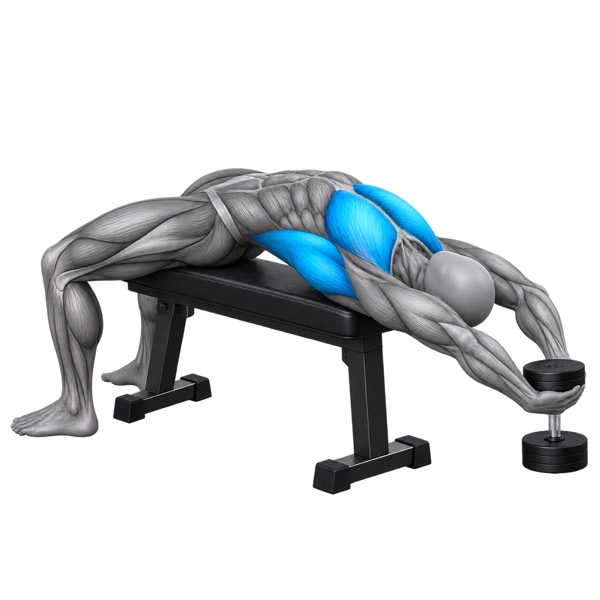
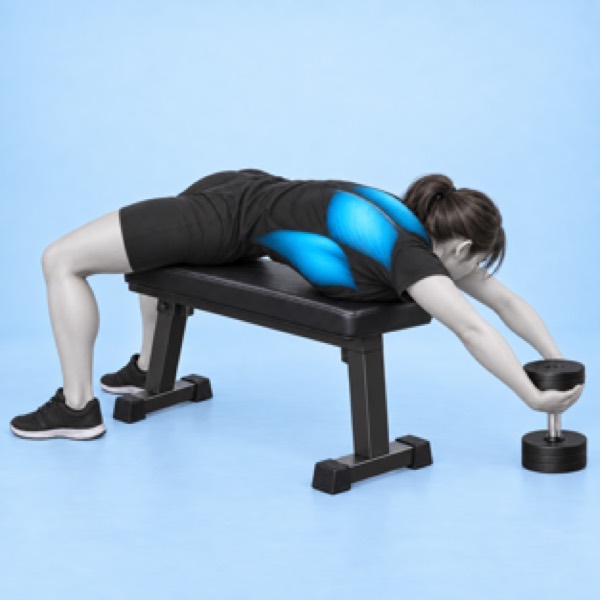
- Primary muscle
- Chest
- Also works
- Back, Triceps
- Equipment
- Dumbbells
- Pattern
- Shoulder extension
Muscles worked
It's a shoulder extension: your arms travel from behind your head back to over your chest. Two muscles drive that, your pec major, mostly its sternal part, and your lats, with help from your teres major and the long head of your triceps. Your serratus anterior holds your shoulder blades in place. The hardest part is the bottom, with your arms behind your head and both muscles stretched; at the top, over your chest, there's almost no tension.
How to do it
Setup
- Lie along a flat bench with your head at the end and your feet flat on the floor.
- Hold one dumbbell with both hands, palms pressed against the underside of the top plate and thumbs wrapped around the handle.
- Bring it over your chest with your elbows slightly bent and brace your abs to keep your ribs down.
Execution
- Lower the dumbbell in an arc behind your head over about 3 seconds, without changing your elbow bend.
- Stop when your arms are roughly in line with your torso, or sooner if your ribs flare or your lower back arches.
- Pull back along the same arc, using your chest and lats, until the dumbbell is over your forehead.
- Breathe in on the way down and out on the way up, keeping your hips on the bench.
Key cue: Elbows locked and ribs down: your arms rotate only from the shoulders.
Common mistakes
- Bending and straightening your elbows each rep. It becomes a triceps extension; lock the bend and go lighter.
- Arching your lower back to go deeper. The range looks bigger, but it comes from your spine, not your shoulders; brace your abs and stop sooner.
- Bringing the dumbbell all the way over your chest. Tension disappears there; stop over your forehead and start the next rep.
- Holding it with a loose grip. The dumbbell travels over your face: wrap your thumbs around the handle and check that the plates are secure.
Variations
- Cross-bench pullover: Only your upper back on the bench, hips below it. It's the classic version; it gives a bit more stretch but demands more hip control.
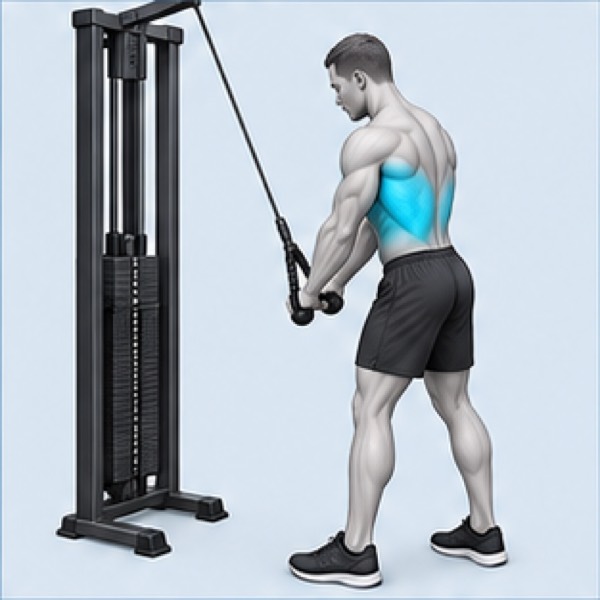
- Straight-arm pulldown: Standing at a high pulley with straight arms. It keeps tension at the bottom and focuses more on your lats.
- EZ-bar pullover: A more stable grip if you go heavy; the technique stays the same.
Sets and reps
It works best for 10–15 slow reps; the controlled stretch matters more than the weight. To build muscle and strength: 10–15 reps, 2–4 sets. When you complete the range on every set, add a little weight. That's double progression.
To build a full session, see our chest workout at the gym.
Alternatives
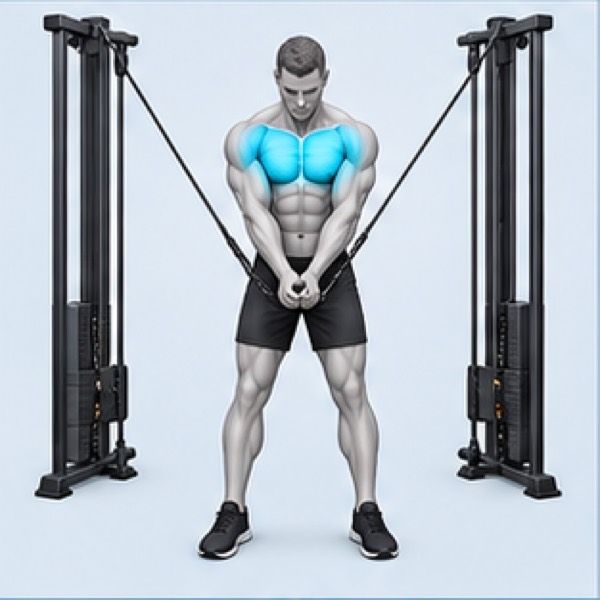
Frequently asked questions
What muscles does the dumbbell pullover work?
Your pec major and lats at the same time, with help from your teres major and the long head of your triceps. Your serratus anterior stabilizes your shoulder blades.
Is the dumbbell pullover a chest or back exercise?
Both: your pecs and lats perform the same movement. Most people feel it more in their chest. If you want to bias your lats, the straight-arm cable pulldown is a better pick.
How heavy should you go on pullovers?
Much lighter than on a press: it's a long lever on a stretched shoulder. Start with a dumbbell you can lower in 3 seconds for 12 reps without arching your back, and build from there.