 Zerolimits
Landmine press
The landmine press is a press with one end of a barbell anchored to the floor: you drive the other end up and forward on a diagonal. It mainly works your front delts and upper chest, with help from your triceps, and it's usually easier on the shoulders than pressing straight overhead.
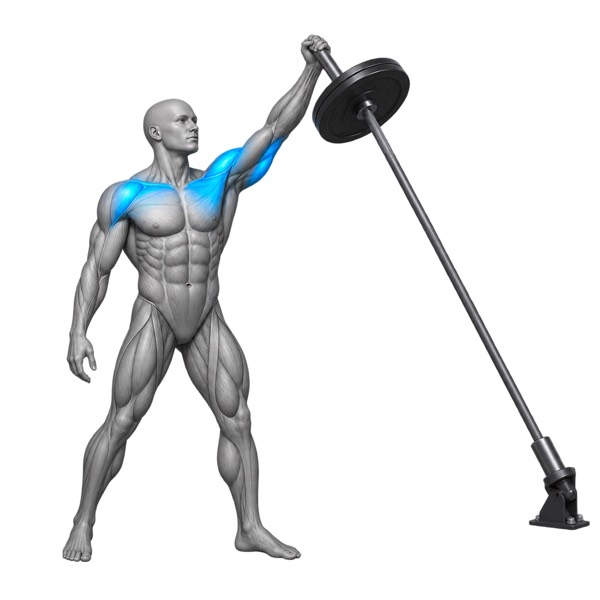
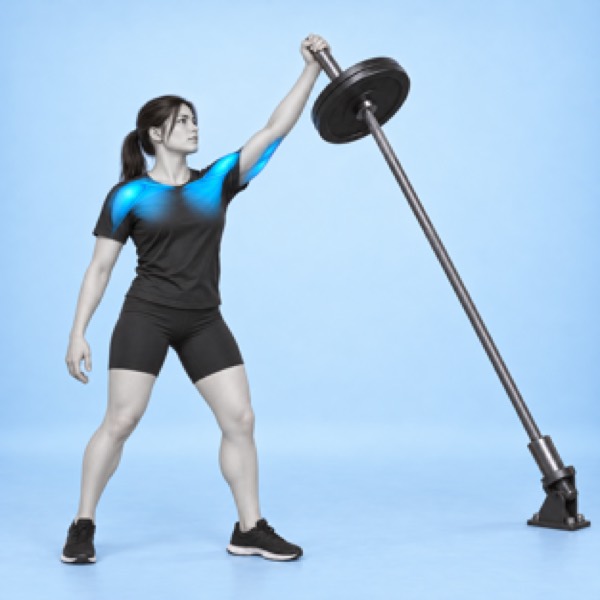
- Primary muscle
- Shoulders
- Also works
- Triceps
- Equipment
- Barbell
- Pattern
- Vertical press
Muscles worked
Your front delts do most of the work, helped by your upper chest, because the press travels on a diagonal. Your triceps straighten your elbow, and your serratus anterior pulls your shoulder blade forward and up at the top. Done one-handed, your obliques and core stop your trunk from rotating. The more you lean into the bar, the more vertical the press and the more your shoulders work; standing taller or farther from the anchor brings in more chest.
How to do it
Setup
- Set one end of the bar in a landmine attachment, or in a corner padded with a towel, and load plates on the other end.
- Hold the end in one hand in front of your shoulder, at chest height, with your elbow in front of your body.
- Stand in a staggered stance with the pressing-side foot back, or half-kneel with that same knee on the floor.
Execution
- Squeeze your glutes and abs and lean your torso slightly toward the bar.
- Press the bar up and forward until your arm is fully straight.
- At the top, let your shoulder reach forward a little with the bar, without twisting your torso.
- Lower under control until the end of the bar is back in front of your shoulder.
Key cue: Press on the diagonal, without leaning back or twisting.
Common mistakes
- Leaning back to make the press more vertical. Your lower back arches and the exercise loses its point. Lean slightly into the bar and squeeze your glutes.
- Twisting your torso. If your hips and shoulders rotate toward the pressing side, your core isn't doing its job. If you can't control it, switch to the half-kneeling version.
- Flaring your elbow. Your elbow comes down in front of your body, about 45° from your torso, not straight out to the side.
- Not finishing the rep. Straighten your arm fully and let your shoulder blade reach forward: that's where your serratus works.
Variations
- Half-kneeling landmine press: With one knee on the floor, your hips can't help and your core works harder to stop you from rotating.
- Two-hand landmine press: Hold the end with both hands in front of your chest. It allows more weight and brings in more chest.
- Landmine push press: A short knee dip helps start the press. It lets you move more weight and train power.
Sets and reps
Single-arm, it works well for 8–12 reps per side, starting with your weaker arm. To build muscle and strength: 6–12 reps, 3–4 sets. When you complete the range on every set, add a little weight. That's double progression.
Alternatives
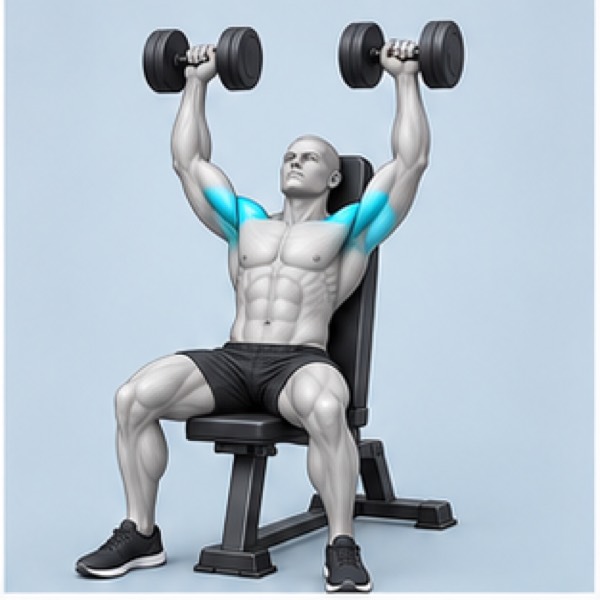 Dumbbell shoulder pressDumbbells
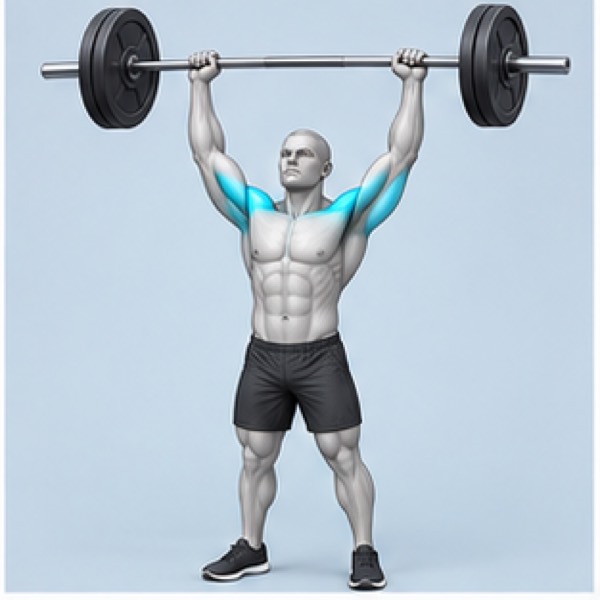 Overhead pressBarbell
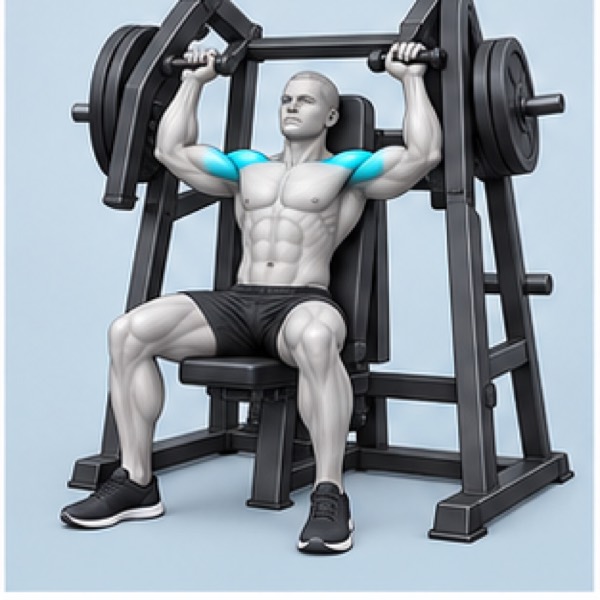 Machine shoulder pressMachine
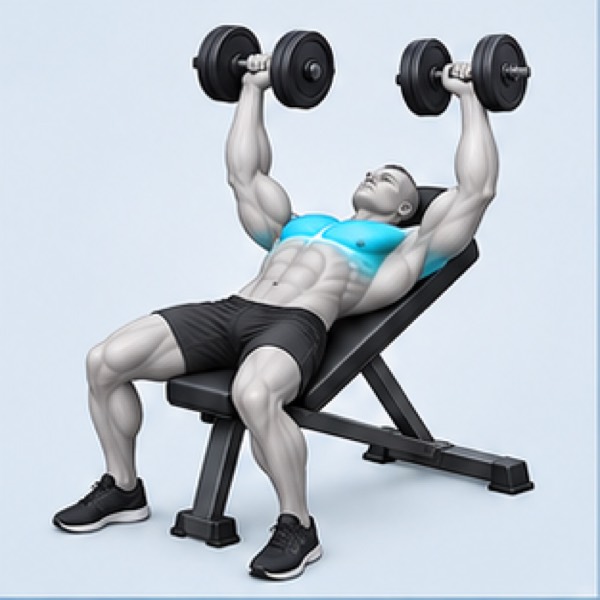 Incline dumbbell pressDumbbells
Frequently asked questions
What muscles does the landmine press work?
Mainly your front delts and upper chest, with help from your triceps and serratus anterior. Done one-handed, your core works to keep your trunk from rotating.
Is the landmine press a shoulder or chest exercise?
Both. The bar travels on a diagonal, halfway between an overhead press and an incline press. Lean into the bar and your shoulders work more; stand taller or farther from the anchor and your chest does more.
How do you do a landmine press without a landmine?
Wedge one end of the bar into a corner, with a towel to protect the wall and floor. Make sure it can't slide before you load plates on the other end.
Landmine press vs overhead press: which is better?
The overhead press is a true vertical press that works your shoulders harder and takes more load. The landmine press is more comfortable if pressing overhead bothers your shoulder or you lack the mobility.