 Zerolimits
Overhead press
The overhead press is a standing barbell press from your collarbones to straight arms overhead, and it mainly works your front delts and triceps. Your glutes and abs stay braced the whole set so your body doesn't bend back under the bar. It's also called the military press, OHP, or strict press.
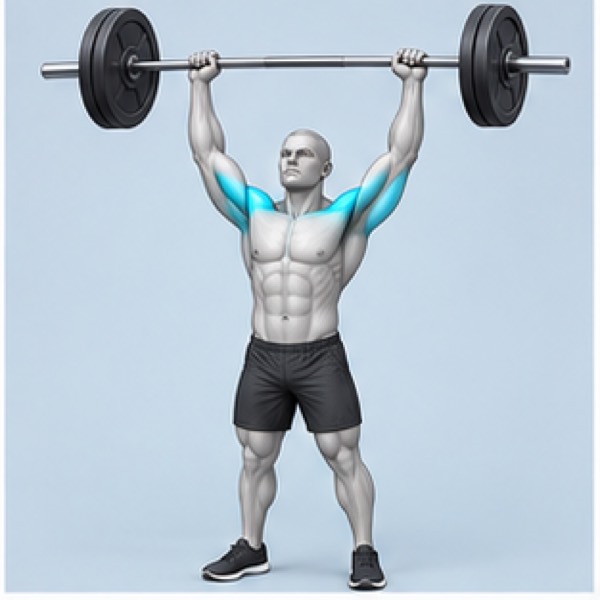
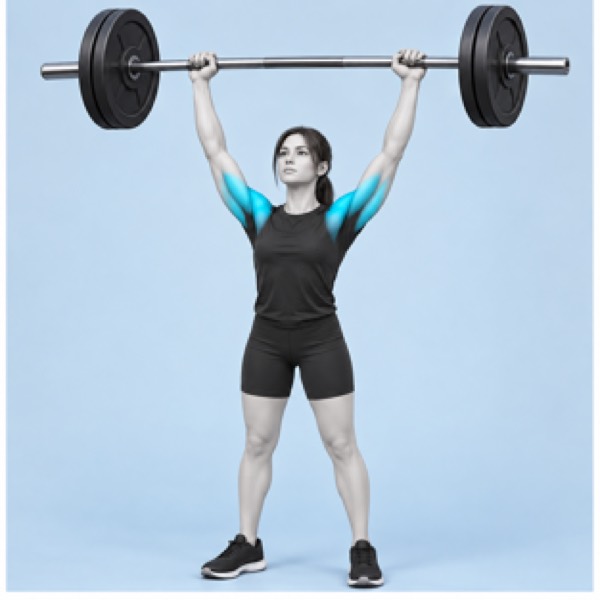
- Primary muscle
- Shoulders
- Also works
- Triceps
- Equipment
- Barbell
- Pattern
- Vertical press
Muscles worked
Your front delts do most of the work, and your triceps take over to lock out your elbows in the top half. Your side delts help once the bar passes your forehead. Your upper traps and serratus anterior rotate your shoulder blades up so your shoulders can finish the press. Your glutes, abs and spinal erectors keep you from leaning back. A wider grip shortens the range and takes some work off your triceps.
How to do it
Setup
- Set the bar in a rack at upper-chest height, about level with your collarbones.
- Grip it slightly wider than your shoulders, with the bar in the heel of your palm and your wrists straight.
- Unrack it, step back and set your feet hip-width apart, elbows slightly in front of the bar.
Execution
- Take a big breath, squeeze your glutes and abs, and lock your knees.
- Press the bar straight up, tilting your face back slightly so the bar clears your chin.
- Once the bar passes your forehead, move your head forward under it and finish with the bar over your shoulders and mid-foot.
- Lock out your elbows and shrug your shoulders up slightly toward your ears.
- Lower under control back to your collarbones and repeat.
Key cue: Squeeze your glutes and push your head through as soon as the bar clears your forehead.
Common mistakes
- Leaning back and arching your lower back to grind the rep up. It turns the lift into an incline press and loads your lower back. Squeeze your glutes, pull your ribs down, and drop the weight if your torso won't stay upright.
- Pressing the bar forward to get around your face. Move your head, not the bar: the bar travels close to your face and ends up over the top of your head.
- Starting with your elbows flared or behind the bar. You lose drive and the bar drifts forward. Set your elbows slightly in front, forearms vertical.
- Using your legs without meaning to. If your knees dip to start the rep, you're doing a push press. Lock your knees and let your arms move the weight.
Variations
- Seated overhead press: Done on a bench with an upright back pad. There's less to balance, so your shoulders do all of it, but it's easy to arch against the pad.
- Push press: A quick dip and drive with your knees launches the bar. You can handle more weight and train the top half of the press.
- Dumbbell shoulder press: Each arm works on its own, and you can turn your wrists to a more comfortable angle. Useful if the barbell bothers your shoulders.
Sets and reps
Add weight in small jumps, 2.5–5 lb total: the overhead press moves up much more slowly than your squat or bench. To build muscle and strength: 6–12 reps, 3–4 sets. When you complete the range on every set, add a little weight. That's double progression.
Alternatives
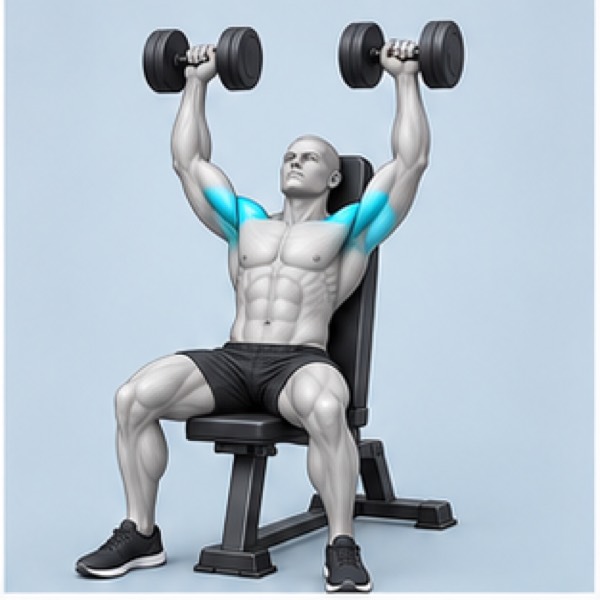 Dumbbell shoulder pressDumbbells
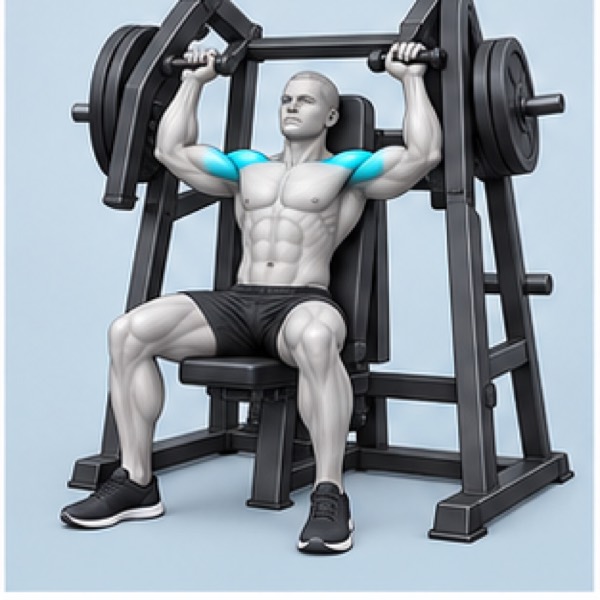 Machine shoulder pressMachine
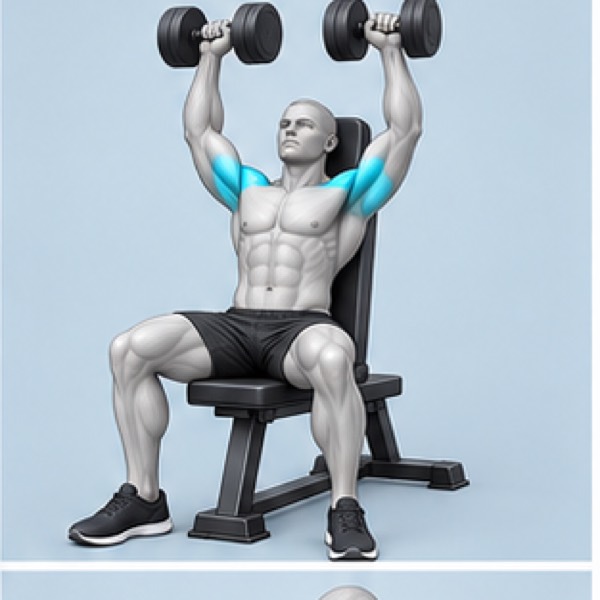 Arnold pressDumbbells
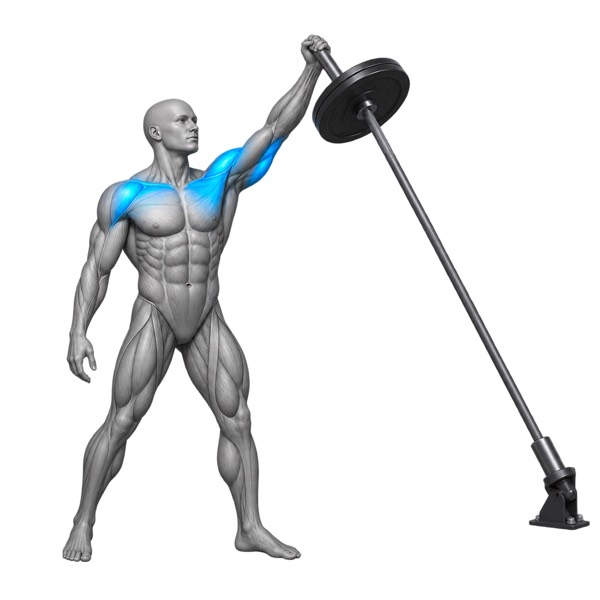 Landmine pressBarbell
Frequently asked questions
What muscles does the overhead press work?
Mainly your front delts and triceps. Your side delts, upper traps and serratus anterior assist, and your glutes and abs work to hold your body upright under the bar.
Overhead press vs military press: what's the difference?
Today they mean the same lift: a strict standing barbell press. The traditional military press was done with the heels together, which makes balance harder. Most gyms use the two names interchangeably.
Standing or seated overhead press?
Standing works your core and glutes more and is the classic strength version. Seated gives you less to balance, so it's easier to focus on your shoulders. Both build your delts; pick the one you can do with cleaner form.